
GOOGLE AI OVERVİEWS: DEFİNİTİON, HOW IT WORKS, AND A GUİDE TO GETTİNG CİTED

Google AI Overviews: Definition, How It Works, and a Guide to Getting Cited

If, when you search on Google, you see an AI-written summary at the top of the results before the blue links, you are looking at AI Overviews, officially called AI Bakışı in Turkish. Having your brand named in that summary or your page shown as a source is one of the most visible outcomes of AEO work. So what exactly are AI Overviews, how do they work, and what does it take to get cited in them? Drawing on official Google sources and controlled studies, and without any secret formula, we cover what is actually evidence-based.

What Are Google AI Overviews?

AI Overviews are an AI summary generated by Gemini at the top of Google Search results. They synthesize the basics of a topic from multiple sources and offer web links to dig deeper. Unlike a list of individual blue links, an AI Overview gives a single synthesized answer. Google shows them only on queries where it decides generative AI will be especially helpful, not on every search. The scale is large: at the Google I/O 2026 keynote, Sundar Pichai announced more than 2.5 billion monthly active users for AI Overviews. You can follow the end-user side of the feature in Google's official AI features documentation.

From SGE to AI Overviews: The Feature's History

The feature was first announced in May 2023 at Google I/O under the name Search Generative Experience (SGE), as an experiment inside Search Labs. At Google I/O 2024 on May 14, 2024 it opened broadly in the US under the name AI Overviews. A frequently confused point lives here: Google never issued a single announcement explicitly renaming or ending SGE, and the official post only references the earlier Search Labs experiment. The SGE framing is largely the SEO industry's interpretation, and the feature was promoted from experiment to a permanent capability.

The Difference Between AI Overviews and AI Mode

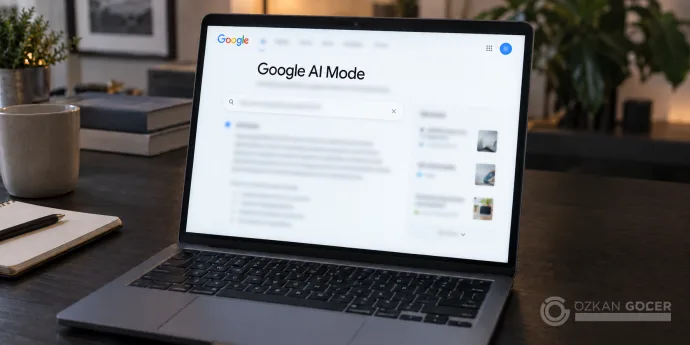
The two are different things. AI Overviews are a short summary embedded in standard search results. AI Mode is a separate, more powerful, conversational experience inside Search, offering more advanced reasoning, multimodal input (text, voice, camera), and deepening through follow-up questions. You can move from an AI Overview into AI Mode with a follow-up question. Per Google I/O 2026 figures, AI Mode has surpassed 1 billion monthly users. Both rely on the same web index and the query fan-out technique; you can find the details in Google's AI Mode announcement.

How AI Overviews Works: Gemini and Query Fan-Out

AI Overviews run on a Gemini model customized for Search and use retrieval-augmented generation (RAG) grounded in the core search ranking systems. The model evolution went like this: a custom Gemini for Search in 2024, Gemini 2.0 on March 5, 2025, and the Gemini 3 family brought to Search (first to AI Mode) in late 2025 and early 2026. The key mechanism is query fan-out: Google's system splits one question into subtopics, issues multiple related searches concurrently, and merges the results into a single coherent answer. The practical consequence matters: a single keyword ranking is decoupled from citation, and you can be cited by performing well on a sub-query you never targeted.

AI Overviews in Turkey and in Turkish

Google officially began rolling out AI Mode and AI Overviews in Turkey on February 18, 2026, a date confirmed both by the official Turkish Google blog and by industry press the same day. The features arrived with the Gemini 3 model family, in the Google app on Android and iOS and on search result pages, rolled out gradually. Because of the gradual rollout, the feature may not have appeared for all users at once on that date. Turkey was one of the last major markets added, roughly a year after the global launch, at a time when the feature was already available in more than 180 countries. You can read the official announcement on Google's Turkish blog.

How AI Overviews Selects and Cites Sources

AI Overviews and AI Mode rely on the same web index as organic search; there is no separate AI index. The basic eligibility condition is that your page is indexed and eligible to be shown with a snippet in normal search. Directional evidence suggests cited content tends to be self-contained passages that directly answer a sub-question: a clear definition, a concise fact, or a direct step list. Extractability is the key here; a section that stands alone as a complete answer is easier to cite than answers buried in long narrative paragraphs. The five-stage candidate-pool models and exact word counts circulating in the industry are unverified, reverse-engineered estimates, not confirmed by Google.

Is Organic Ranking a Prerequisite? What the Studies Say

A top ranking is a strong correlate but neither sufficient nor a strict prerequisite. Ahrefs' March 2026 study (863K keywords, 4M AI Overview links) found only about 38 percent of cited URLs ranked in the top 10 organic results, with roughly 31 percent in positions 11 to 100 and roughly 31 percent beyond position 100; the study details also carry an important caveat, since Ahrefs notes it improved its citation-parsing method and the data is not directly comparable to older figures. The real finding is the disagreement between studies: BrightEdge reported about 17 percent, Ahrefs 38 percent, and older analyses around 54 percent. The frequently quoted 99 percent figure is a different metric, namely the probability that at least one top-10 source appears in a given overview, not a per-citation rate. Do not rely on any single percentage.

Evidence-Based Tactics to Get Cited

Google's official position is clear: optimizing for generative AI search is optimizing for the search experience, and is still SEO; the strongest lever is foundational SEO. Google's AI optimization guide says so explicitly. The practical steps are these: indexable and snippet-eligible pages; original, useful, people-first content (Google warns against repackaging what is already said online); and strong E-E-A-T signals (trust is the most important component, but E-E-A-T is not a direct ranking score). The peer-reviewed GEO study from Princeton and Georgia Tech (KDD 2024) found that citing sources, adding verifiable statistics, and adding authoritative quotations can lift generative-search visibility by up to about 40 percent, on the sole condition that the data is genuine and verifiable. Answering questions directly with self-contained responses is also good practice, but treat it as a readability principle, not a citation mechanism proven by Google.

Debunked Myths and Vendor Hype

The most repeated myth is that special markup is required. Google clearly states that there are no additional requirements, no special schema.org structured data, no llms.txt, and no AI-specific files needed to appear in AI Overviews or AI Mode. Schema is still useful for classic rich results, but it is not a lever that unlocks an AI Overview; a controlled 2026 Ahrefs test (1,885 pages that added JSON-LD and about 4,000 control pages) found no meaningful change in citations. The fact that cited pages carry schema more often is a confound, not causation: well-maintained, authoritative sites both use schema and produce extractable content. The exact multipliers circulating in SEO blogs (for example plus 73 percent for structured data, or 134 to 167 words as the ideal unit) come from a single commercial source, are not peer-reviewed, and should not be used as verified data. Google publishes no such numeric multipliers in any official documentation.

AI Overviews' Traffic Impact and Conclusion

AI Overviews are changing search behavior, but the numbers differ by source and method, and correlation is not causation. Per Pew Research (data from March 2025), on searches with an AI summary users clicked a traditional result only 8 percent of the time, versus 15 percent without one. According to SparkToro and Datos data, zero-click searches in the US reached about 68 percent in early 2026. Google argues that total organic click volume has stayed relatively stable, but has not shared supporting public data. In short, there is no magic setting to appear in AI Overviews; solid SEO fundamentals, original and clear content, strong E-E-A-T, and brand strength are the real determinants. We covered the same principles on the ChatGPT visibility side, and for the broader picture you can explore our Generative Engine Optimization guide, our what is AEO and content optimization content, and our AEO services.

FAQ

Frequently Asked Questions

Quick answers for readers who skipped to the end.

What are Google AI Overviews and how do they differ from normal search results?
AI Overviews, officially called AI Bakışı in Turkish, are AI summaries generated by Gemini that appear at the top of Google Search results. They synthesize the basics of a topic and offer web links to dig deeper. Unlike a normal list of blue links, an AI Overview presents a single answer synthesized from multiple sources. Google shows them only on queries where it decides generative AI will be especially helpful, not on every search.
What is the relationship between AI Overviews and the old SGE?
The feature was first announced in May 2023 at Google I/O as SGE, an experiment inside Search Labs. It opened broadly in the US under the name AI Overviews at Google I/O 2024 on May 14, 2024. Google never issued a single announcement explicitly renaming or ending SGE; the official post only references the earlier Search Labs experiment. The SGE framing is largely industry interpretation, and the feature was promoted from experiment to a permanent capability.
What is the difference between AI Overviews and AI Mode?
AI Overviews are a short summary embedded in standard search results. AI Mode is a separate, more powerful, conversational experience inside Search, offering more advanced reasoning, multimodal input (text, voice, camera), and follow-up questions. You can move from an AI Overview into AI Mode with a follow-up question. Per Google I/O 2026 figures, AI Mode has surpassed 1 billion monthly users. Both rely on the same web index and the query fan-out technique.
Which Gemini model powers AI Overviews?
The first AI Overviews ran on a Gemini model customized for Search in 2024. On March 5, 2025 they were upgraded to a custom version of Gemini 2.0 in the US. The Gemini 3 family was brought to Search (first to AI Mode) in late 2025 and early 2026. Search routes the hardest questions to these stronger models while using faster models for simpler tasks. Turkey's launch is also powered by the Gemini 3 model family.
How does the query fan-out technique work?
Query fan-out is a Google-confirmed technique: the system splits one question into subtopics, issues multiple related searches concurrently, and merges the results into a single coherent answer. The practical consequence is that a single keyword ranking is decoupled from citation; you can be cited by performing well on a sub-query you never targeted. The often-cited patent US11663201B2 is a practitioner inference, and Google does not use the term across all its documentation.
When were AI Overviews launched in Turkey?
Google officially began rolling out AI Mode and AI Overviews in Turkey on February 18, 2026. The date is confirmed both by Google's official Turkish blog and by industry press the same day. The features arrived in the Google app on Android and iOS and on search result pages, powered by the Gemini 3 model family and rolled out gradually. Because of the gradual rollout, the feature may not have appeared for all users at once. Turkey was one of the last major markets added, roughly a year after the global launch.
How many monthly active users have AI Overviews reached?
The number grew over time, and these different figures are not an inconsistency but official statements from different dates. About 1.5 billion monthly users were cited in May 2025 (Google I/O 2025), and over 2 billion on Alphabet's Q2 2025 earnings call on July 23, 2025. The most recent official figure is over 2.5 billion monthly active users, announced by Sundar Pichai at the Google I/O 2026 keynote in May 2026.
Do I need schema markup or special AI files to appear in Google AI Overviews?
No. Google explicitly states there are no additional requirements or special optimizations to appear in AI Overviews or AI Mode, there is no special schema.org structured data you need to add, and you do not need to create new machine-readable or AI text files. Schema is still useful for classic rich results, but it is not a lever that unlocks an AI Overview. Files like llms.txt also have no positive effect because Google Search does not use them.
Is a top-10 organic ranking required to be cited in AI Overviews?
A top ranking is a strong correlate but neither sufficient nor a strict prerequisite. Ahrefs' March 2026 study (863K keywords, 4M links) found only about 38 percent of cited URLs ranked in the top 10, with roughly 31 percent in positions 11 to 100 and roughly 31 percent beyond position 100. Because of query fan-out, even a page beyond position 100 can be cited. Still, good organic ranking meaningfully raises your odds of being cited.
Why do AI Overview citation studies report such different numbers?
Because they use different keyword datasets, methodologies, and dates. BrightEdge reported about 17 percent top-10 overlap, Ahrefs 38 percent (March 2026), and older analyses around 54 percent. The frequently quoted 99 percent figure is an entirely different metric: a 2024 analysis found that about 99 percent of AI Overviews include at least one cited source that also ranks in the top 10, which is an at-least-one-overlap probability, not a per-citation rate. Do not rely on any single overlap percentage.
What kind of content gets pulled into AI Overviews, and why does extractability matter?
Directional evidence suggests cited content tends to be self-contained passages that directly answer a sub-question: a clear definition, a concise fact, or a direct step list. Extractability means a section that stands alone as a complete answer is easier to cite than answers buried in long narrative paragraphs. It also helps for the page to be crawlable, snippet-eligible, and a strong topical match. The exact word counts circulated in the industry are unverified estimates, not even reliable indicators.
Does adding statistics, quotes, and citations improve citation likelihood?
Academic evidence says yes, with a condition. The peer-reviewed GEO study from Princeton and Georgia Tech (KDD 2024) found that citing sources, adding statistics, and adding quotations from authoritative sources can lift generative-engine visibility by up to about 40 percent in controlled experiments. The key condition: the data must be genuine and verifiable. Stuffing fake or unverifiable numbers does not work. The study covers generative engines broadly and is not a confirmed Google AI Overviews ranking factor.
How can I exclude my content from AI Overviews?
The nosnippet, data-nosnippet, and max-snippet tags remove or limit content from AI summaries, but they also strip your normal search snippet, reducing organic clicks. In other words, the cost of leaving AI summaries is losing visibility in classic search too. Google-Extended in robots.txt only blocks AI model training; it does not stop AI Overviews or AI Mode visibility, because those use the regular Googlebot index. So make the decision to opt out carefully.
How much does organic click-through drop when an AI Overview appears?
Studies show a drop, but the numbers vary by methodology and correlation is not causation. Per Pew Research (data from March 2025), users clicked a traditional result only 8 percent of the time on searches with an AI summary, versus 15 percent without one. Ahrefs (December 2025) reported that an AI Overview presence cut the average click-through rate of the position-1 page by about 58 percent, while explicitly noting other SERP features have reduced clicks for years and that this is correlation. Do not rely on any single figure.
Is AEO or GEO a different discipline from SEO?
Google's position is clear: no. Generative AI features sit on core Search ranking and quality systems, so Google says optimizing for generative AI search is optimizing for the search experience, and is therefore still SEO. The practical meaning is that the strongest lever is foundational SEO: indexable and snippet-eligible pages, original and useful people-first content, and strong E-E-A-T signals. AI-specific tricks, files, or rewrites are described by Google as unnecessary or ineffective.
Are the specific selection multipliers in SEO blogs (4.8x, 73% etc.) trustworthy?
No, do not treat them as verified data. Figures like a certain number of entities per thousand words equals so many times, structured data plus 73 percent, or 134 to 167 words as the ideal unit come from a single commercial source; they are not peer-reviewed and not independently replicated. Even secondary sources label them an unverified single-source analysis. Google publishes no numeric multipliers, similarity thresholds, or entity-density ratios in any official documentation. Do not present these numbers as established fact.
Summarize:
Özkan Göçer profile photo

Özkan Göçer

Growth Engineer & Digital Marketing Specialist

Özkan Göçer is a Growth Engineer and Digital Marketing Specialist with over 15 years of field experience and 200+ completed projects. He shares advanced optimization strategies that help content get cited as a primary source by AI platforms like AI Overview, ChatGPT, and Perplexity.


Scroll to top