What Are Play-to-Earn (P2E) Crypto Games?
Play-to-earn is a model where the game you play gives you crypto or NFTs that hold real-world value. In traditional games the effort you spend stays inside the game; in P2E, you can in theory sell or trade the assets you earn. If cryptocurrency and wallets are new to you, build that foundation first.
Let us start with an important warning: exciting as P2E is as a game genre, it is not a reliable income source. Many games have seen their earning economy collapse over time, and most players, apart from early entrants, lost money. Treating it as fun first and a possible bonus second is the healthiest approach.
How Do Play-to-Earn Games Work? (NFT, Token, GameFi)
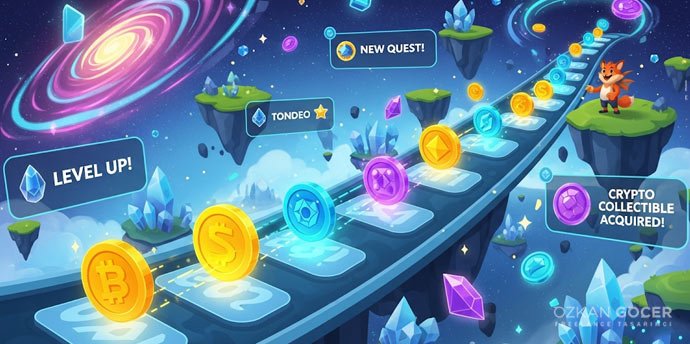
P2E games rest on GameFi logic, which combines gaming with decentralized finance. In-game assets (characters, cards, land) become yours as NFTs, and you earn the game's token for achievements and quests. You can buy and sell the tokens and NFTs you earn on a marketplace.
Most games build a two-part economy: a governance token and a separate token for in-game spending. Some games require you to buy an NFT before starting, which creates an entry cost. The sustainability of the economy depends on a flow of new players and control of the token supply.
The Best Play-to-Earn Crypto Games (Examples)
The games below are known examples that represent the genre; they are listed for information, not as a recommendation. Each has a different economy and risk, so research before you start.
- Axie Infinity: the genre's pioneer; it boomed in 2021, then earnings fell sharply.
- Gods Unchained: an NFT-based card game you can start for free.
- The Sandbox and Decentraland: virtual land and metaverse-focused games.
- Splinterlands: a low entry-cost, card-based P2E game.
- Pixels and Illuvium: newer-generation farming and adventure games.
Track a game's token, market cap, and volume on sources like CoinGecko and CoinMarketCap. Most P2E games run on Ethereum and similar networks; the rewards are far more volatile and risky assets than major coins like Bitcoin.
When you pick a game, look not only at its popularity but at the sustainability of its economy; token supply control, the active player count, and developer transparency are the key signals. A sustainable model ties earnings to real game value rather than to new players' money.
Many games that boomed and busted collapsed because they could not strike this balance; tokens were over-minted, rewards lost value, and most players beyond the early ones lost money. Looking at how a game's economy actually works, not its graphics, is the healthiest approach.
Free-to-Play P2E Games
Not every P2E game asks for an upfront payment; some let you start for free. Games like Gods Unchained, Splinterlands, and Pixels are good to try with low or zero entry cost.
Starting free is the smartest way to learn both the game and its economy without risking money. Whatever the earning promise, taking the first step with a free game is usually the right call.
Mobile and PC Play-to-Earn Games
On mobile, the phone version of Axie, Pixels, and similar games can be played from a phone. Recently, "tap-to-earn" games like Hamster Kombat and Notcoin, which claim you earn by tapping the screen, have spread widely.
Be cautious with these tap-to-earn games; most are built on airdrop expectation and ads rather than being a real game, and the value earned is usually very low. You often do not get back the value of the time you spend.
Can You Really Earn Money? (Which Games Pay Real Money)
The honest answer: some did, but most did not. During Axie Infinity's 2021 rise, a portion of players earned serious income, but earnings collapsed once the token supply inflated and the flow of new players slowed. In P2E economies, early entrants earned while most models proved unsustainable in the long run.
Be realistic: think of P2E as a side benefit of a game you enjoy, not a salary. Earnings depend on the market, the game's economy, and timing; do not trust get-rich-quick promises. None of this is investment advice, so do your own research (DYOR).
To put it concretely, in 2021 players in some countries earned meaningful income with Axie Infinity, but the same effort returned far less once the token price and the flow of new players fell. Because earnings are tied directly to a game's popularity and token price, they are highly volatile.
The healthy approach is to treat P2E as a side benefit of a game at most, not a steady income source. Tying rent or bills to a single game's token price means trusting a risk you cannot control.
The Risks of Play-to-Earn Games
P2E carries serious risks alongside the fun. The biggest danger is treating the game as an investment rather than a game; when the game's token or NFT loses value, the entry fee you paid melts away too.
- Entry cost: when expensive NFTs lose value, you take a loss.
- Token inflation: excessive token issuance lowers the value of earnings.
- Unsustainable economy: the model can collapse when new players stop arriving.
- Scams: fake games and rug pulls are common.
- Time-reward imbalance: the return on hours spent is often low.
How to Get Started with Play-to-Earn
The safe way to start goes through small, informed steps. You first set up a wallet like MetaMask, then choose a game with a solid reputation and a transparent economy. Where possible, start free and learn the game and its token flow without risking money.
- Set up a self-custody wallet (for example, MetaMask).
- Choose a transparent game with a strong reputation and community.
- Start free and learn the economy and gameplay.
- Understand how tokens and NFTs are earned and sold.
- Never invest money you cannot afford to lose.