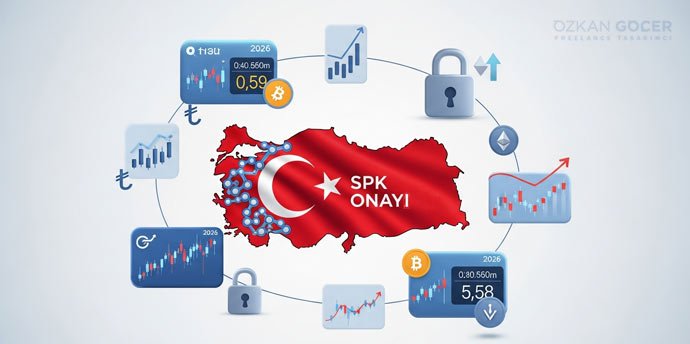
A legal crypto exchange is a platform that, under Turkey's Crypto Asset Law no. 7518, complies with Capital Markets Board (SPK) regulation and MASAK obligations, holding a license or being in the licensing process. Buying and selling crypto is not banned in Turkey; it is now regulated. Below you will find what "legal" means, how to check whether an exchange is licensed, the criteria for choosing a safe exchange, and the signs of a fraudulent platform. Regulation can change; confirm the current situation from official sources.
On this page
What Does "Legal Crypto Exchange" Mean? Regulation in Turkey
Buying and selling crypto is not banned in Turkey; it was regulated by Crypto Asset Law no. 7518, which took effect in 2024. The law placed crypto asset service providers (exchanges) under the supervision of the Capital Markets Board (SPK) and under anti-money-laundering (AML) and know-your-customer (KYC) obligations within MASAK's scope.
That is exactly what "legal crypto exchange" refers to: a platform that complies with these rules, holds a license or is in the licensing process, and is supervised. One point is often confused: what has been banned since 2021 is using crypto for payments, not buying, selling or investing. Because the legislation keeps developing, following the current situation from SPK's official sources is the safest path.
How Do You Check Whether an Exchange Is Legal/Licensed?
You can verify a platform's legality with a few concrete steps; being "large and popular" is not enough on its own.
SPK authorization: verify from official lists whether the exchange is under SPK regulation and licensed (or in the application process).
MASAK and KYC: legal exchanges run identity checks; be suspicious of a platform that asks for no identity at all. MASAK sits at the center of this oversight.
Presence in Turkey: a corporate office, Turkish legal documents (user agreement, data protection) and transparent company information.
Lira channels: depositing and withdrawing Turkish Lira through official banks.
The checks may look complex, but they take minutes and protect you from unlicensed platforms. When in doubt, confirm from an official source before trading; this content is not legal advice.
Local and Global Exchanges: Operating in Turkey
Local crypto exchanges (such as BtcTurk, Paribu and Bitlo) and Turkish versions of global exchanges (such as Binance TR) operate in Turkey; they offer Turkish Lira support and Turkish-language service. With the new regulation, platforms serving Turkey are expected to comply with SPK regulation and licensing.
I give the names as examples, not as recommendations; license status can change over time, so check the current list from an official source. When comparing which exchanges offer the best terms, my best crypto exchanges review gives a criteria-based view. On foreign-based platforms not registered in Turkey, the risk to legal protection and access can be higher.
Criteria for Choosing a Safe Exchange
Legality is the first condition, but not the only one. Choosing a safe exchange means weighing several criteria together; do not decide on a single feature.
Legal status: under SPK regulation, registered with MASAK.
Security: two-factor authentication (2FA), storing most funds in a cold (offline) wallet, and any past security breach.
Liquidity: high volume and easy buying and selling.
Support: Turkish Lira and Turkish-language support, fast customer service and reputation.
For account security, always turn on 2FA; I explained step by step how to set it up in my 2FA guide. Keeping large amounts in your own cold wallet instead of leaving them on an exchange for long is another security layer.
Which Crypto Exchange Is the Most Reliable?
There is no single "most reliable exchange" for everyone; the answer depends on your need and the current situation. The right way to find "the most reliable" is to compare the criteria above yourself (being legal, a strong security record, cold storage, high liquidity, Lira support, transparency).
An exchange being large or popular does not by itself mean "the safest"; even big exchanges have run into trouble in the past. Instead of keeping all your crypto on an exchange for long, storing large amounts in your own wallet, preferably a cold wallet, clearly reduces the risk. The decision is yours; I offer criteria, not a single exchange to push.
Warning About Unlicensed Platforms and Fraud
Unlicensed and fake platforms carry serious risk: your money can be stolen, you may not be able to withdraw, and you may find no legal protection. Recognizing a few warning signs protects you from most traps.
Guaranteed-profit promises like "X% a day" or "sure win"; no legitimate exchange does this.
Asking for no identity check (KYC) at all, or suspicious deposit methods (crypto-only or a personal account).
Vague company, address and license information.
Constant new "tax/commission" demands when you try to withdraw; a classic fraud pattern.
I detailed how to tell fake exchanges apart in a separate guide. Use only legal platforms under SPK regulation, do not give in to rushing pressure, and do not trade when something looks suspicious.
Crypto Tax, Declaration and Account Security (Turkey)
Taxation of crypto assets is a developing area in Turkey and is subject to current legislation; new laws and rules can affect tax and declaration obligations. If you trade, keeping records of your transactions (buy, sell, date, amount) makes things easier later.
Follow current obligations from the Revenue Administration; if you trade in high volume or in a commercial manner, consult a financial advisor. Because tax rules can change, do not act on the assumption that "last year it was like this". Do not neglect account security either: a strong password, 2FA and caution against phishing links are basic protection. The content is for information only; it is not investment or tax advice, so confirm the current situation from an official source.
FAQ
Frequently Asked Questions
Quick answers for readers who skipped to the end.
Are crypto exchanges legal in Turkey?
Yes, they are not banned but regulated. With Crypto Asset Law no. 7518, effective in 2024, crypto asset service providers came under SPK regulation and AML/KYC obligations within MASAK's scope. So a "legal crypto exchange" is a platform that complies with these rules and is supervised. Note: only using crypto for payments has been banned since 2021, not buying and selling. The legislation is developing; confirm the current situation from SPK's official sources.
How do I know an exchange is legal/licensed?
To check: (1) SPK authorization; verify from official lists whether the exchange is under SPK regulation and licensed (or applying). (2) MASAK registration and KYC; legal exchanges run identity checks, so be suspicious of any that ask for none. (3) A Turkish office and Turkish legal documents. (4) Turkish Lira through official bank channels. These checks are the basis of protecting yourself from unlicensed and fraudulent platforms. When in doubt, confirm from an official source.
Which crypto exchanges operate in Turkey?
Local exchanges (BtcTurk, Paribu, Bitlo) and Turkish versions of global exchanges (Binance TR) operate in Turkey; they offer Turkish Lira and Turkish-language support. With the new regulation, platforms are expected to comply with SPK regulation and licensing. These names are examples, not recommendations, and license status can change; check the current list from SPK's official sources. On foreign platforms not registered in Turkey, the risk can be higher.
What should I look at when choosing a safe crypto exchange?
Criteria: legal status (under SPK regulation, MASAK-registered), security (2FA, storing funds in cold wallets, any past breach), fund safeguards, liquidity/volume, fee transparency, Turkish Lira and Turkish-language support, reputation and customer service. No single criterion is enough; weigh them together. Storing large amounts in your own cold wallet rather than leaving them on an exchange for long adds security. This content is not advice.
Which crypto exchange is the most reliable?
There is no single "most reliable exchange" for everyone; the answer depends on your need and the current situation. The right way is to compare the criteria above yourself (being legal, a security record, cold storage, liquidity, Lira support, transparency). An exchange being large or popular does not alone mean "the safest"; even big exchanges have had trouble before. Storing large amounts in your own cold wallet adds security. I do not recommend a specific exchange; I offer criteria.
How do I protect myself from unlicensed or fraudulent platforms?
Warning signs: guaranteed-profit promises ("X% a day", "sure win"); asking for no KYC or suspicious deposit methods; vague company, address or license information; "special opportunity" platforms pushed by strangers on social media; constant new "tax/commission" demands when you withdraw. To protect yourself, use only legal platforms under SPK regulation, do not give in to rushing pressure, and do not trade when something looks suspicious.
Are crypto gains taxed in Turkey, and is declaration required?
Crypto taxation is a developing area in Turkey and subject to current legislation; new laws and rules can affect tax and declaration obligations. Keep records of your transactions (buy/sell, date, amount), follow current obligations from official sources (Revenue Administration/SPK), and consult a financial advisor for your specific case (especially high volume or commercial activity). Because rules can change, do not assume "last year it was like this". This is not tax or legal advice; confirm the current situation.
What are legal crypto apps?
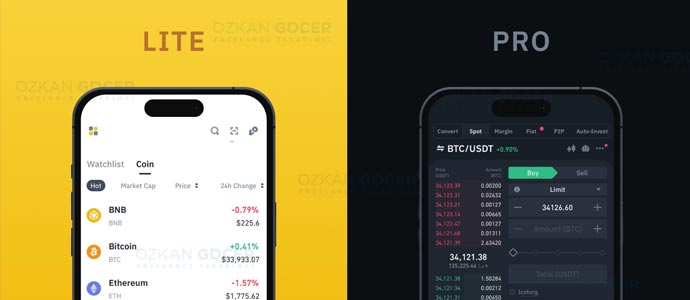
A "legal crypto app" is the official mobile app of a provider compliant in Turkey (under SPK regulation, MASAK-registered); that is, the app of a legal exchange. To identify one, verify the license status of the company behind the app and download it only from the official store and the correct developer account (fake apps are common). Portfolio trackers are a different category since they do not trade. Legality relates less to the app itself and more to the regulatory status of the provider behind it.
Which is better, a local or a global crypto exchange?
Both have advantages, and "better" depends on your need. Local exchanges usually offer strong Turkish Lira and Turkish-language support, local bank integration, and being directly subject to Turkish regulation. Global exchanges can offer a wider crypto range, high liquidity and advanced features, but their legal status in Turkey and Lira support vary by platform. The most important measure, whichever you pick, is that the platform is legal, licensed and safe in Turkey. Compare and decide by your priorities.
Should I keep my crypto on an exchange or in my own wallet?
It is an important security decision. Keeping it on an exchange is practical (easy trading, password recovery), but the keys stay with the exchange; there is risk if it is hacked or restricts access. Keeping it in your own wallet (especially cold/hardware) gives you control and removes exchange risk, but security is fully yours (if you lose the recovery phrase, the money is gone). A common approach: keep a small active amount on an exchange and a large long-term amount in your own secure wallet. Whichever you choose, take security seriously (2FA, protecting your recovery phrase).
First published:
Share:
Summarize:
Özkan Göçer
Growth Engineer & Digital Marketing Specialist
Özkan Göçer is a growth engineer working across web development, brand design and search marketing, with an additional focus on Web3 community and marketing strategy.
Please fill out the required field.Please enter a valid email address.Please write at least %d characters.Please complete the security check.Submission failed. Please try again later.!Got it, thank you!Your request has been successfully received. I will review your project details and get back to you within 24 hours.%1$d / %2$d characters
Contact
How can I help with your project?
Tell me about it in 3 quick steps: I will get back to you within 24 hours with a custom strategy.
Step 1 / 3 · What do you need?
Step 2 / 3 · Project details
0 / 4000
Step 3 / 3 · How to reach you
By sending your message, you agree that you have read the Privacy Notice.
Reply time: within 24 hours
We use cookiesWe use cookies to improve your experience and for anonymous statistics. See our Cookie Policy