What Is Liquidity? (Simple Definition)
Liquidity is the financial concept that expresses how quickly and without losing value an asset can be turned into cash (money). The more easily and quickly an asset is sold and turned into money, the more "liquid" it is.
The most liquid asset is cash itself, because it is already money; you do not need to convert it into anything to use it. Conversely, assets that take a long time to sell or lose value when sold fast are not liquid (illiquid). The concept matters for personal finance (how quickly you can reach your money), for businesses (the power to pay short-term debts) and for markets (being able to buy and sell an asset easily); you can also see its international definition on Investopedia. In short, liquidity means "ease of convertibility into money".
An Everyday Example of Liquidity
The clearest example is comparing cash with real estate. The cash in your wallet is fully liquid; you can spend it instantly. The money in your bank account is also very liquid, easily withdrawn. Now think of a house: a house is a valuable asset but not liquid, because selling it can take weeks or months; if you must sell in a hurry, you usually sell below its value.
A car is also less liquid than cash. Gold is a bit less liquid than cash but more liquid than a house (relatively easy to sell). So the ranking is roughly this: cash (most liquid), bank deposits, gold or stocks, a car, and last a house or land (least liquid). The example shows the essence of liquidity: even if something has high value, if it cannot be turned into money quickly and without loss, its liquidity is low.
Liquid and Illiquid Assets
We can rank assets by their liquidity in three groups:
- Highly liquid: cash (most liquid), demand bank deposits, foreign currency and actively traded stocks.
- Mid liquid: gold and precious metals, time deposits (restricted until maturity).
- Low liquid (illiquid): real estate (house, land, shop), vehicles, art, private company shares.
The same logic applies in businesses: cash and receivables count as liquid assets, while fixed assets like machinery and buildings count as illiquid. A healthy financial position requires balancing value-building but possibly illiquid assets with enough liquid assets for urgent needs.
What Is the Liquidity Ratio and How Is It Calculated?
The liquidity ratio, especially in the business and accounting world, is an indicator measuring a company's power to pay its short-term debts. Its logic is simple: are the company's short-term convertible assets enough to cover its short-term debts?
The basic liquidity ratio (current ratio) is found by dividing current assets by short-term debts; if the result is above 1, the company has assets to cover its short-term debts. A stricter measure, the acid-test ratio, leaves out inventory that can take time to sell; the strictest measure, the cash ratio, considers only cash and equivalents. You can examine how the current ratio is calculated in international sources too. When interpreting, comparing with sector averages and the company's history matters; a single ratio alone is not enough.
Market and Exchange Liquidity: What Does "Being Liquid" Mean?
Market liquidity shows how easily an asset (for example a stock) can be bought and sold without affecting its price much. If a stock is liquid, there are many buyers and sellers; you trade quickly at a reasonable price whenever you want. Its measure is usually trading volume: high-volume assets are liquid, and you can separately examine market liquidity criteria.
An illiquid stock, on the other hand, trades little; when you want to sell, there may not be enough buyers, so you either wait or lower the price. In high liquidity the gap between buy and sell prices (spread) is small, and trades are fast and fair; in low liquidity prices are more volatile and large orders can move the price sharply. For an investor, liquidity is the answer to "can I exit my position whenever I want". Investment decisions are personal; here I give general information, not advice.
Liquidity in Crypto and Forex
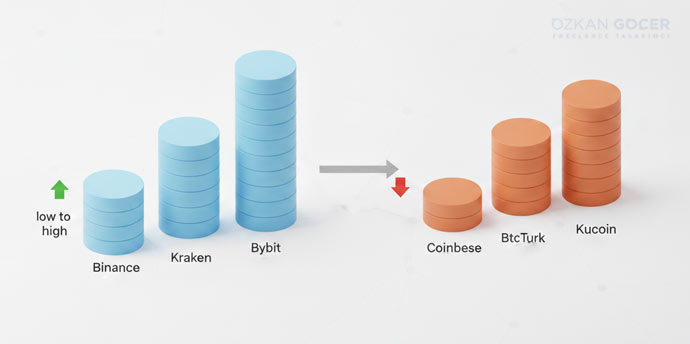
The same basic logic applies in these markets too, but they have their own aspects. The forex (currency) market is one of the most liquid in the world; major currencies are bought and sold instantly with a narrow spread thanks to huge trading volume. On the crypto side, liquidity varies a lot by coin and exchange: large cryptos like Bitcoin and Ethereum are usually liquid, but small and little-known altcoins can have low liquidity; that carries the risk of not finding a buyer when selling, or of the price dropping sharply.
The crypto world also has the concept of a "liquidity pool": a system where, on decentralized exchanges (DEX), users provide liquidity for trading by putting their assets into a pool. A commonly confused term is "getting liquidated" (liq); it is not the same as being liquid. "Getting liquidated" means that in leveraged (borrowed) trades, when the price moves against you, your position is forcibly closed (liquidation), which results in serious loss. Low-liquidity crypto assets are both more volatile and more open to manipulation; what I write is not investment advice.
What Happens If Liquidity Rises or Falls?
Liquidity being high or low affects both markets and the economy. When liquidity is high, buying and selling is easier, trades are fast, the spread narrows and prices are usually more stable; an investor can enter and exit at a reasonable price whenever they want. When liquidity is low, buyers and sellers are few, selling gets harder, prices become more volatile, and the risk of losing value in an urgent sale rises.
On the broader economic scale, market liquidity (the abundance of money and credit in circulation) is linked to central bank policies: abundant liquidity usually supports spending and investment, but too much can create inflation pressure; a liquidity shortage can slow the economy. The summary for an investor: high liquidity means flexibility and safety, while low liquidity means risk and volatility. When entering an asset, thinking about how easy the exit will be (its liquidity) matters too. I covered the basics of the crypto market in my cryptocurrency article.