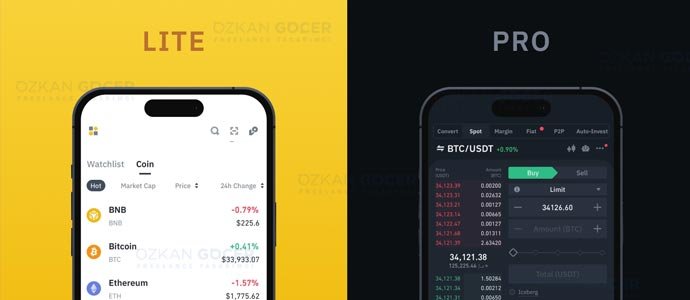
This guide compares 11 platforms by use case, fee scope and the questions that matter before you deposit. It is not a trading-volume ranking, and no numerical safety scores have been assigned. The international comparison differs from the Turkish edition, which also examines Binance TR, BtcTurk Kripto and Paribu for local bank transfers.
Sources checked: 13 September 2026. The assessment uses official fee schedules, regulatory documents and disclosed security incidents. It does not include account-opening, live-trade or customer-support response-time tests. The agreement and confirmation screen applicable to your account remain the final checks for eligibility, pricing and withdrawals.
Which crypto exchange fits your needs?
Build a shortlist around the transaction you actually intend to make. Someone buying Bitcoin monthly and withdrawing it to a personal wallet needs a different comparison from an active trader using multiple spot markets.
- Regular spot trading: compare Binance and OKX's standard spot schedules with Kraken Pro's volume and asset-based tiers. Check order-book depth for your particular pair and order size.
- Bank-funded purchases: compare the banking route, total purchase quote and withdrawal conditions at Coinbase, Gemini and Bitstamp. Eligibility depends on your country and the legal entity serving you.
- A specific altcoin: examine the pair, fee class and withdrawal network on KuCoin, Gate, Bybit or Bitget. A long listing catalogue does not establish liquidity or the quality of a token.
- An app and an exchange under one brand: with Crypto.com or Coinbase, identify the product before comparing prices. An exchange order-book schedule does not automatically describe a simple-buy app.
Using several exchanges can reduce dependence on one platform, but it also adds accounts, transfers and recovery procedures to manage. More accounts are useful only when they solve a clear funding, market-access or custody need.
If you expect to trade mainly on your phone, distinguish an exchange account from a wallet app whose private keys you control. The best cryptocurrency apps guide brings mobile options together. When choosing, evaluate order entry, fee displays and withdrawals for the specific product and account type you will use.
11 cryptocurrency exchanges compared
Fees below are shown as maker / taker. A maker adds liquidity to the order book; a taker removes existing liquidity. Figures describe the stated entry tier without token-payment discounts or special promotions. Different products and pair categories should not be treated as identical services.
Scroll sideways to read every column. Keyboard: focus the table and use the arrow keys.
| Platform / product | Reason to compare | Spot maker / taker | Conditions and source |
|---|---|---|---|
| Binance | International spot markets | 0.10% / 0.10% | Regular User, standard spot, before BNB discounts. Not Binance TR or Binance.US. Official schedule. |
| OKX | Standard spot pricing | 0.08% / 0.10% | Regular User, Spot/Standard. Special pairs and regional services differ. Official schedule. |
| Kraken Pro | Order-book trading and fee tiers | 0.40% / 0.80% | Spot Crypto, Tier 1. Instant Buy and stablecoin schedules differ. Official schedule. |
| Coinbase | Product and corporate disclosures | Product-specific | Exchange: 0.40% / 0.60% at $0–10,000 volume. This is not an Advanced or simple-buy quote. Exchange fees. |
| Bybit | Crypto-to-crypto spot trading | 0.10% / 0.10% | VIP 0 crypto-to-crypto; fiat pairs, special zones and regional terms differ. Official schedule. |
| Bitget | Separating spot costs from extra products | 0.10% / 0.10% | Standard spot, before BGB discounts. Copy-trading terms require a separate check. Official fee explanation. |
| KuCoin | Altcoin fee classes | 0.10% / 0.10% | VIP 0 Class A; Class B: 0.20% / 0.20%; Class C: 0.30% / 0.30%. Official schedule. |
| Gate | Specific altcoin and withdrawal access | Check your account | The current global entry rate could not be verified during this review; excluded from numerical fee ranking. Official tiers and fees. |
| Gemini ActiveTrader | Order-book purchases and tier conditions | 0.60% / 1.20% | Entry tier; higher tiers may depend on volume or assets. Other Gemini interfaces differ. Official schedule. |
| Crypto.com Exchange | Exchange pricing versus the App | 0.25% / 0.50% | Level 1, under $10,000 volume, without CRO benefits. Not an App purchase quote. Official schedule. |
| Bitstamp | Banking routes and standard spot pairs | 0.30% / 0.40% | Under $10,000 in 30-day volume, standard pairs. Separate FX/stablecoin categories apply. Official schedule. |
A lower figure does not necessarily mean a cheaper purchase. Funding charges, currency conversion, execution price and withdrawal fees affect the amount that reaches your destination wallet. Confirm that the schedule belongs to the entity and product available in your country.
What to examine on each platform
Binance: compare the actual pair, not aggregate volume
For a spot-trading shortlist, inspect the order book for the pair you intend to use. A platform's overall trading activity does not establish how much liquidity is available near the displayed price of a smaller token. Token-based fee discounts should also be assessed separately from the price risk of holding that token.
A protection fund such as SAFU should not be read as universal insurance for every customer loss. Identify the covered entity, assets and events before relying on a fund or reserve statement. Market losses and platform incidents are different risks.
OKX: distinguish the exchange, regional service and wallet
If you are considering a wallet separate from your exchange account, the hot wallet comparison and safety guide explains who controls the keys and which types of use should be compared.
OKX's standard spot pricing makes it relevant to an active-trading comparison. Its centralized account, regional entities and Web3 wallet involve different arrangements. A wallet transaction on a blockchain is not the same service as an exchange holding funds for you.
Country restrictions need current checks. OKX announced its US service on 16 April 2025; the older blanket claim that all US users are excluded is therefore misleading. That launch does not make every global product available in the United States or elsewhere.
Kraken Pro: your tier matters more than the lowest advertised rate
Kraken separates Instant Buy from Pro order-book trading. A new account's spot cost differs from a tier reached through trading volume or assets held on the platform. Compare the tier you qualify for today, rather than the lowest figure at the bottom of a schedule.
Reserve verification is one input into custody assessment. It does not eliminate account compromise, operational disruption or future withdrawal risk. Avoid treating a platform's security reputation as a guarantee that no incident can occur.
Coinbase: identify the product before using its fee table
Coinbase Exchange publishes an institutional trading schedule. It should not be used as a universal price for Coinbase Advanced or simple purchases. Check the relevant interface and account terms, including any spread or payment-method charges.
Public-company reporting is useful context, but does not prevent customer-data breaches. Coinbase's 15 May 2025 disclosure described insiders providing access to some customer information. Treat unexpected support calls and requests to transfer funds to a supposedly safe wallet as separate security risks.
Bybit: include the incident record in your decision
Bybit's crypto-to-crypto spot schedule differs from fiat-pair pricing and derivatives. Choosing an exchange for spot purchases does not require using leverage, which introduces liquidation and other risks beyond holding an asset outright.
The FBI reported approximately $1.5 billion stolen from Bybit around 21 February 2025. Scale and reserve disclosures are not reasons to exclude that event from a security assessment. Read current custody and withdrawal arrangements alongside the historical record.
Bitget: automation does not remove trading risk
Separate standard spot fees from token discounts and additional product terms. If you use copy trading, examine position sizing, any profit-sharing arrangement, execution differences and how positions are closed.
Copying another trader does not ensure the same entry price or repeat their past performance. A large collection of automated tools adds value only if you understand how the selected tool can lose money and how to stop it.
KuCoin: check the token's fee class
If you plan to automate orders, the crypto trading bots comparison covers software subscriptions, supported exchanges and API permissions. Using a bot does not remove exchange trading fees or trading risk.
KuCoin's Class A, B and C structure means that one headline percentage cannot describe every spot market. Identify the base asset's class before placing an order. A bot with no separate subscription charge can still generate trading fees each time it buys or sells.
Legal history also deserves attention. The US Department of Justice's 27 January 2025 announcement records a guilty plea by operator Peken Global Limited to unlicensed money transmission. This does not establish the present licensing status of every company using the brand in other countries.
Gate: verify that you can exit the market
When investigating a particular altcoin on Gate, check the order book, supported withdrawal network and current transfer status. A visible price chart does not prove that enough buyers exist for your order or that withdrawals are currently available.
The current global entry fee was not independently verified in this review, so the earlier numerical claim has been removed. Check your account's spot tariff, any token discount and the withdrawal charge together. Regional Gate entities should be assessed under their own terms.
Gemini ActiveTrader: compare the interface you will use
Gemini ActiveTrader has its own fee schedule. The entry tier is not the same as a discounted tier reached through volume or assets, and the schedule should not be applied to every Gemini purchase interface.
If you intend to buy periodically and withdraw, compare funding plus the final amount delivered to your wallet. For occasional small purchases, an otherwise convenient banking route can be offset by a withdrawal charge that is large relative to the order.
Crypto.com: the App and Exchange are different cost comparisons
The Crypto.com Exchange rate in the table refers to order-book spot trading without CRO benefits. It does not describe an all-in quote in the Crypto.com App. Determine which product is available to your account before using that percentage.
Token-linked benefits should be evaluated against the conditions required to receive them. Holding or locking a token introduces exposure beyond the purchase you originally planned. A discount has to be worthwhile for your actual trading volume.
Bitstamp: standard pairs and stablecoin categories differ
Bitstamp's schedule separates standard trading from specified FX and stablecoin categories. A reduced rate for one category should not be presented as the normal fee for every Bitcoin purchase. The schedule also distinguishes bank transfers, instant purchases and crypto withdrawals.
Use the funding method you can actually access when comparing it with another exchange. A low-cost bank transfer route is relevant only when your country, bank and account qualify for it; a card purchase is a different transaction.
How to assess a trustworthy crypto exchange
Look for a clear contracting entity, understandable custody terms, verifiable financial information, a documented incident record and a usable withdrawal route. These address different risks. A token can fall sharply in price even when the exchange functions as intended.
Scroll sideways to read every column. Keyboard: focus the table and use the arrow keys.
| Evidence | What to check | What it does not establish |
|---|---|---|
| Proof of Reserves | Entity, date, included assets and whether your balance is included | Complete corporate solvency or uninterrupted future withdrawals |
| Financial statement audit | Entity, period, scope and the auditor's opinion | A guarantee covering every transaction or future event |
| Insurance | Insured party, limits, covered events, exclusions and claims process | Automatic reimbursement of every customer's balance or trading loss |
| Protection fund | Governance, assets, coverage and payment conditions | Deposit insurance or an unconditional promise to repay all losses |
| Regulatory registration or permission | Exact company, country, activity and current status | Authorization for every company and product under the same brand |
The PCAOB investor advisory on reserve reports explains why PoR should not be equated with a financial statement audit. A reserve ratio needs context: what was measured, which obligations were included and when the snapshot was taken. A global report should not automatically be extended to all obligations of a local subsidiary.
Likewise, not finding a report of an attack does not prove that an exchange has never experienced one. Review the disclosed event, customer impact and response, rather than awarding a safety label based on brand familiarity.
How to choose the best Bitcoin exchange
If your goal is to buy Bitcoin, hundreds of altcoins and advanced derivatives may contribute little to the decision. Focus on the currency you start with, the execution price and the route by which actual BTC reaches your wallet.
- Compare equivalent routes. A direct BTC purchase and a purchase through an intermediate stablecoin can involve different fees, spreads and conversion exposure.
- Use the same amount and time. The last traded price is not necessarily the price available for your full order. Check the quote or order-book estimate for your amount.
- Verify the asset and network. A token tracking Bitcoin on another blockchain is not the same transfer as native BTC on the Bitcoin network.
- Check wallet compatibility. A Bitcoin address and a Lightning payment request are not interchangeable. A cheaper network is useful only when the receiving wallet supports it.
- Include the withdrawal minimum and fee. A fixed BTC charge has a greater proportional effect on a small withdrawal than on a larger one.
For example, a hypothetical withdrawal fee of 0.00005 BTC equals 5% of a 0.001 BTC transfer amount, but 0.5% of 0.01 BTC. This is arithmetic, not a quoted fee for every exchange. It shows why small recurring purchases require a withdrawal plan as well as a trading-fee comparison.
Compare total cost, not just the trading commission
For a side-by-side look at fee schedules, see the crypto exchange commission rates comparison. Match the trading pair and volume tier, and distinguish trading fees from conversion and withdrawal costs.
The most useful result is the net amount received at the same destination for the same starting budget. Funding fees, currency conversion, execution price and withdrawals can outweigh a small commission advantage.
Consider an illustrative $1,000 trade before fees. A 0.10% commission costs $1; 0.15% costs $1.50. The difference is $0.50. If the cheaper-fee platform executes 0.20% worse against the same reference price, the approximately $2 price disadvantage is larger than that saving. Actual results depend on where the fee is deducted and the amount received.
Do not count the same transfer expense twice. If an exchange withdrawal charge already includes its network cost, adding another gas charge to that transaction overstates the cost. A later transaction sent from your own wallet may incur a separate network fee.
A limit order is not always a maker order. A limit that immediately matches existing liquidity can incur a taker fee. Where supported, post-only helps prevent taker execution, but an order that would immediately match may be cancelled. Kraken's maker/taker explanation describes this distinction. A lower fee is not helpful if you accept an unwanted price or misunderstand execution risk.
Country eligibility and Turkish transfer rules
For more detail on transfer timing and amount limits in Türkiye, see the crypto withdrawal limits and waiting period guide. Read the scope below alongside the conditions that apply to your own platform account.
Read the legal entity named in your agreement and the services it may provide where you live. A familiar brand, translated website or available app is not sufficient proof of eligibility. Never assume that a local subsidiary and the global exchange have identical accounts, products or protections.
For users in Türkiye, the SPK list of operating crypto service providers explicitly says inclusion does not itself constitute authorization. Check the exact company and current permission separately. A completed TRY bank deposit also does not establish that an external crypto withdrawal can proceed immediately.
MASAK's waiting provisions concern relevant transfers involving unhosted wallets or overseas institutions without sender/recipient information-sharing requirements: at least 48 hours after purchase, exchange or deposit; at least 72 hours for the first crypto withdrawal. KYC completion alone is not the starting point.
Stablecoin withdrawals have $3,000 daily and $50,000 monthly limits, with conditional doubling under the Travel Rule. Check scope and exceptions in the official MASAK guide and your platform's implementation.
A checklist before your first deposit
The crypto asset security checklist provides a separate review of account access, devices, recovery information and transaction permissions. Apply the checks to the exchange account or personal wallet you will actually use.
- Verify the official domain and app publisher. A sponsored result or unsolicited message does not establish authenticity; review these signs of a fake exchange.
- Read the contracting entity, country restrictions, account closure terms and withdrawal conditions before funding.
- Use a unique password and strong supported authentication. Complete two-factor authentication setup with recovery arrangements.
- Check the pair, fee tier, withdrawal network, minimum amount and any requirement to use a bank account in your own name.
- For a new destination, consider a small test transfer that meets minimums and accounts for fees. A successful test verifies that transfer, not every future withdrawal.
- Separate active-trading needs from longer-term custody. If considering a personal hardware wallet, compare cold wallet models and understand recovery-phrase responsibilities first.
Choose between your shortlisted platforms using the full purchase and withdrawal route. When costs are similar, an understandable process and verifiable access to your funds may matter more than an extra feature. This comparison supports platform research; it does not recommend purchasing a particular asset or promise returns.