A fake crypto exchange is a scam built to look like a real platform while actually stealing your money. Below you will find 7 red flags, how to verify an exchange through MASAK/SPK, common fraud types, the "I can't withdraw" trap, what to do step by step if you have been scammed, and the rules for protecting yourself. What follows is not investment advice but a protection guide.
On this page
What Is a Fake Crypto Exchange and Why Is It Dangerous?
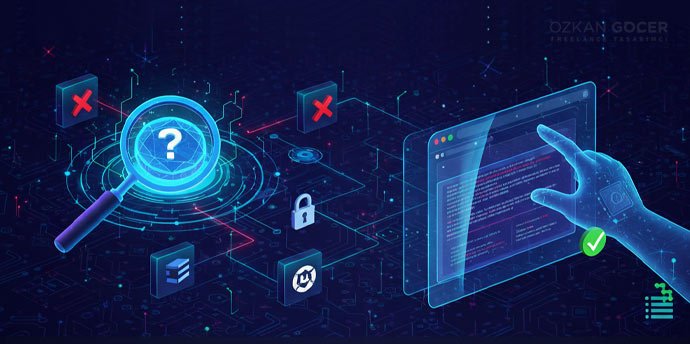
A fake crypto exchange is a fraud system that looks like a real cryptocurrency trading platform but is actually set up to steal people's money. It usually appears as a professional-looking website or app; it closely resembles real exchanges, and sometimes even imitates the name and logo of a well-known exchange (a clone site).
Here is how it works: it convinces you to deposit money with high profit promises, shows fake "profits" in your account (it looks like money is growing on screen, but it is not real), then blocks you when you want to withdraw; it asks you to pay an extra "tax", "commission" or "penalty" and finally disappears with all your money. It is dangerous because losses are usually large, very hard to recover, and the scammers often operate from abroad and anonymously. So before depositing money into an exchange, understanding whether it is real is extremely important.
The 7 Red Flags of a Fake Exchange
As a digital marketer, I see up close how convincingly fake crypto ads are designed. If even one of the red flags below is present, be very careful:
Unrealistic returns: promises like "guaranteed profit", "X percent daily gain", "double your money". Real investment has no guaranteed profit.
Pressure and urgency: language that pushes you to act without thinking, like "deposit now, the chance is slipping", "last X hours".
Blocked withdrawals: depositing is easy but, when you try to withdraw, constant obstacles or extra payments appear (the strongest sign).
No license: regulatory registration or license information is missing or cannot be verified.
Clone or fake address: the address closely resembles a well-known exchange but has small differences; it reaches you via an email or ad link.
Strange communication: an "advisor" or "tip" given over WhatsApp or Telegram.
Fake reviews and reputation: exaggerated, identical positive comments; claims of celebrity or "approved" status.
If the signs add up, do not deposit money. A real platform never rushes you and never blocks you from withdrawing your money.
How Do You Verify a Reliable Exchange? (MASAK/SPK)
Giving you a single "most reliable exchange" name would not be right; that becomes product advice and varies by person. Instead, it is far more valuable to learn how to check an exchange's reliability yourself:
License and registration: in Turkey, crypto asset service providers must be registered with MASAK and, under the 2024 regulation, are subject to oversight by the Capital Markets Board (SPK). Confirm from official sources whether the exchange holds this registration.
Company information: are the name, address and history of the company running the exchange clear and verifiable?
Reputation and track record: has it existed for a long time in independent sources, and does it have a history of serious complaints?
Security: two-factor authentication (2FA), transparent fees, clear terms of use.
Official channel: download the app only from the official site or official app store; do not trust an ad or message link.
The summary question is this: not "which is best" but "is this platform licensed and verifiable". I compiled the exchanges that operate legally and have an office in Turkey in a separate article.
Common Types of Crypto Fraud
Knowing the mechanisms is half of protection. Let us group the most common fraud types under three headings.
Pig Butchering and Romance Scams
In pig butchering, the scammer first builds friendship and trust over social media or messaging, then directs you to a fake exchange as "a platform that earns a lot"; they slowly "fatten" the victim and make them invest big and lose it. Romance scams build an emotional relationship on a dating app or social media and ask for money under the excuse of "let us invest together". Never trust investment tips from someone you do not know.
Phishing and Fake Giveaways
In phishing, a fake email or site tries to steal your login details or your wallet recovery phrase (seed phrase); Kaspersky's guide explains phishing types well. Fake giveaways work with the logic of "send X crypto, get double back", usually imitating a celebrity or company name. No real campaign asks you to send money first.
Rug Pull
In a rug pull, a fake project or coin is launched, money is collected from investors, and the founders suddenly run away; the coin becomes worthless. The risk is high in new and unknown projects. I addressed these traps one by one in my guide to protecting your crypto assets.
'I Can't Withdraw': The Pay-a-Fee/Tax Trap
Not being able to withdraw and being told to "pay a commission or tax first" is the clearest stage of fake exchange fraud; it is an almost certain sign of a scam. The scenario works like this: you deposit money into the platform, your account grows on screen as if it is "making a profit", and you get excited. When you try to withdraw, obstacles suddenly appear: "pay X percent tax first", "deposit a commission to activate the account", "collateral is needed for withdrawal".
The goal is to squeeze more money out of you; as you make these extra payments, new ones appear and in the end you withdraw nothing. A reminder: a real exchange does not ask you to pay tax or commission in advance to withdraw your money; any fee is deducted directly from the transaction. If someone asks for extra money so you can withdraw your funds, stop and make no further payment, because you will lose that money too.
What to Do Step by Step If You Have Been Scammed
Stay calm and act fast. Here is what you should do, in order:
Stop immediately: deposit no more money; do not fall for those asking for "one last payment for recovery", because that is a separate trap.
Keep the evidence: do not delete the messages, receipts, wallet addresses, and site and app screenshots.
Notify your bank: if the money went via a bank or card, call your bank at once; in some cases the transaction can be stopped.
File an official complaint: file a criminal complaint with the Public Prosecutor's Office; you can also apply to the Cybercrime units.
Protect your accounts: change your passwords, enable 2FA, and update anywhere you used the same password.
The bitter truth: recovering money in crypto fraud is often hard, but early reporting and collecting evidence raise the odds. Do not feel ashamed; it is a very common and professionally staged crime, and the criminal is the scammer, not you.
Golden Rules for Protecting Yourself
The basic rules for protecting yourself are clear:
"Guaranteed or high profit" is a trap; no real investment promises guaranteed wealth.
Resist being rushed; pressure is the scammer's biggest weapon.
Do not trust the tip or link of someone you do not know.
Verify the exchange; use only licensed platforms accessed from official addresses.
Do not share your recovery phrase (seed phrase) or passwords with anyone.
I explained in detail why the recovery phrase is the only key to your money in my seed phrase article. A reminder: what I write is not investment advice; crypto is already volatile and risky, and fraud risk is added on top. The best protection is not rushing, verifying, and approaching every "too good to be true" offer with suspicion.
FAQ
Frequently Asked Questions
Quick answers for readers who skipped to the end.
What is a fake crypto exchange and why is it dangerous?
A fake crypto exchange is a fraud system that looks like a real cryptocurrency trading platform but is actually set up to steal people's money. It usually appears as a professional-looking website or app; it closely resembles real exchanges and sometimes even imitates the name and logo of a well-known exchange (a clone site). How does it work? It convinces you to deposit money with high profit promises, shows fake "profits" in your account (it looks like money is growing on screen, but it is not real), then blocks you when you want to WITHDRAW; it asks you to pay an extra "tax", "commission" or "penalty" and finally disappears with all your money. It is dangerous because losses are usually large, very hard to recover, and the scammers often operate from abroad and anonymously. So BEFORE depositing money into an exchange, understanding whether it is real is extremely important.
What signs tell me a crypto exchange is fake?
If even one of these RED FLAGS is present, be very careful: (1) UNREALISTIC RETURNS, promises like "guaranteed profit", "X percent daily gain", "double your money". Real investment has no guaranteed or high profit. (2) PRESSURE and URGENCY, language that pushes you to act without thinking, like "deposit now, the chance is slipping", "last X hours". (3) BLOCKED WITHDRAWALS, depositing is easy but, when you try to withdraw, constant obstacles or extra payments appear (the strongest sign). (4) NO LICENSE, regulatory registration or license information is missing or cannot be verified. (5) CLONE or FAKE ADDRESS, the address closely resembles a well-known exchange but has small differences; it reaches you via an email or ad link. (6) STRANGE COMMUNICATION, an "advisor" or "tip" given over WhatsApp or Telegram. (7) FAKE REVIEWS and REPUTATION, exaggerated, identical positive comments; claims of celebrity or "approved" status. If the signs add up, do not deposit money; a real platform never rushes you and never blocks you from withdrawing.
How do I verify a reliable crypto exchange?
Giving you a single "most reliable exchange" name would not be right (that becomes product advice and varies by person); instead, it is far more valuable to learn how to check an exchange's reliability YOURSELF: (1) LICENSE and REGISTRATION, in Turkey crypto asset service providers must be registered with MASAK and, under the 2024 regulation, are subject to oversight by the Capital Markets Board (SPK). Confirm from official sources whether the exchange holds this registration and license. (2) COMPANY INFORMATION, are the name, address and founding history of the company running the exchange clear and verifiable? (3) REPUTATION and TRACK RECORD, has it existed for a long time in independent sources, and does it have a history of serious complaints or fraud? (4) SECURITY, two-factor authentication (2FA), transparent fees, clear terms of use. (5) OFFICIAL CHANNEL, download the app only from the official site or official app store, from the correct address. In short: ask not "which is best" but "is this licensed and verifiable".
What are the most common types of crypto fraud?
Knowing the mechanisms is half of protection. The most common ones: (1) PIG BUTCHERING, the scammer first builds friendship and trust over social media or messaging, then directs you to a fake exchange as "a platform that earns a lot"; they slowly "fatten" the victim and make them invest big and lose it. (2) ROMANCE scams, building an emotional relationship on a dating app or social media and asking for money under the excuse of "let us invest together". (3) PHISHING, a fake email or site tries to steal your login details or wallet recovery phrase (seed phrase). (4) FAKE GIVEAWAYS, "send X crypto, get double back", usually imitating a celebrity or company name. (5) RUG PULL, launching a fake project or coin and running away after money is collected. (6) FAKE APPS or mining, apps imitating real exchanges or "cloud mining" promises. The common point: all of them involve rushing, promises of high or guaranteed profit, and trust manipulation. Never trust investment tips and links from someone you do not know.
I deposited money but can't withdraw, they say "pay commission/tax", what does it mean?
This is the CLASSIC and clearest stage of fake exchange fraud, an almost certain sign of a scam. The scenario works like this: you deposit money into the platform, your account grows on screen as if "making a profit", and you get excited. When you try to withdraw, obstacles suddenly appear: "you must pay X percent tax first", "deposit a commission to activate the account", "collateral is needed for withdrawal". The goal is to squeeze MORE money out of you; as you make these extra payments, new ones appear and in the end you withdraw nothing. IMPORTANT: a real exchange does not ask you to "pay tax or commission in advance" to withdraw your money (any fee is deducted directly from the transaction). If someone asks for extra money so you can withdraw your funds, STOP, make no further payment, because you have no chance of getting that money back and you will lose the new amount too. At this point the thing to do is not to keep paying but to document the situation and apply to the authorities.
I was scammed through crypto, what should I do?
Stay calm and act fast: (1) STOP IMMEDIATELY, deposit no more money; do not fall for those asking for "one last payment for recovery or withdrawal" (that is a separate trap). (2) CUT CONTACT but do not delete, keep the messages with the scammer, transaction receipts, wallet addresses, and site and app screenshots as EVIDENCE. (3) NOTIFY YOUR BANK, if the money went via a bank or card, call your bank at once and report it; in some cases the transaction can be stopped. (4) OFFICIAL COMPLAINT, in Turkey file a criminal complaint with the Public Prosecutor's Office; you can also apply to the Cybercrime units of the police or gendarmerie. (5) PROTECT YOUR ACCOUNTS, your information may be compromised; change your passwords, enable 2FA, update anywhere you used the same password. (6) CONSULTING A LAWYER can help with your rights and the legal process. The bitter truth: recovering money in crypto fraud is often hard, but early reporting and collecting evidence raise the odds and help protect others too. Do not feel ashamed; it is a very common and professionally staged crime, and the criminal is the scammer, not you.
What are the golden rules for protecting against crypto fraud?
The basic rules for protecting yourself: (1) "Guaranteed or high profit" equals a TRAP; no real investment promises guaranteed or quick wealth, so go on alert when you hear such a claim. (2) RESIST being rushed; pressure and urgency are the scammer's biggest weapon, always stop and research. (3) Do NOT trust the tip or link of someone you do not know; investment suggestions from social media, WhatsApp, Telegram or dating apps are the most common source of fraud. (4) VERIFY the exchange; use only licensed (MASAK-registered, under SPK oversight), known platforms accessed from official addresses. (5) Do NOT share your RECOVERY PHRASE (seed phrase) or passwords with ANYONE; no real institution asks for it. (6) Use 2FA and download apps only from official sources. (7) If in doubt, SLOW DOWN and consult someone you trust. Remember: this content is not investment advice; crypto is already volatile and risky, and fraud risk is added on top. The best protection is not rushing, verifying, and approaching every "too good to be true" offer with suspicion.
First published:
Share:
Summarize:
Özkan Göçer
Growth Engineer & Digital Marketing Specialist
Özkan Göçer is a growth engineer working across web development, brand design and search marketing, with an additional focus on Web3 community and marketing strategy.
Please fill out the required field.Please enter a valid email address.Please write at least %d characters.Please complete the security check.Submission failed. Please try again later.!Got it, thank you!Your request has been successfully received. I will review your project details and get back to you within 24 hours.%1$d / %2$d characters
Contact
How can I help with your project?
Tell me about it in 3 quick steps: I will get back to you within 24 hours with a custom strategy.
Step 1 / 3 · What do you need?
Step 2 / 3 · Project details
0 / 4000
Step 3 / 3 · How to reach you
By sending your message, you agree that you have read the Privacy Notice.
Reply time: within 24 hours
We use cookiesWe use cookies to improve your experience and for anonymous statistics. See our Cookie Policy