- |
- ·
Social media is neither all good nor all bad; it is a powerful tool that produces benefit or harm depending on how it is used. While it offers great opportunities in communication, information, education and work, it also carries serious risks around addiction, lost time, mental health and privacy. Below you will find a balanced view of the benefits and harms, its effect on mental health, tips for conscious use, a bullet summary, and what to watch for with children. What matters is keeping the control in your hands.
What Is Social Media? (A Short Summary)
Social media is the set of online platforms where people share content, interact and communicate over the internet; Instagram, YouTube, TikTok, X, Facebook and WhatsApp are the best-known examples. In short, they are digital sharing networks that connect people from all over the world.
Today they are used by billions of people and have settled into many parts of life, including communication, entertainment, work and marketing. Research from bodies like Pew Research shows this widespread use clearly. Like any powerful tool, social media has both significant benefits and serious harms; both depend largely on how it is used.
The Benefits of Social Media
Used rightly and in balance, social media is a powerful tool that increases learning, connection and opportunity. Grouping the benefits under two headings makes them clearer.
Communication, information and education
Easy communication with distant family and friends, fast access to news and current information, and free educational content are the most visible benefits. From an expert's post to a "how-to" video, social media is today one of the world's largest open learning environments. When you follow the right accounts, your feed turns into a source of knowledge.
Work, marketing and community
On the work and career side, social media offers networking, job finding, personal branding and an economical marketing channel for businesses. Managing social media for brands, I have seen it many times: even a small business can build a real audience with consistent content on a limited ad budget. Communities sharing a common interest or situation provide solidarity and support; to run your content with a plan, you can use my social media content plan guide.
The Harms of Social Media
Most of the harms appear with uncontrolled, excessive use. Knowing that social media's display of "flawless lives" does not reflect reality is the first step in protecting yourself.
Addiction, time and attention
The constant urge to check, hours passing without notice and a shrinking attention span are the most common harms. Infinite scrolling and notifications keep the brain busy and make focus harder; nighttime use disrupts sleep. In Turkey, organizations like Yeşilay support the fight against addiction; in my article on social media addiction, which covers the topic in depth, you can find the symptoms and solutions.
Privacy, security and misinformation
Sharing personal information, data collection and fraud are important security risks. The fast spread of false news and manipulation, that is, misinformation, is a separate danger; cyberbullying and hate speech do real harm too. Questioning the source before sharing and checking your privacy settings reduce most of these risks.
The Effect of Social Media on Mental Health
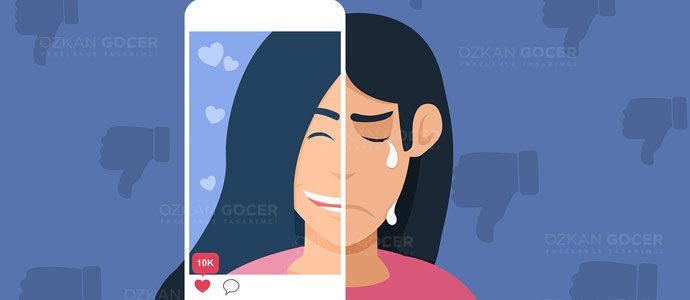
Social media's effect on mental health is complex and can be both positive and negative. Because people usually share the brightest moments of their lives, the viewer can develop constant comparison, a sense of inadequacy and low self-esteem; excessive use has been linked with anxiety and a feeling of loneliness.
On the positive side, support communities, a bond with people in a similar situation and awareness can help. The key is the form and duration of use. If you experience constant unhappiness, anxiety or thoughts of self-harm because of social media, do not take it lightly; getting support from a mental health professional is not a weakness but a healthy step. The World Health Organization also points to the link between digital use and mental health.
Tips for Conscious and Balanced Use
The way to enjoy the benefits and reduce the harms is not to quit social media but to keep control. A few practical habits make a noticeable difference for most people.
- Set a limit on daily use and track it with screen-time tools.
- Turn off notifications that constantly distract you.
- Avoid checking your phone right before sleep and first thing in the morning.
- Unfollow accounts that make you feel bad or push you into comparison.
- Use it actively for learning or connection instead of passive scrolling.
- Take regular "digital breaks" and check your privacy settings.
Conscious use turns social media from a time-and-mood trap into a useful tool. The aim is not to quit it entirely but to keep the control with you.
A Summary in Bullet Points (Benefits and Harms)
For an assignment, a presentation or a talk, a short, bulleted summary is the most practical way to present the topic in balance.
- Benefits: fast communication, access to information, education opportunities, work and marketing, community and solidarity, social awareness, self-expression and entertainment.
- Harms: addiction and lost time, negative effects on mental health, attention problems, disrupted sleep, privacy and security risks, misinformation, cyberbullying and disconnection from real life.
As you can see, social media is a powerful tool; both its benefit and its harm depend on how it is used. Conscious, measured and purposeful use increases the benefits and minimizes the harms.
Social Media in Children and Teens
Children and teens are more open to social media's effects because of their developing self-esteem and need for belonging. Comparison, cyberbullying, inappropriate content and sleep and school problems are the main risks.
The way to protect them is not a total ban but raising conscious users. Age-appropriate use, open and non-judgmental communication, reasonable screen time, privacy education and parents being role models are the most effective steps; sources like Common Sense Media offer age-appropriate guidance. If you see withdrawal, a drop in school performance or signs of bullying in your child and home methods fall short, consult a professional. An early, compassionate approach gives the best result.
Frequently Asked Questions
Quick answers for readers who skipped to the end.
What is social media?
What are the benefits of social media?
What are the harms of social media?
How does social media affect mental health?
How do I use social media more consciously and in balance?
How do you summarize the benefits and harms of social media in bullet points?
What should you watch for with children and teens on social media?
Is social media good or bad overall?
How do I protect myself from misinformation on social media?