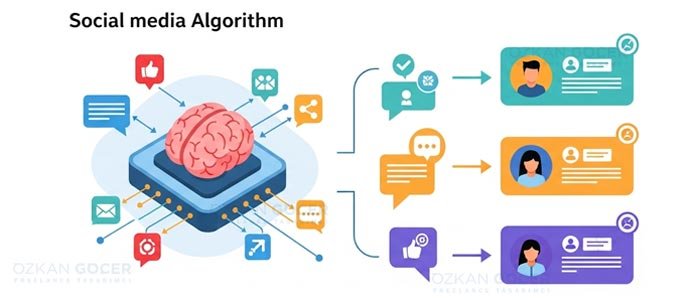
What Is a Social Media Algorithm?
Social media algorithms are mathematical rule sets that determine which posts appear on a user's feed. Instead of displaying content chronologically, platforms use these systems to sort and rank updates based on individual behavior. Analyzing these mechanics is far more effective than chasing viral trends. Every social media platform relies on proprietary data points, including profile history, device type, and active hours, to predict what will keep users on the screen longest. Networks constantly adjust these mathematical equations to maximize user retention, which directly impacts their ad revenue models.
Algorithms analyze hundreds of active and passive signals like watch time, shares, comments, and past interactions to make real-time distribution decisions. Engagement rate remains a primary ranking signal across major networks, which pushes creators toward genuine community interaction. When you publish a post, the algorithm serves it to a tiny test audience first.
High engagement during this initial phase signals the system to distribute the post to a wider circle of users. Machine learning models process millions of data inputs per second to customize the feed for every single account, ensuring no two feeds look identical. They categorize posts using metadata, image recognition, and natural language processing to match them with interested users.
Optimizing for these systems requires a shift from broad broadcasting to hyper-targeted relevance. Platforms prioritize retention because longer sessions increase ad inventory. If you create content that sparks active conversations, shares, and saves rather than passive scrolling, the system naturally rewards you with organic reach. Success is never guaranteed, as networks update their code frequently to combat spam and manipulation.
Focus on clean data tracking, audience feedback loops, and platform-specific formats to adapt your distribution strategy over time. Understanding technical filters is the only way to maintain visibility without relying solely on paid advertising budgets. Ultimately, the algorithm acts as a matchmaker between content creators and consumers.
How Algorithms Rank Content (Key Signals)
Engagement (Likes, Comments, Shares, Saves)
Social media algorithms prioritize active interactions over passive scrolling. When users save or share posts, the platform interprets this as a strong signal of value, boosting the content's reach in subsequent feeds. A high share-to-like ratio triggers wider algorithmic distribution faster than sheer volume of likes alone. Comments that spark conversation generate longer dwell time, keeping users on the platform longer. Each platform assigns a specific mathematical weight to these actions to determine which posts deserve promotion.
Interest and Past Behavior
Every click, hover, and search builds a behavioral profile that algorithms use to predict future interest. If a user spends time watching video tutorials about email marketing, the algorithm feeds them similar content. Predictive loops rely on historical data to make real-time ranking decisions. For example, platforms like Mailchimp analyze user interaction data to optimize email send times, similar to how social networks customize feed delivery. You cannot easily force your way into a user's feed if their past behavior shows zero interest in your niche. The system constantly refines this profile based on real-time actions.
Recency and Relationship
Freshness remains a primary ranking signal for news-driven and real-time social media networks. Algorithms calculate the decay rate of posts, meaning older content quickly loses visibility unless it maintains an exceptionally high engagement rate. Relationship signals also dictate visibility. Direct messages, tags, and frequent mutual interactions signal a close relationship, pushing those accounts to the top of the feed. Building direct engagement loops matters because the algorithm prioritizes content from accounts that users interact with daily. Consistent interaction ensures steady visibility.
Content Type and Format
Platforms push specific formats to compete with rival networks. When a social media platform launches a new video feature, the algorithm temporarily favors that format to encourage adoption. Users who consistently consume video will see video; those who prefer text-based posts receive text. Aligning your content format with current platform priorities and user preferences is necessary to maintain organic reach. Testing different media formats helps you identify what the algorithm favors for your specific target audience.
How Algorithms Work by Platform
Instagram deploys separate algorithms for Feed, Stories, Reels, and Explore. The system tracks user interactions to rank posts. It prioritizes content from accounts you engage with most frequently. Immediate saves and shares carry the most weight here; such actions signal high value to the platform and make them distribute the content wider.
TikTok
TikTok prioritizes watch time and completion rate over follower count. The recommendation engine analyzes video details like captions, sounds, and hashtags to serve content to users on their For You Page. If a user watches a video to the end, the algorithm pushes that content to a wider pool of similar profiles. High-retention hooks are mandatory to prevent immediate swiping.
YouTube
YouTube operates as a search engine and recommendation system combined. It tracks click-through rate and average view duration to determine which videos keep users on the platform. Statista data shows massive daily video consumption globally; ranking here requires optimizing titles and thumbnails to drive immediate clicks.
Facebook uses a scoring system to rank posts in the feed based on meaningful social interactions. The platform prioritizes content from family, friends, and local groups over public pages. To bypass organic limitations, build active discussion threads, because long-form comments signal high value to the social media algorithms.
LinkedIn filters posts through a three-stage process to eliminate spam before routing content to the feed. The algorithm measures dwell time, calculating how long users pause to read your text. Sharing industry-specific data and actionable insights keeps professionals reading longer, which triggers organic distribution across secondary connections. External links often reduce reach, so keeping users on the platform is key.
X (Twitter)
X ranks posts using a real-time recommendation algorithm that balances recency with active engagement. The platform boosts posts from premium subscribers who use the service and prioritizes direct replies within threads. Quick interactions make or break visibility; posting visual media alongside short, punchy statements helps capture immediate attention in fast-moving feeds across different platforms.
How to Optimize Content for the Algorithm
Social media networks run on mathematical models designed to maximize user retention. Every platform processes billions of data points daily to determine which posts appear in a user feed. Algorithms prioritize immediate engagement signals over historical page authority. When users interact with your content within the first few minutes of publishing, the system categorizes the post as high-value. High initial velocity triggers wider distribution. To make your content perform well, you must align your publishing schedule with the exact hours your target audience is active.
Optimizing for social search is now just as important as traditional search engine optimization. Users increasingly use social media platforms as search engines to find product reviews, tutorials, and local business information. Search intent shapes visibility across every digital ecosystem, and algorithmic indexing leans heavily on textual context.
To capture this traffic, format your posts with clear, searchable keywords in the captions, subtitles, and alt text. Algorithms read text data to categorize your media and serve them to relevant users. Avoid outbound links that take users away from the host platform; native content always receives preferential treatment in feed distribution.
Raw engagement metrics dictate how long your content remains visible in the feed. Algorithms monitor the ratio of saves and shares to total impressions to gauge actual utility. If users save a post, the platform recognizes it as high-quality resource material and extends its lifespan. Analyze your performance data weekly to identify which formats generate these actions. I structure my content calendars around formats that prompt active participation rather than passive scrolling.
Focus on starting conversations in the comment section to keep the algorithmic feedback loop active. Active moderation ensures your posts maintain momentum without relying on paid distribution. Consistent posting schedules train the algorithm to crawl your profile regularly.
Words and Tactics That Hurt Facebook Reach
Facebook's feed algorithm actively demotes posts that use explicit engagement bait. Words like "share," "comment," "like," or "tag" trigger automated filters designed to prevent artificial reach inflation. Organic distribution drops instantly when marketing teams rely on these cheap triggers to force user interaction. The platform prioritizes authentic conversations; it penalizes patterns that try to game the system. Instead of forcing users to take specific actions, brands must create content that naturally invites discussion. When you write copy that sounds like a machine-generated demand, the system flags it, reducing your overall visibility.
Outbound links represent another major friction point for social media reach. Meta wants to keep users inside its ecosystem to maximize ad impressions. When posts direct people away from the platform, the algorithm limits their visibility. To bypass this restriction, some marketers place links in the first comment, though recent data suggests the algorithm is catching up to this workaround. Sensationalist language and clickbait headlines also trigger penalties.
Phrases that withhold information or exaggerate facts violate the platform's quality guidelines, leading to a permanent reduction in page distribution. If your copy uses phrases like "you won't believe what happened next," expect a swift drop in impressions.
Success on modern social platforms requires aligning with user intent rather than fighting the algorithms. Analyze your performance data to identify which formats keep people on your page longer. Native video, high-resolution images, and text-only updates often perform better because they do not trigger spam filters. Focus on building genuine community spaces. When you make your audience feel heard, they interact naturally, signaling to the system that your content deserves wider distribution without you having to beg for engagement. Avoid repetitive hashtags and duplicate copy across multiple posts, as these patterns signal low-quality automation to the system and make them look like spam.
The 5-5-5 and 30/30/30 Rules
Structured engagement frameworks exist to signal consistent account activity to social media algorithms. The 5-5-5 rule dictates that before you publish any new content, you must engage with five industry peers, leave five thoughtful comments on relevant posts, and reply to five direct messages or stories. Consistent engagement tells the platform algorithm that your account is active and collaborative, which often increases the initial reach of your own posts.
Social media platforms prioritize active users who keep other users on the platform. Relying solely on automated tools or passive publishing fails because algorithms track real-time user behavior data to determine content distribution. You must train the system to recognize your profile as a source of genuine interaction.
To scale operations without burning out, you can implement the 30/30/30 rule for daily workflow management. Allocate 30 minutes to outbound engagement with target accounts, 30 minutes to creating high-quality posts, and 30 minutes to analyzing performance data and responding to comments. Structured scheduling prevents the common trap of endless scrolling. It forces you to treat social media as a business tool rather than a distraction.
Setting these strict time limits improves output and keeps the focus on measurable metrics. You make data-driven decisions instead of guessing what content might resonate with your audience. Establishing a set routine ensures you use your time efficiently while feeding the platform algorithm the consistent signals it requires to index your content.
Neither framework guarantees viral success; they simply establish a baseline of consistency that algorithms reward. Social platforms use complex machine learning models to analyze how users interact with your posts. If your content lacks substance, no amount of systematic engagement will save it. Use these frameworks to build a predictable routine, gather clean performance data, and refine your creative assets based on actual user feedback.
When you analyze user behavior, you can make informed adjustments to your strategy. The goal is to understand what makes your audience stop scrolling and interact, then replicate those elements to keep them engaged. Consistent execution of such frameworks builds a sustainable distribution channel over time.
AI's Role in Social Media Algorithms
Social media algorithms rely on machine learning models to process billions of data points in real time. Every scroll, pause, like, and share feeds the system. Platforms analyze dwell time closely; the exact milliseconds a user spends looking at a post matter more than a simple like. The algorithm builds a predictive profile for every user, matching them with content that maximizes session duration. A constant feedback loop determines which posts survive the initial distribution phase and which disappear from feeds entirely.
Scroll sideways to read every column. Keyboard: focus the table and use the arrow keys.
| Platform | Primary AI Data Signal | Algorithm Goal |
|---|---|---|
| TikTok | Watch completion rate | Maximize session loop |
| Direct message shares | Foster active connections | |
| Comment depth and relevance | Promote professional discourse | |
| YouTube | Click-through rate and dwell time | Long-term viewer retention |
Platforms use predictive models to categorize content through natural language processing and computer vision. When you upload an image or video, the system extracts objects, text, and audio cues to index the asset. Algorithms then serve the content to a small test group of users. If the initial users interact positively, the platform expands the reach to a wider audience. The ultimate goal for social media networks is ad revenue, which requires keeping users on the app as long as possible. AI makes them stay by serving an endless stream of highly personalized posts, turning raw user data into a behavioral map.
To succeed under algorithmic constraints, you must optimize for immediate signals. Relying on generic engagement bait fails because modern algorithms flag artificial interactions. Instead, structure your posts to trigger high-value signals like shares and saves. Aligning your content structure with the platform's preferred format, such as short-form vertical video, signals to the AI that your content is highly relevant. Do not expect overnight virality; focus on consistent data signals that help the algorithm identify your target audience.
Social Media Algorithm Myths (Busted)
Many creators believe social media networks shadowban accounts to force paid promotion. When organic reach declines, the culprit is almost always poor engagement metrics during the initial distribution phase rather than a secret penalty. Algorithms prioritize user retention. If users scroll past your posts within the first three seconds, the platform stops distributing them. The system processes real-time engagement data to determine reach. It does not run on personal grudges.
Another common myth centers on finding a magic posting time or using a specific number of hashtags to trick the system. Modern social media algorithms rely on machine learning models that analyze user behavior patterns, not static schedules. A post published at 3:00 AM can still go viral if the initial batch of active users interacts with it positively. Stuffing thirty hashtags into your caption actually dilutes the categorization data. Platforms use natural language processing to understand your content. Keep your metadata clean.
Marketers often claim that outbound links trigger automatic algorithmic suppression. While platforms prefer to keep users on their site, the penalty is rarely a hardcoded block. High-value external resources that spark active discussions in the comments section can maintain strong visibility. The algorithm measures the total session time of the user. If your link leads to a high bounce rate where users immediately return to the social media feed, the system devalues the post. Focus on building genuine interaction rather than trying to outsmart the code.
Scroll sideways to read every column. Keyboard: focus the table and use the arrow keys.
| Common Myth | Algorithmic Reality | Actionable Solution |
|---|---|---|
| Shadowbanning limits reach | Low initial engagement signals stop distribution | Optimize the first 3 seconds of video or text |
| Hashtag stuffing boosts visibility | Dilutes categorization data and confuses natural language processing | Use 3 to 5 highly specific, contextual tags |
| Outbound links are instantly penalized | High bounce rates back to the feed trigger drops | Pin the link in comments or build high-value landing pages |
Algorithmic systems do not operate on static rules. Engineering teams constantly run A/B tests to modify how machine learning models weigh shares, saves, and comments. Trying to hack these systems with engagement pods or automated bots yields short-term spikes followed by permanent domain devaluation. Build your distribution strategy around human psychology. When you create posts that people naturally want to discuss, you make it easy for the system to distribute them.
Why Algorithms Can Be Problematic
Social media platforms design their algorithms to maximize screen time and ad impressions. Every click, scroll pause, and share feeds the system data. These systems favor outrage and sensationalism because high-arousal emotions trigger faster user actions. The algorithm does not care about truth; it cares about keeping users glued to the feed. To achieve high retention, platforms analyze historical user behavior to predict what will keep you scrolling, creating feedback loops that make them stay in echo chambers. Automated curation distorts public discourse by amplifying extreme views while suppressing nuanced discussions.
Organic reach decay directly stems from these algorithmic shifts. Platforms systematically restrict the visibility of organic posts to force businesses into paid advertising. During campaign setups, I often observe high-quality organic posts get buried simply because the platform algorithm prioritizes paid placements or highly controversial content that generates cheap engagement. Creators must constantly adapt to unannounced updates, turning content creation into a guessing game.
When a platform changes its distribution model, businesses lose access to the audience they spent years building. Relying solely on third-party algorithms puts your digital assets at constant risk, as a single code deployment can wipe out your organic traffic overnight. Such vulnerability forces brands to buy back the attention of their own followers.
Algorithms rely on historical data that often contains human biases. Machine learning models replicate these biases, leading to discriminatory ad delivery or unfair moderation of specific user accounts. When you use these networks, you trade personal data for connectivity. Social media companies package this data to sell highly targeted ad slots, making users the actual product. Relying on automated systems to curate human communication limits diverse perspectives and forces creators to optimize for machines instead of real people.
Diversifying your traffic channels away from single-platform dependency remains the only sustainable way to protect your business. Building owned channels like email lists and independent websites ensures you maintain direct access to your audience regardless of algorithmic changes, reducing reliance on volatile social networks.