What Is Social Media Addiction? (Dopamine and the Reward Loop)
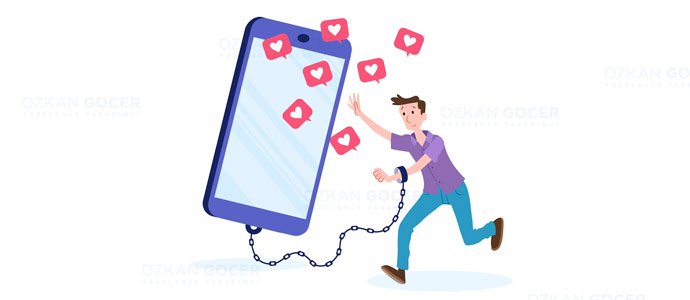
Social media addiction is when a person uses social media so excessively and compulsively that, even though it harms their work, school, relationships and mental health, they cannot stop. It is not like a substance addiction, but it shows the features of a behavioral addiction.
At its center is the reward-dopamine loop: every notification, like and new piece of content stimulates the brain's reward system and pulls the person back to the app again and again. Heavy use by everyone is not addiction; to speak of addiction there must be loss of control, an inability to stop and a negative effect on life. An important point: this is not a person's "lack of willpower"; it is a real matter tied also to platforms being deliberately designed to be addictive.
Symptoms of Social Media Addiction
Recognizing the symptoms is not for blaming yourself but for noticing the situation and taking a step. If a few signs have become constant and are harming your life, they are worth attention.
- A frequent, almost automatic urge to check the phone or app.
- Saying "just five minutes" and staying for hours, trying to stop and failing.
- Spending far more time than planned and not noticing the time.
- Restlessness, distress or irritability when unable to use it.
- Sleep, studies, work and face-to-face relationships suffering.
- Hiding or downplaying how much you use it.
If a few of these symptoms have become constant for you and are disrupting your life, consulting a professional can be valuable. Seeing the symptoms is the first step of the solution.
Causes: Why Is It Addictive?
Behind social media being addictive are a few powerful mechanisms. Knowing them is the first step to regaining control without blaming yourself.
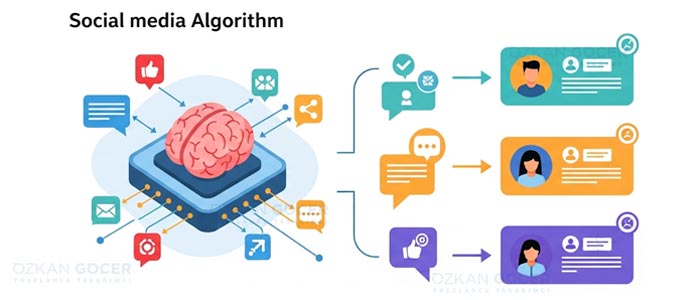
The first is design: platforms are built to keep you as long as possible; infinite scrolling, autoplay, notifications and different content on every open keep the brain constantly busy. The second is the dopamine-reward loop; likes and new content create small reward moments and the brain seeks them again, just like the "variable reward" logic of a slot machine. The third is the search for approval and FOMO (fear of missing out); the fourth is turning to social media to escape stress, distress or loneliness. Addiction is not only personal weakness; it is the result of powerful psychological mechanisms and deliberate design. The American Psychological Association also points to these mechanisms.
Harms and the Effect on Mental Health
The harms of excessive, uncontrolled use can be both mental and physical. Comparison with others, the search for approval and FOMO are linked with anxiety, low self-esteem, unhappiness and, in some cases, depressive symptoms. Nighttime use delays sleep and lowers its quality; constant notifications and a short-content stream weaken the attention span and deep focus.
A drop in academic and work performance, and harm to face-to-face relationships and quality time with family, are also common. The severity of the harm depends on the degree of use; what matters is noticing these effects and balancing the use. If your quality of life, mood or functioning has clearly deteriorated because of social media, it should be taken seriously and, if needed, professional support sought. I also covered the topic in terms of social media's general effects in a separate article.
How Many Hours Is Addiction? (Duration or Control?)
What defines addiction is not an exact "hour" number; the real measure is how the use affects your life. Someone who uses it for long each day but can protect their work, relationships and mood is different from someone who uses it less and still experiences loss of control.
So instead of "how many hours", ask these: Is my use in my control? Is it disrupting other areas like sleep, work and relationships? Do I struggle when I try to stop? If you answer "yes" to these, it deserves attention regardless of duration. Phone screen-time tools help you see your use, but saying on their own "this many hours is addiction" is not right; what is decisive is functioning and control.
How Do You Overcome Social Media Addiction?
The first step in coping is awareness: observe how much and why you use it, and accept the problem. Then a few concrete steps work for most people.
- Set a daily time limit and use app timers.
- Turn off notifications that constantly call you back.
- Keep the phone away from the bedroom and the dining table, and remove apps from the home screen.
- Try regular "digital breaks" and phone-free hours or days.
- Fill the freed time with a hobby, sport, face-to-face socializing or a book.
- Notice your triggers (distress, stress) and build other ways of coping.
The steps work for most people; but if you cannot manage on your own or the situation is serious, getting support from a mental health professional (a psychologist or psychiatrist) is the most effective path. In Turkey, organizations like Yeşilay also provide support in the fight against addiction. Asking for help is not a weakness but a strong step.
Children, Teens and When to Seek Professional Help
Children and teens are more open to addiction because of their developing brains and their needs for approval and belonging. For them, guiding rather than banning entirely, building open and non-judgmental communication, setting reasonable screen and night rules, and parents being role models are more effective; sources like Common Sense Media offer age-appropriate guidance.
The situations where you should consider professional help are: if you cannot reduce use despite trying repeatedly, if social media clearly disrupts your work, school, relationships or health, if you experience intense anxiety or anger when unable to use it, or if it is accompanied by depression, anxiety or loneliness. A professional can assess the underlying causes and offer appropriate support; the World Health Organization also stresses the importance of early support in mental health. Especially if there is hopelessness or thoughts of self-harm, consult a professional or an emergency helpline without delay.