- |
- ·
I define social media as the collective network of online platforms and applications that allow you to create, share, and exchange content in virtual communities. Your success on these channels depends on understanding user behavior and platform mechanics rather than just posting random updates. I will show you how to navigate the current landscape, choose the right channels for your budget, and build a strategy that actually drives traffic to your website.
What Is Social Media? (In Simple Words)
Social media refers to internet-based communication tools that allow people to generate, share, and exchange information in virtual communities. Unlike traditional media like television or newspapers where communication flows one way, digital channels rely on two-way interaction. Users build personal profiles, connect with friends or strangers, and publish content ranging from text updates to high-definition videos.
In my own practice auditing digital footprints, I often see businesses confuse mere broadcasting with actual networking. True engagement happens when users actively participate in conversations rather than just consuming data. Active participation builds trust faster than any paid advertisement.
Popular platforms like Facebook and Instagram dominate the daily routine of billions of individuals worldwide. People use these networks to find new products, catch up on global news, or share updates about their personal lives. Businesses leverage this constant connectivity to run targeted advertising campaigns and build direct relationships with their audience. Handling these diverse channels effectively requires structured social media management, which involves scheduling posts, analyzing performance metrics, and responding to customer inquiries. Using these platforms without a clear strategy usually results in wasted ad spend and ignored messages. Consistent execution remains the baseline for organic growth.
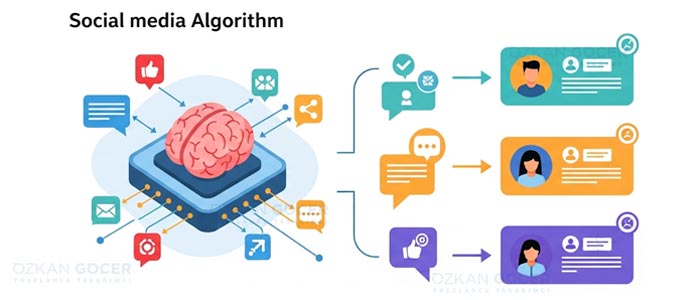
Modern social networks operate on algorithms designed to show users content that matches their specific interests. Every like, share, and comment trains the system to deliver more of the same material, creating highly personalized feeds. Constant feedback loops make the digital space highly addictive but highly measurable for marketers. In the projects I have managed, success relies on understanding these algorithmic patterns rather than trying to fight them. You must focus on creating genuine value for your target audience to gain visibility in an increasingly crowded digital landscape. Relying on outdated tricks will only hurt your organic reach over time.
Types of Social Media and Platforms
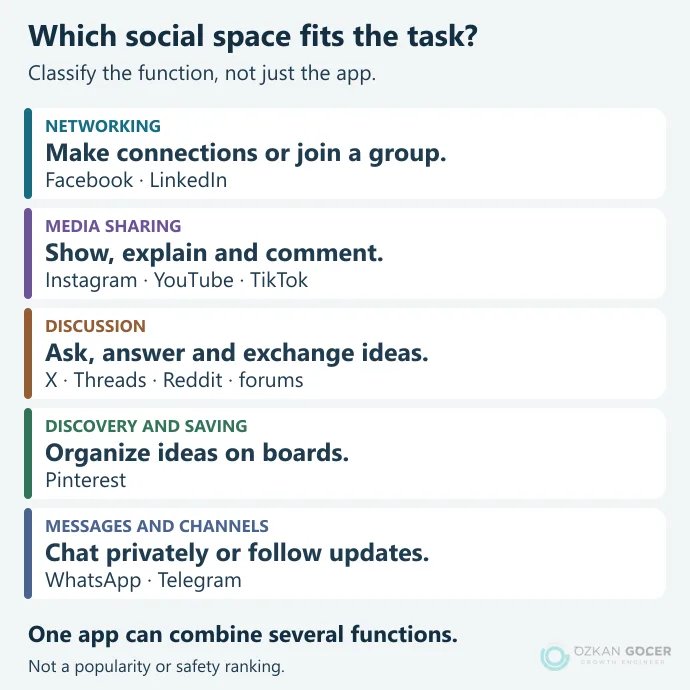
Social Networks (Facebook, LinkedIn)
Relationship building and professional networking drive social networks. Facebook connects billions of users worldwide, serving as a hub for personal updates, local events, and targeted advertising. In my own practice, I utilize Facebook groups to build organic communities around niche brands before launching paid campaigns on social media.
LinkedIn shifts the focus to business-to-business interactions. Professionals use this space to share industry insights, recruit talent, and establish thought leadership. According to HubSpot data, LinkedIn lead generation campaigns often yield higher conversion rates for B2B enterprises compared to standard social channels.
Media Sharing (Instagram, YouTube, TikTok)
Visual content drives engagement across media sharing platforms. Instagram relies heavily on high-quality images, short-form reels, and influencer partnerships to capture user attention. TikTok accelerated the shift toward vertical, algorithm-driven video, forcing brands to adopt new content styles to gain traction. YouTube serves as the second-largest search engine globally, where people seek educational tutorials and long-form entertainment.
Microblogging (X/Twitter)
Real-time information distribution defines microblogging. X, formerly Twitter, allows users to share short updates, breaking news, and immediate opinions. Brands use this channel for direct customer service and trendjacking. Success here requires constant monitoring; a single viral post can shift public perception in minutes.
Messaging Apps (WhatsApp, Telegram)
Private communication channels have evolved into powerful marketing tools. WhatsApp and Telegram allow direct, end-to-end communication with customers. Businesses use these apps to send shipping updates, answer queries, and broadcast exclusive offers to subscribed lists. I have found that using automated chatbots within these messaging systems reduces customer support response times significantly.
Forums and Communities (Reddit)
Reddit organizes information around specific user interests called subreddits. People visit these forums to find honest reviews, solve technical problems, and discuss niche hobbies. Marketing on Reddit requires extreme caution. Users quickly reject blatant self-promotion, meaning you must add genuine value to discussions before talking about your product.
How Does Social Media Work?
Social media platforms operate as dynamic databases where users create, share, and interact with content. Algorithms dictate the flow of information based on user engagement metrics like watch time, shares, and comments. In my own practice managing digital campaigns, I observe how platforms like Facebook and Instagram prioritize high-engagement posts to keep people on the app longer. Every click feeds the system. The algorithm refines your profile to serve targeted ads and organic content based on your behavior. Data-driven loops ensure that the most engaging media rises to the top of the feed.
Networking lies at the core of digital ecosystems. Users establish connections with friends, influencers, and brands, creating a web of nodes that accelerates information distribution. When you publish a new update, the system distributes it to a fraction of your followers first, expanding reach only if initial engagement signals are strong. Businesses leverage the mechanism by integrating their social channels with marketing tools like Mailchimp to synchronize customer data and run multi-channel campaigns. Connecting channels helps track the journey from a social media impression to an email subscriber. You gain a clear view of how social interactions convert into direct sales.
Monetization drives the continuous development of social media features. Advertisers buy access to specific user demographics, utilizing the deep behavioral profiles built by the platforms. People use networks to learn about products, share experiences, and consume news. Using platforms effectively requires understanding how data flows between users and advertisers. Platforms monetize attention by selling ad space, turning user interactions into profitable assets. Success depends on adapting to algorithm updates that constantly redefine how content reaches the target audience.
What Are the Top 3 Social Media Platforms?
Dominating the global digital landscape requires understanding where the audience spends attention. Data from Statista confirms Facebook remains the largest social networking platform worldwide, boasting over 3 billion monthly active users. People use this space for connecting with family, joining local groups, and consuming news. In the projects I have managed, facebook campaigns consistently deliver the highest volume of raw traffic, though conversion rates vary by industry. Businesses targeting older demographics find success here because these users rely heavily on the platform for daily information and community interaction.
Visual content drives engagement, making Instagram the second powerhouse for brand discovery. Over 2 billion active users navigate this app to find new products, follow creators, and share visual updates. Utilizing instagram requires a strong focus on short-form video and aesthetic imagery. In my own practice, I see direct-to-consumer brands scale by using influencer partnerships on this channel. YouTube occupies the third spot, serving as both a social media network and the second-largest search engine.
Audiences search YouTube for educational content, product reviews, and entertainment, making it an excellent repository for long-term organic traffic. Marketers must optimize video titles and descriptions just like traditional search engine optimization to capture this intent-driven audience.
Choosing between these platforms depends on your target audience and content capabilities. Do not try to master all three simultaneously. Focus on where your potential customers actively seek information about your niche. Testing two channels first allows you to gather clean data without spreading your resources too thin. Success requires consistent publishing and active community management rather than a passive presence.
| Platform | Monthly Active Users | Primary Content Type |
|---|---|---|
| 3.05 Billion | Text, Link Sharing, Community Groups | |
| 2.00 Billion | Short-form Video, Images, Stories | |
| YouTube | 2.49 Billion | Long-form Video, Searchable Tutorials |
A Brief History of Social Media
Social media began as basic digital bulletin boards before SixDegrees emerged in 1997 as the first true social networking site. Users created profiles and friended others, establishing the foundational mechanics of modern platforms. MySpace dominated the landscape by the mid-2000s, turning music and customizable HTML profiles into cultural touchstones. Facebook changed the entire ecosystem in 2004 by restricting access to university students first, building an exclusive network that eventually opened to the public and scaled to billions of active users. Rapid scaling forced a shift from simple peer-to-peer communication to algorithmic content delivery.
The launch of the iPhone in 2007 shifted how people consume media, moving interactions from desktop screens to mobile feeds. Instagram capitalized on this shift in 2010, prioritizing visual content over text and transforming how businesses share information about products. In my own practice managing digital campaigns, observing the migration of budget from desktop search to mobile feeds reshaped my entire optimization strategy.
Early SEO pioneers like Moz documented how search engines began indexing these social signals, proving that networking platforms were no longer just for personal chat but major channels for organic visibility. New formats emerged quickly to capture shrinking attention spans.
Modern networks rely on predictive algorithms rather than chronological updates to keep users engaged. People now use social platforms to search for local businesses and product reviews, bypassing traditional search engines entirely. Success requires understanding how audiences interact with content, as organic reach continues to decline across almost every major network. Businesses must diversify their approach, using paid amplification alongside community building to maintain touchpoints with their target audience without relying on a single channel.
Advantages of Social Media
In my own practice managing digital campaigns, social media platforms function as direct-response channels rather than just brand awareness tools. Businesses use these networks to bypass traditional media gatekeepers, establishing direct communication lines with target audiences. Platforms like Facebook and Instagram allow precise demographic targeting based on user behavior, interest profiles, and location data. Advertisers can segment audiences by exact purchasing habits, job titles, or life events. Active users on these networks share real-time feedback, giving companies immediate market intelligence without expensive focus groups.
Organic networking on these channels costs nothing but time. When people share information about a new product or service, peer-to-peer recommendation engines trigger organic distribution. Organic sharing loops lower customer acquisition costs. In the projects I have managed, leveraging user-generated content on Instagram has consistently reduced reliance on paid ads. Users trust peer reviews over corporate messaging; using authentic customer stories builds credibility faster than standard advertising. Deploying user-generated content turns passive buyers into active brand advocates who generate free word-of-mouth marketing.
Social media data provides raw, unfiltered consumer insights. Analyzing what users say about your brand on Facebook or Twitter reveals product defects, customer service bottlenecks, and emerging market trends. Real-time monitoring allows businesses to resolve customer complaints publicly, turning negative experiences into positive public relations opportunities. You gain access to global talent, industry influencers, and strategic business partnerships through professional networking platforms. Instead of guessing what your audience wants, you monitor active conversations to adapt your offer. Direct engagement builds brand loyalty, provided you maintain consistent, honest communication.
To maximize these channels, you must balance organic reach with paid distribution.
| Strategy | Primary Benefit | Cost Structure | Speed of Results |
|---|---|---|---|
| Organic Social | Community trust and long-term brand equity | Free (time investment only) | Slow, compounding growth |
| Paid Social | Immediate reach and precise demographic targeting | Pay-per-click or cost-per-impression | Instant traffic and conversions |
10 Disadvantages of Social Media
In my own practice auditing digital channels, I regularly observe how social media consumption drains user productivity and fragments attention spans. Platforms like Facebook and Instagram rely on algorithms designed to maximize screen time, trapping users in endless scroll loops. Frequent use of social media directly impacts cognitive focus. Businesses lose billions of dollars annually in lost productivity when employees spend work hours checking feeds instead of executing tasks. Beyond time theft, the constant exposure to curated, unrealistic lifestyles on social media breeds anxiety and low self-esteem among younger demographics. People trade real-world presence for digital validation.
Security vulnerabilities and data privacy violations represent another severe risk. Using social platforms exposes personal information to sophisticated phishing schemes and identity theft, leaving users worrying about privacy settings. Bad actors exploit social networking infrastructure to spread false information rapidly, manipulating public opinion during critical market shifts. For brands, relying solely on organic reach on Facebook or Instagram has become a failing strategy. Algorithm updates consistently suppress organic visibility to force paid ad spend, meaning you must pay to reach the audience you already built. You are essentially renting space on land you do not own.
Digital networking often replaces genuine human interaction with superficial metrics like likes and shares. People substitute deep relationships with shallow online connections, leading to increased feelings of isolation. Managing brand accounts has shown me that negative feedback and public relations crises spread faster than positive news. A single misunderstood post can trigger a boycott, destroying years of brand equity in hours. Relying on third-party platforms means you do not own your customer data. A sudden policy change, a new algorithm update, or an abrupt account suspension can wipe out your entire communication channel instantly, forcing you to start from scratch.
Social Media Addiction and Mental Health
In my own practice analyzing user retention, I observe how platforms like Facebook and Instagram engineer notification systems to trigger dopamine spikes. Social networking sites rely on variable reward schedules. Users refresh feeds seeking new information, mimicking slot machine mechanics. Constant scrolling alters attention spans and elevates anxiety levels. People often find themselves using social platforms unconsciously, driven by the fear of missing out on social updates. The design of these interfaces deliberately exploits human vulnerability to social validation.
Research associates heavy social media use with sleep deprivation and depressive symptoms. Data indicates that individuals spending more than three hours daily on interactive platforms face double the risk of experiencing poor mental health outcomes. Algorithms prioritize sensational content to maximize session duration. In the projects I have managed, engagement metrics often rise when content triggers strong emotional reactions, demonstrating how platform architecture exploits human psychology. You pay for free networking services with your attention and psychological well-being. The cost is often your peace of mind.
Mitigating negative effects requires intentional friction. Setting hard daily limits on Instagram or Facebook helps break the habit of mindless opening. You can replace passive consumption with active, real-world communication to rebuild focus. Digital detoxes do not offer a permanent cure; establishing boundaries around technology use protects cognitive bandwidth. Managing your digital diet is about reclaiming control over your time. Small adjustments in your daily routine can significantly reduce the psychological strain of constant connectivity.
How Social Media Affects Society
Digital networking platforms reshaped how people consume daily news and interact. In my own practice analyzing user acquisition data, I observe how rapidly algorithm updates on Facebook and Instagram alter public attention. Algorithms push content directly to feeds. Active search is dead. Passive consumption models shift societal discourse by prioritizing sensationalism over verified facts. Algorithmic filtering creates echo chambers where individuals only encounter viewpoints that align with their existing beliefs. Fragmented public debate becomes the standard, eroding trust in traditional journalism and democratic institutions.
Constant connectivity creates a double-edged sword for global communities. While using these channels allows instant mobilization for social causes, it simultaneously accelerates political polarization. Peer-reviewed studies link heavy use of social media to increased anxiety and altered self-perception among younger demographics. People build idealized online personas, transforming personal relationships into metrics of validation. Behavioral shifts alter how younger generations learn about social norms and self-worth. Peer pressure now operates 24 hours a day, leaving no offline sanctuary for adolescents. Continuous digital exposure reshapes cognitive development and sleep patterns.
Data privacy remains a central conflict in the digital ecosystem. Large tech firms monetize user attention by selling highly targeted advertising slots, turning personal behavior into a commodity. In the projects I have managed, leveraging detailed demographic profiles proved highly effective for conversion rates, yet the ethical implications of granular tracking persist. Society must navigate the balance between technological convenience and individual data sovereignty as new platforms emerge.
Regulation struggles to keep pace with rapid technological shifts, leaving users vulnerable to data exploitation. Governments worldwide now face the challenge of enforcing antitrust laws against monopolies that control the flow of global information. Without robust legislative frameworks, individual autonomy remains secondary to corporate profitability.
The 5-5-5 Rule for Social Media
In my own practice managing brand accounts, I rely on structured daily routines rather than random scrolling to spark organic growth. The 5-5-5 rule provides a systematic framework for social media interaction. You spend five minutes engaging with five new profiles, leaving five thoughtful comments on their posts. Active engagement forces you to move past passive consumption and connect directly with target users. Instead of hoping the algorithm favors your content, you take the initiative to drive traffic back to your profile. Establishing a daily habit builds early momentum for new accounts that lack search visibility, helping you bypass the initial stagnation phase.
Applying the method across different platforms requires tailoring your approach to how people consume information. On Instagram, you might focus on high-value visual creators, using the five comments to answer questions or share insights about their industry. On Facebook, the strategy shifts toward industry groups where professional networking occurs naturally. I have found that the use of this structured approach prevents the typical fatigue associated with social media management.
You establish a predictable workflow that yields measurable touchpoints without wasting hours. The goal is to provide genuine value, not to pitch your services immediately, as aggressive selling alienates potential followers.
Success relies on targeting the right accounts rather than spamming random profiles. Look for new creators, active industry peers, or potential customers who already interact with your competitors. Do not expect overnight viral success; organic networking takes time to build trust. By consistently dedicating fifteen minutes daily to these micro-interactions, you build a steady stream of profile visits and qualified leads. Small touchpoints accumulate over time, turning cold prospects into warm leads who actively seek out your expertise. A methodical approach transforms passive platforms into active lead generation channels.
Social Media for Business
Businesses no longer treat social media as an optional marketing channel; they treat it as a primary infrastructure for customer acquisition and retention. Modern networking platforms aggregate billions of active users who exchange information, review products, and interact with brands daily. In my own practice, I have seen companies fail because they treated these channels as simple broadcasting boards rather than two-way communication pipelines.
Success requires matching your specific business model with the right environment. For instance, B2B service providers often find high-value leads on professional networks, while consumer brands scale rapidly by using highly visual platforms like Instagram to showcase physical products.
Data-driven marketing relies on understanding user behavior across different ecosystems. Facebook remains a dominant force for demographic targeting due to its massive database of user preferences and life events. People use these digital spaces to seek recommendations, meaning your organic presence and paid campaigns must provide immediate value. When launching a new campaign, you must analyze audience metrics instead of guessing what content might work. Algorithms prioritize engagement, pushing posts with high interaction rates to wider audiences. Gathering concrete data about your target audience prevents wasted ad spend.
Building a sustainable pipeline through social channels demands consistent execution and technical setup. You need to install tracking pixels, set up conversion API integrations, and establish clean attribution models to measure ROI accurately. Many businesses waste thousands of dollars because they cannot trace which platform generated a specific sale. Focus your resources on two or three channels where your target buyers spend their time, rather than spreading your budget thin across every emerging network.
Consistent testing of ad creatives, landing pages, and audience segments will yield predictable customer acquisition costs over time. Scaling budget on winning campaigns while cutting underperforming assets quickly keeps your customer acquisition costs sustainable.
Frequently Asked Questions
Quick answers for readers who skipped to the end.