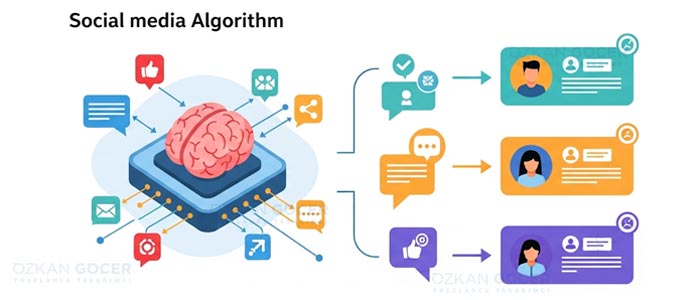
What Is the Google Algorithm? (In Simple Words)
Think of the Google algorithm as a massive, automated decision-making system. Typing a query triggers a process where this system sifts through billions of web pages to deliver the most relevant answers in milliseconds. Google does not rely on a single program to organize the web. A complex network of individual algorithms works in tandem to evaluate content quality, user experience, and technical health.
The system behaves like a digital librarian, measuring hundreds of signals before assigning a ranking position to any page. Every search query initiates a real-time calculation, matching user intent with the most authoritative resources available in the index.
Matching a specific keyword used to guarantee a top spot in the search results. Today, the search engine looks deeper, analyzing user intent and the relationships between different pages. High-quality links from authoritative websites act as digital votes of confidence, signaling to the algorithm that your site is trustworthy. Search engine optimization (SEO) is the practice of aligning your web pages with these ranking signals. If your page provides clear, structured answers and loads quickly, the system rewards you with better visibility. Crawlers constantly scan the web to index new content, ensuring that the index remains fresh and accurate for users worldwide.
The system is never static. Google deploys minor updates daily, alongside major core updates several times a year to refine how it ranks content. Frequent adjustments can shift traffic patterns overnight, rewarding high-quality platforms while demoting low-value spam. Keeping pace with these changes requires focusing on genuine user value rather than trying to game the system. Understanding that the algorithm aims to mimic human judgment helps you build a sustainable online presence. Relying on outdated shortcuts will eventually trigger a ranking drop when the next core update rolls out.
The evolution of these ranking systems shows a clear shift from basic pattern matching to deep semantic understanding. The following comparison highlights how the core components of the algorithm have evolved over time to prioritize user experience over technical manipulation.
Scroll sideways to read every column. Keyboard: focus the table and use the arrow keys.
| Ranking Factor | Old Algorithmic Focus | Modern Algorithmic Focus |
|---|---|---|
| Keyword Usage | Repetitive keyword stuffing within the text. | Natural language processing and search intent matching. |
| Links Profile | Quantity of backlinks regardless of source quality. | Contextual links from trusted, relevant domains. |
| Page Experience | Basic desktop accessibility. | Mobile responsiveness, secure connections, and fast loading speeds. |
How Does the Google Algorithm Work? (3 Stages)
Crawling
Google discovers URLs through routes such as links on known pages and submitted sitemaps. Connecting relevant pages with internal links gives visitors and crawlers a path to follow. Discovery does not guarantee crawling or indexing. Google’s explanation of how Search works treats these as separate stages.
Crawlers read the code, text, and media on each page. They prioritize high-quality, frequently updated websites to determine how often to return. If a page blocks crawler access via the robots.txt file, Googlebot respects these instructions and skips the content. Ensuring search engines can access your pages is the absolute first step of any technical seo strategy.
Indexing
Once Googlebot crawls a page, the system analyzes the content to understand its topic and structure. Google stores this processed data in a massive database called the Search index. During analysis, the algorithm parses the text, HTML tags, and schema markup to categorize the page. If the system detects duplicate content or rendering issues, it may exclude the page from the index entirely.
Successful indexing requires clean rendering. JavaScript execution issues often block indexing, leaving pages invisible to searchers. You can verify indexing status directly in Google Search Console to ensure your target keyword is associated with the correct URL. Only indexed pages can proceed to the final stage of the search pipeline.
Ranking
When a user types a query, the google algorithm evaluates thousands of indexed pages to deliver the most relevant results. Evaluating pages relies on hundreds of ranking signals, including keyword relevance, user location, and page speed. PageRank, one of the foundational algorithms created by Google founders, still influences this process by measuring the quality and quantity of external links pointing to a site. High-quality backlinks signal trust and authority to the search engine.
Search algorithms undergo constant adjustment. A core update can shift search engine results pages overnight, penalizing low-quality content and rewarding sites with strong topical authority. I monitor these updates closely to adjust SEO strategies, focusing on user intent rather than trying to game the system. Success in ranking requires a balance of technical health, authoritative links, and content that directly answers the user's search query.
Key Google Ranking Factors
Content Quality and Relevance
Search engines prioritize pages that directly answer user queries. Aligning content with search intent outperforms raw keyword density every time. The google algorithm analyzes semantic meaning and user engagement signals to determine if a page satisfies the searcher. You must create helpful, original content that addresses the specific needs of your audience.
To rank well, structure your text with clear headings and natural keyword integration. Avoid stuffing terms; instead, focus on depth and accuracy to secure your position in search results. Regular updates to outdated content prevent ranking decay over time.
Backlinks and Authority
External votes of confidence remain a cornerstone of the google ranking system. Each high-quality backlink acts as a signal of trust, telling the algorithm that your site contains reliable information. Natural link acquisition signals to search engines that your content is authoritative and worthy of promotion.
Acquiring links from authoritative, industry-relevant domains builds domain rating faster than generating hundreds of low-quality spam links. Focus on editorial outreach and digital PR to earn these references naturally. Avoid manipulative link schemes, as modern algorithms easily detect and penalize unnatural patterns.
User Experience (Core Web Vitals)
Technical performance directly impacts how users interact with your pages. Google measures user experience through Core Web Vitals, focusing on loading speed, interactivity, and visual stability. A slow site frustrates users and leads to immediate abandonment.
Slow loading times trigger high bounce rates, which signals poor quality to the algorithm. Optimizing image formats and reducing JavaScript execution times helps stabilize rankings during core update rollouts. Smooth navigation keeps visitors on your site longer, indirectly boosting your seo performance.
E-E-A-T
Search algorithms evaluate Experience, Expertise, Authoritativeness, and Trustworthiness (E-E-A-T) to filter out low-quality information. Evaluation is especially strict for health, finance, and safety topics. Demonstrating real-world experience in your niche helps establish credibility with both users and search engines.
Showcase clear author bios, cite reputable sources, and maintain an easily accessible privacy policy. Trust is the hardest element to build but the most resilient against algorithm updates. Clear credentials and transparent business information verify your legitimacy.
Mobile-Friendliness and Speed
Google uses mobile-first indexing, meaning the mobile version of your site determines your ranking. A responsive design is mandatory to ensure proper rendering across all screen sizes. If your mobile page lacks content parity with the desktop version, your visibility will drop.
Test your pages using Google Lighthouse to identify rendering bottlenecks. Fast, mobile-optimized sites consistently capture more traffic from search results. Speed optimization is a continuous process that requires regular monitoring and technical adjustments.
Scroll sideways to read every column. Keyboard: focus the table and use the arrow keys.
| Ranking Factor | Primary Metric | Optimization Action |
|---|---|---|
| Content Relevance | Search Intent Match | Target specific keyword queries with depth. |
| Link Authority | Backlink Quality | Acquire links from trusted industry domains. |
| Page Experience | Core Web Vitals | Improve loading speed and visual stability. |
| Mobile Usability | Responsive Design | Ensure mobile-first rendering and fast load times. |
Major Google Algorithms and Updates
Panda (Content Quality)
Launched in 2011, the Panda update shifted the search landscape by targeting low-quality sites, duplicate content, and keyword stuffing. The filter penalized pages with thin value while rewarding deep, original research. Sites that leaned on scraped product descriptions or excessive ad-to-content ratios lost visibility once the filter went live.
To survive the google algorithm, you must focus on user intent. Clean up thin pages, merge duplicate content, and ensure every page serves a clear purpose for the reader.
Penguin (Link Spam)
The Penguin update targeted manipulative link-building practices and unnatural anchor text distribution. Before Penguin, buying cheap links in bulk was a common way to manipulate search results. The algorithm automated the detection of such schemes, instantly devaluing spammy backlinks and penalizing the offending site.
Modern seo requires a clean backlink profile built on editorial merit. Monitor your incoming links regularly and use the disavow tool only when you detect a clear, malicious negative SEO attack against your domain.
Hummingbird and BERT (Semantic Search)
Hummingbird redesigned the core engine to understand the context of a search query rather than matching individual words. BERT (Bidirectional Encoder Representations from Transformers) expanded the capability by analyzing the relation of all words in a sentence. The updates stopped the era of writing robotic sentences just to force an exact-match keyword into a paragraph.
Search engines now understand conversational queries. Write naturally, answer follow-up questions directly, and structure your content to match how real people speak.
Helpful Content System
Google introduced the system to ensure searchers find original, helpful information written by people, for people. The system applies a sitewide signal that flags domains publishing high volumes of low-effort content created solely for search engine ranking. Recovery from a helpful content penalty requires a complete content audit, removing fluff, and injecting genuine expert insights.
Verify that your writers have actual experience in the topic. Avoid automated content generation that merely summarizes existing search results without adding new data or perspective.
Recent Core and Spam Updates (2024-2026)
Recent core update rollouts have integrated helpful content signals directly into the main ranking systems. The rollouts target scaled content abuse, expired domain abuse, and site reputation abuse. Google constantly refines the algorithms to clean up search results, meaning a single core update can shift your visibility overnight.
Track your performance using Google Search Console to isolate which pages lost impressions after an update. Analyze the search intent of the winning pages, refine your technical setup, and avoid quick-fix ranking schemes.
What Is a Google Algorithm Update?
A Google algorithm update represents a direct modification to the mathematical formulas and ranking signals used to retrieve and organize search results. Google relies on a complex network of individual algorithms to evaluate every page based on relevance, quality, speed, and user experience. When engineers adjust these systems, the ranking of your site can shift overnight. Some updates target specific issues like spam, low-quality links, or keyword stuffing, while others adjust how the search engine understands natural language.
Such adjustments can completely redefine which pages secure top positions for high-value search terms. The search engine processes billions of queries daily. Constant calibration ensures that users receive the most accurate information available.
Major changes, known as a core update, occur several times a year and impact the broad foundation of the ranking system. Broad updates do not target a single site or keyword; instead, they aim to improve how the system assesses overall content value across the entire web. A page that previously ranked high might drop because other pages now offer better answers, not because the original page has technical errors.
Adapting to shifts requires analyzing search intent rather than trying to trick the algorithm with artificial link networks or excessive keyword repetition. You must focus on creating resources that genuinely satisfy the user query. Recovery from a core update begins with a deep content audit to align with updated search intent. Understanding the underlying quality guidelines helps you make informed adjustments.
Monitoring your performance during rollouts is essential for maintaining search visibility. Google Search Console serves as the primary tool for tracking impressions, clicks, and average ranking positions after an update goes live. When you notice a sudden drop in organic traffic, isolate the affected pages and analyze which queries lost visibility. Compare your content with the newly promoted results to identify gaps in depth or structure.
Recovery is never instantaneous; it requires consistent optimization and patience as the search engine processes your updates over weeks or months. Tracking performance metrics weekly allows you to distinguish between normal seasonal fluctuations and actual algorithmic penalties. Regular monitoring prevents knee-jerk reactions that could further damage your search presence.
The AI Overview Era and the Future of Search
Google now synthesizes information directly at the top of the search engine results page. Synthesized answers reduce the organic click-through rate for informational queries. Traditional keyword tracking loses its predictive power as generative AI answers user queries before they ever click a link. The core google algorithm now prioritizes direct, synthesized answers pulled from multiple sources.
To survive ongoing update cycles, your site must transition from targeting high-volume keywords to becoming the definitive source that the AI engine cites. Traditional ranking metrics are evolving; visibility now depends on being part of the LLM (large language model) synthesis pool. You cannot rely on basic search volume metrics anymore. Searchers want immediate answers. You must deliver them in the first 100 words of your page.
Optimizing for AI search requires structured data and clear, authoritative content blocks. Search engine algorithms crawl pages looking for direct answers to complex, multi-turn questions. Structuring content with clear schema markup and direct Q&A formats helps maintain visibility during major core updates. High-quality external links still validate your authority, but the context surrounding those links matters more than ever.
The ranking system evaluates how well a page satisfies the user intent behind a specific search query, rather than just matching a literal keyword string. If your pages lack clear semantic structure, search engine crawlers will bypass them for more readable sources. Build tables, bulleted lists, and concise definitions directly into your primary landing pages. Clean HTML formatting helps the crawler parse your data faster.
Expect continuous volatility as Google refines its retrieval-augmented generation systems. No single seo tactic guarantees a permanent top spot in the AI Overview box. Diversifying your traffic sources prevents catastrophic losses when a sudden algorithm update rolls out. Focus on building brand searches; when users search for your specific brand name alongside a product category, the algorithm bypasses generic informational filters to display your pages directly.
Track your brand footprint across LLM training datasets by monitoring brand mentions and citation frequency in AI-generated results. Adaptability is your only real defense against automated search updates. Analyze your search console data weekly to identify which pages lose traffic to AI summaries, then restructure that content to serve as the primary source citation. Do not expect quick fixes.
What to Do If an Update Affects Your Site
When a core update rolls out, panic often drives webmasters to make immediate, destructive changes. Avoid changing your URL structures or deleting pages during the first two weeks of search volatility. Start by isolating the exact date of the ranking drop and comparing it against the official google algorithm release timeline. Open Google Search Console to analyze your performance data.
Filter by search appearance and compare the pre-update period with the post-update period. Look for specific patterns. Did the drop affect your entire site, or did it target a specific category page? Identifying the exact pages that lost visibility prevents you from wasting time on unaffected sections of your web presence. Gather this data before making any technical alterations to your site.
Evaluate the search engine results pages for your target keyword terms. Google updates often shift search intent, meaning the algorithm now prefers informational guides over transactional landing pages for queries where you previously ranked. Analyze the competitors who gained positions during the update. Study their content structure, the depth of their answers, and how they satisfy user queries.
If your page lost its ranking to more detailed resources, you must update your content with original data, expert insights, and clearer answers. Successful SEO requires aligning your content with what the current algorithm rewards, rather than relying on outdated optimization tactics. Do not simply rewrite paragraphs; add real value that competitors lack.
Review your backlink profile alongside technical performance metrics. Algorithms frequently adjust how they weigh external links and internal link distribution. Toxic link spikes or broken internal links often compound the negative effects of a core update. Audit your outbound links to ensure you only point to authoritative sources. Fix slow loading times and mobile rendering bugs, as Google demands high-performing pages for its users.
Recovery from a major algorithm shift takes time, sometimes requiring you to wait until the next official update for Google to re-evaluate your improvements. Focus on steady, incremental quality upgrades instead of looking for quick fixes. Maintain a clean, accessible site architecture so search crawlers can easily index your updated content.
Scroll sideways to read every column. Keyboard: focus the table and use the arrow keys.
| Phase | Action Plan | Expected Outcome |
|---|---|---|
| Immediate (Weeks 1-2) | Monitor Google Search Console; track ranking fluctuations. | Identify specific affected pages and keyword groups. |
| Analysis (Weeks 3-4) | Compare search results; audit competitor content and links. | Understand intent shifts and algorithm preferences. |
| Execution (Month 2+) | Update thin content; fix technical errors and internal links. | Gradual recovery of site authority and search visibility. |
Why Google Updates Its Algorithm So Often
Google processes billions of searches daily, requiring constant adjustments to maintain the quality of search results. The search engine giant implements thousands of minor updates each year, alongside larger algorithmic changes. Bad actors constantly try to game the system using low-quality automated content and artificial links. To maintain search quality, the google algorithm must evolve. Search intent shifts quickly during global events or technological transitions.
A static algorithm would fail within weeks, leaving search results cluttered with outdated pages and keyword-stuffed spam. Instead, Google deploys minor tweaks daily alongside major, system-wide changes to ensure users find helpful information quickly. Constant refinement prevents search engine manipulation.
Several times a year, Google releases a broad core update that fundamentally alters how the search engine evaluates content quality. Broad core updates do not target a single site or specific keyword; they assess the overall authority, trust, and usefulness of web pages. When a core update rolls out, your page ranking can fluctuate wildly. A page that held the top spot for months might drop several positions, while a previously buried site rises.
Such volatility occurs because the underlying ranking algorithms recalculate the value of links, content depth, and user experience signals across the entire index. Google aims to align its automated systems with human evaluator guidelines, forcing webmasters to focus on genuine value rather than technical loopholes. Such shifts ensure that searchers receive accurate, safe, and highly relevant answers.
Tracking these shifts requires reliable data rather than panic-driven changes. Google Search Console serves as the primary diagnostic tool to isolate which pages lost impressions and which search queries dropped in ranking. You must analyze performance reports over a 14-day window post-update before rewriting content or disavowing links. Comparing mobile and desktop performance during the post-update period helps identify if the update targeted technical rendering issues.
Hastily changing your SEO strategy during an active rollout often worsens the drop. Focus on building clean, high-performance pages that satisfy search intent, as the algorithm ultimately aims to reward sites that prioritize the end-user. Recovery takes time, and patience remains your strongest asset during search engine volatility.
If you want to grow your organic visibility professionally, you can take a look at the SEO services I offer.