- |
- ·
The best cold wallet depends on your needs: Ledger Nano X for general use and mobile flexibility, Trezor for open-source transparency, Tangem for card-format simplicity, and Ellipal for full (air-gapped) isolation. A cold wallet keeps your private keys offline, protecting your crypto from exchange collapses and hacks; prices range from about $70 to $250. The core of security is not the device itself but storing your recovery phrase (seed phrase) correctly.
I have followed blockchain and crypto markets for more than seven years, and in that time I have watched exchange failures and hot-wallet hacks teach investors one hard truth: unless you physically disconnect your assets from the internet, they are never fully safe. A cold wallet (hardware wallet) builds that "digital vault" by keeping your private keys offline, out of a hacker's reach. In this guide I review the 8 best models of 2026 by security, ease of use, coin support and value, and I explain how a cold wallet works, the hot-vs-cold difference and the seed-phrase rules that actually keep you safe.
What Is a Cold Wallet and How Does It Work?
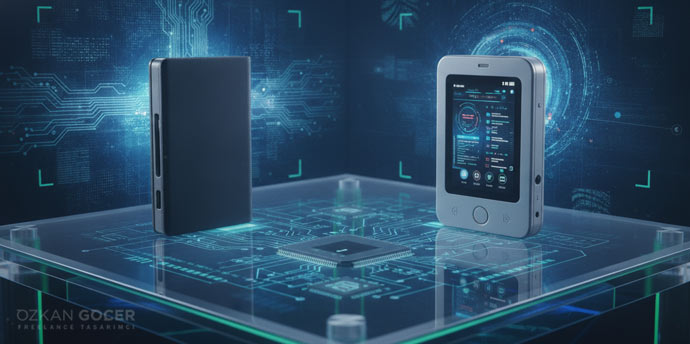
A cold wallet is hardware that stores the private keys granting access to your crypto inside an encrypted chip, without ever connecting to the internet. The logic is simple: a transaction request is created on your phone or computer, but the signing (approval) happens only on the device itself, offline. So even if your computer is infected with malware, your private key never leaves the device. To understand the basics of crypto, see my what is cryptocurrency guide.
Best Cold Wallets of 2026: Detailed Review
1. Ledger Nano X: Best Overall for Mobile Investors
The flagship of French maker Ledger, the Nano X is treated as the industry standard. Its biggest edge is encrypted Bluetooth, which frees the wallet from depending on a computer and lets you transact securely on the move with an iOS or Android phone.
- Security: A military-grade CC EAL5+ certified Secure Element (SE) chip, the kind used in passports.
- Coin support: More than 5,500 cryptocurrencies, with room for up to 100 coin apps at once.
- Pros: Full mobile freedom over Bluetooth, large memory, the most advanced interface (Ledger Live), USB-C with a built-in battery.
- Cons: Higher price than most; closed-source firmware; Bluetooth worries some security purists (though it can be disabled).
2. Trezor Model T: Leader in Transparency and Touch
The premium model from the other giant, Trezor, is built on a 100% open-source philosophy, which removes the risk of a hidden backdoor.
- Standout: A color touchscreen lets you enter the PIN on the device, not the computer, so a keylogger cannot steal it.
- Shamir Backup: Splits the recovery phrase into parts for advanced security.
- Pros: Large color touchscreen, fully open-source and auditable, advanced backup, microSD slot.
- Cons: Limited iOS support; plastic build feels less premium; among the priciest models.
3. Tangem Wallet: A Card-Shaped NFC Cold Wallet
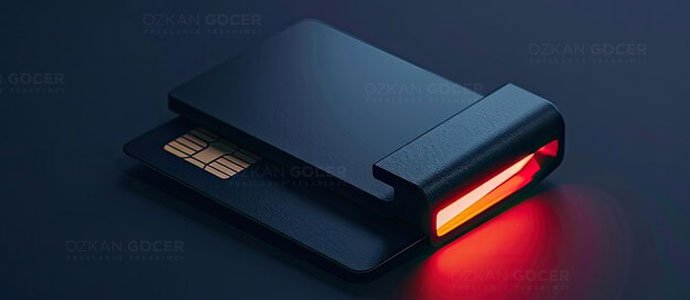
A rising name, Tangem breaks the classic USB-stick form with a credit-card-sized cold wallet. It has no screen, battery or cable; it draws power from your phone's NFC.
- How it works: Tap the card to the back of your phone to sign; setup takes under three minutes.
- Security: An EAL6+ chip made by Samsung, with IP68 water and dust resistance.
- Pros: Nothing to break (no screen, battery or cable), pocket-easy, excellent value, the simplest setup.
- Cons: No screen means a blind-signing risk; you must keep a backup card (seed phrase is optional).
4. Ellipal Titan: An Air-Gapped Armored Wallet
For total isolation, the Ellipal Titan has no USB port, Bluetooth or Wi-Fi; it communicates only through QR codes.
- Physical security: A single-piece metal case that self-destructs (anti-tamper) if forced open.
- Pros: 100% internet isolation, superior physical durability, a large screen for reading QR codes and transaction details.
- Cons: No desktop support (mobile only), bulky, needs its own charging adapter.
5. Ledger Nano S Plus: The Value Champion
If you will not carry your wallet around and do not need Bluetooth, the Nano S Plus is the smartest pick. It shares the Nano X's security chip and large memory but works by cable only, making it the most economical strong choice for NFT collectors and DeFi users.
- Pros: Same security chip and memory as the Nano X, far more affordable, USB-C, excellent DeFi and NFT compatibility.
- Cons: No Bluetooth, no iOS use, a slightly smaller screen, cable-only.
6. SafePal S1: A Binance-Backed Budget Pick
Developed with investment from Binance Labs, the SafePal S1 is a credit-card-sized device with a camera. Despite its air-gapped, QR-based design, the price is very competitive, and integration with the Binance app is seamless.
- Pros: The most affordable air-gapped wallet, fast QR transactions via its camera, direct access to Binance spot and futures, broad coin support.
- Cons: Build quality feels plasticky, low screen resolution, the buttons can be fiddly.
7. Trezor Model One: The Veteran
The world's first cold wallet, the Model One is known for simplicity and an affordable price. It has no touchscreen and is run with two physical buttons. It does not support some popular coins like XRP or ADA, but for Bitcoin and Ethereum it remains one of the safest harbors.
- Pros: Proven, unhacked security record, very affordable, light and simple, open-source.
- Cons: No touchscreen, does not support some popular coins (XRP, ADA), older Micro-USB connector.
8. CoolWallet Pro: A Flexible Card in Your Wallet
As flexible as a real credit card, the CoolWallet Pro connects to your phone over Bluetooth. A small e-ink screen shows transaction details, it is water resistant, and it fits right into your card slot.
- Pros: Real credit-card size (0.8mm) and flexible, durable against water and impact, fully mobile over Bluetooth, advanced staking and NFT support.
- Cons: The e-ink screen is tiny, it needs its own charging clip, and the flat button can be hard to press.
Comparison Table: Specs and Prices
| Model | Connection | Security | Screen | Price Tier |
|---|---|---|---|---|
| Ledger Nano X | Bluetooth / USB-C | EAL5+ chip (SE) | OLED | High |
| Trezor Model T | USB-C | 100% open source | Color touch | Very high |
| Tangem Wallet | NFC (contactless) | EAL6+ chip | None (mobile) | Low (value) |
| Ellipal Titan | Air-gapped (QR) | Anti-tamper metal case | 4" touch | High |
| Ledger Nano S Plus | USB-C | EAL5+ chip (SE) | OLED | Mid |
| SafePal S1 | Air-gapped (QR) | EAL5+ chip + sensors | 1.3" color | Low (budget) |
| Trezor Model One | Micro USB | 100% open source | OLED (buttons) | Low |
| CoolWallet Pro | Bluetooth (card) | EAL6+ chip | Small e-ink | Mid |
Hot Wallet vs Cold Wallet
Both store crypto, but their security models are opposite. A hot wallet is connected to the internet; it is convenient but exposed to remote attacks. A cold wallet is offline; remote hacking is almost impossible.
| Criterion | Hot Wallet | Cold Wallet |
|---|---|---|
| Connection | Always online | Offline |
| Security | Lower (remote attack risk) | High (physical approval) |
| Use | Fast, daily transactions | Long-term storage |
| Cost | Free | ~$70-$250 |
| Best for | Small, active balances | Large, long-term portfolios |
To set up a hot wallet safely, see my guide to creating a crypto wallet.
Types of Cold Wallets
Cold wallets fall into three groups by how they connect:
- USB / hardware wallet: Connects to a computer or phone by cable (Ledger Nano S Plus, Trezor Model T).
- NFC card wallet: Works by tapping the phone, with no screen or battery (Tangem).
- Air-gapped (QR code) wallet: Uses no cable or wireless link, communicating only via QR codes (Ellipal Titan, SafePal S1).
Cold Wallet Buying Guide
The cost of a cold wallet averages $70 to $250. If your crypto portfolio is worth more than the device, it is clearly worth it. When an exchange is hacked or collapses (think of the FTX case), your loss can be total; a cold wallet works like an insurance policy that drives that risk toward zero. The most critical rule when buying: never buy a second-hand device, and purchase only from the maker's official website (Ledger.com, Trezor.io) or an authorized distributor, making sure the box's security seals are intact. A device from a random marketplace seller may arrive pre-loaded with spyware through a supply-chain attack.
Seed Phrase Security: 5 Golden Rules
A cold wallet's real strength depends on protecting your recovery phrase (seed phrase). If the device is stolen but those words are safe, your money is safe; conversely, if the words are exposed, your money is gone even while the device sits in your hand.
- Never store it digitally: Screenshots, email, notes apps and cloud storage are strictly off-limits.
- Store it physically and durably: Write it on paper, better yet on a metal plate (fire and water resistant).
- Share it with no one: No institution, exchange or "support" agent asks for a seed phrase; anyone who does is a phishing scammer.
- Back it up: Keep copies in two separate secure physical locations.
- Buy from official channels: A second-hand or marketplace device may come pre-loaded with a seed phrase.
I covered every layer of protection in my crypto asset security guide; if your wallet is ever stolen, my wallet stolen guide walks you through the steps.
Security and Investment Disclaimer
A cold wallet is the safest way to store your crypto, but it places the responsibility entirely on you: if you lose your recovery phrase, no one can restore access to your assets. The content here is for information only and is not investment advice; cryptocurrency is a high-risk, volatile asset class. Make your device choice and your investment decisions through your own research (DYOR).
Cold Wallet FAQ
Which is the most reliable cold wallet?
Security is a spectrum. Air-gapped wallets with no physical internet link (Ellipal, SafePal) are theoretically the safest. But Ledger and Trezor are considered the most trusted brands because they have been tested for years by millions of users and bug-bounty programs.
What is the difference between a hot and a cold wallet?
A hot wallet (MetaMask, exchange wallets) stays connected to the internet, which exposes it to phishing and malware. A cold wallet stores your private keys in an offline physical device, inside an encrypted chip, and you approve transactions with physical buttons on the device, making remote hacking close to impossible.
Is it worth buying a cold wallet?
Yes, if your crypto portfolio is worth more than the device (about $70-$250). When an exchange is hacked or fails, your loss can be total. A cold wallet drives that risk toward zero, working like a low-cost insurance policy for your assets.
How much do cold wallets cost?
Cold wallets cost roughly $70 to $250 depending on the model. Budget models like the SafePal S1 and Tangem sit at the lower end, while the Ledger Nano X and Trezor Model T are at the premium end.
Ledger or Trezor: which is better?
Both are the most trusted brands; the choice depends on your priority. Ledger offers broad coin support and mobile flexibility (Bluetooth); Trezor stands out with 100% open-source code and a touchscreen for transparency. Choose Ledger for mobile use and coin variety, Trezor for open-source auditability.
What is a seed phrase and how should it be stored?
A seed phrase is the 12- or 24-word recovery phrase given at setup; it is the real backup key to your assets. Never store it digitally (screenshot, email, cloud); write it on paper or a metal plate, keep it in two separate secure locations and share it with no one. If these words are exposed, your funds can be stolen even while the device is in your hand.
What if my cold wallet breaks or is lost?
Your money is not lost. Your assets live on the blockchain, not on the device. By entering the 12- or 24-word recovery phrase (seed phrase) from setup into a new device, you regain access to your entire balance.
Can a cold wallet be hacked?
Because it works offline, remote hacking of a cold wallet is almost impossible. The real risk is physical: the device being stolen along with a weak PIN, or the seed phrase being exposed. With a strong PIN and a properly stored recovery phrase, the risk drops to practically zero.
Where should I buy a cold wallet?
A vital safety rule: buy only from the maker's official website or an authorized distributor. Never buy from random marketplace sellers or second-hand, because a supply-chain attack may have pre-loaded spyware onto the device.
Which coins can a cold wallet store?
Modern devices like Ledger and Trezor support more than 5,000 cryptocurrencies. You can store popular assets such as Bitcoin, Ethereum, XRP and USDT, plus thousands of tokens on EVM-compatible networks (Avalanche, BSC, Polygon).
Which cold wallet does Binance support?
The hardware wallet officially backed and invested in by the crypto exchange Binance is the SafePal S1. It integrates fully with the Binance app and is the easiest cold wallet for exchange users.
Is the Tangem wallet safe?
Yes, Tangem uses an EAL6+ certified (passport-grade) chip. With no battery or screen, the risk of physical failure is low. For backup you use the 2 or 3 cards in the pack, a different security model that removes the burden of storing a seed phrase.