Google Ads in One Sentence (and How It Differs from AdSense)
Google Ads is the system that lets you appear, for a fee, above the search results and across Google's ad network. When someone searches for the product or service you offer, you can show up in the most visible spot, and in most campaigns you only pay per click. So you spend money not to appear, but only when someone interested actually clicks.
Let us clear up a common mix-up first: Google Ads is for advertisers who pay to attract customers, while AdSense is for publishers who earn money by showing ads on their own site. The two are opposite sides of the same coin and are often confused. Since you are the one advertising, Google Ads is the side that concerns you. I walk through setup in my guide to advertising on Google.
The Core Benefit: Reaching People the Moment They Search
What sets Google search ads apart is that they capture demand that already exists, instead of trying to create it. When someone types "roof repair near me," that person has a need and is looking for a solution; appearing right then is the closest advertising gets to a sale.
Why search ads work differently from social ads
A social ad shows a product to someone scrolling with no intent to buy, so you are trying to create demand. A search ad is triggered by the words the person typed, so the intent is already there. Both are good for different jobs: social for brand awareness and visual products, search for converting ready intent.
The Other Key Benefits: Measurability, Speed, Control, Targeting
Alongside intent-based reach, Google Ads offers several practical advantages:
- Measurability: you see exactly which keyword brings how many clicks, conversions, and at what cost, and you can track return on ad spend (ROAS).
- Speed: traffic starts the day a campaign goes live; unlike SEO, you do not wait months.
- Budget control: you set the daily budget and can pause or raise it anytime, with no fixed commitment.
- Targeting: you narrow who sees your ad by keyword, location, language, device, and time of day.
You can read more about measurement in my article on ROI and ROAS; for industry PPC and conversion data you can check sources like Semrush, and the official setup and features start at Google Ads.
How Much Does It Cost? Is $10–$20 a Day Enough?
Google Ads has no fixed price; you set the daily budget and pay per click. Cost varies a lot by industry and competition, from a few dollars per click in competitive niches to far less elsewhere.
How CPC and daily budgets really work
The sensible approach is to test with a small budget like $10–$20 a day, then scale based on conversion data. In a low-competition niche, $20 a day is enough to gather real data; in an expensive industry the same budget may only buy a few clicks, so you narrow keywords and location to make every dollar count. You can review cost-per-click by industry in benchmark data, and I cover ways to lower spend in my Google Ads cost article.
The Downsides: When Google Ads Is NOT Worth It
Honestly, Google Ads is not always right for every business. The moment you stop paying, the traffic stops too, so it is not permanent; a poorly built campaign burns budget fast and demands constant monitoring and optimization. On very thin-margin products, the cost per click can eat your profit.
If your landing page cannot turn visitors into customers, pouring money into ads is like carrying water in a leaky bucket; you need to make the site convert first. When no one has the time or expertise to watch and optimize the account, Ads can lose money. In those cases, fixing the website and investing in SEO first is usually smarter; I cover why sites fail to convert in my conversion article.
Google Ads vs SEO: Which (or Both)?
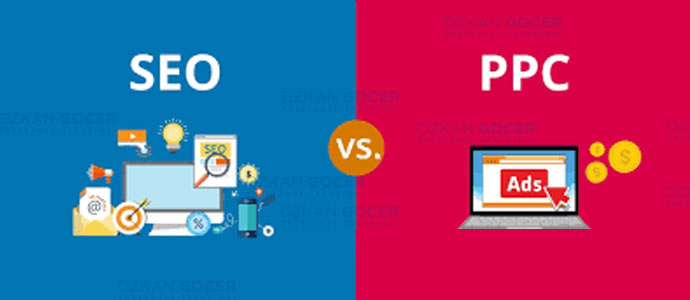
Google Ads is fast but gives traffic that flows only while you pay; SEO is slow but durable and compounds. The two are not rivals but complementary channels. If you need quick results and testing, start with Ads while investing in SEO for lasting visibility, so reliance on paid clicks falls over time. I detail when each wins in my SEO vs Google Ads article. For data-driven thinking, Google's own resource Think with Google is also useful.
Benefits for Small and Local Businesses
A limited budget can still run a meaningful test. Instead of broad, expensive keywords, choose narrow, intent-driven ones; for example, prefer "waterproof hiking boots" over "cheap shoes," where buyer intent is clear. Narrow geo-targeting to only the area you serve, so budget is not wasted on out-of-area clicks.
Early on, the goal is not profit but learning: which keywords convert and which ad copy gets clicked. Small and local businesses get measurable, on-demand visibility with no big upfront commitment, plus precise local targeting. Match the ad type to your need: Search ads when demand exists, Display and Video for awareness, Shopping ads for e-commerce. Most businesses start with Search and add others based on data. Starting small and scaling with evidence is far safer than launching blindly with a large budget.
For performance-focused ad management, you can review my Google Ads expert service.