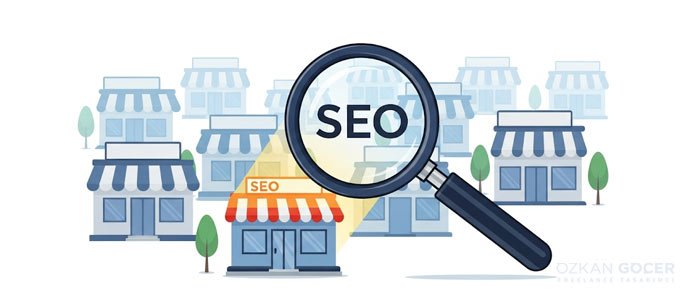
Map rankings depend on how completely and accurately a Google Business Profile is maintained. Google prioritizes geographic proximity and trust over massive ad budgets. You can outrank national brands. The following sections break down how local SEO works, how it differs from traditional search optimization, and how you can implement and track your results.
What Is Local SEO?
Local search engine optimization (SEO) targets queries with geographic intent. When users search for a "cafe near me" or "auto repair in Austin," Google processes IP addresses, GPS data, and Wi-Fi signals to rank the closest, most reliable merchants. Capturing local high-intent searches directly drives physical foot traffic and phone calls. Proximity equals revenue. You position your brand right when location dictates the buying decision. Understand the broader mechanics of search optimization in my importance of SEO for businesses article, and study how algorithms index web pages in my what is a search engine guide.
Why Is Local SEO Important? (For SMBs)
"Near me" queries convert far faster than broad informational searches. Users typing these phrases want to buy, visit, or call right now. Small and medium-sized businesses (SMBs) gain several distinct advantages from targeting high-intent searchers:
- High conversion rates: Searchers looking for nearby solutions are ready to buy immediately.
- Level playing field: Physical proximity and positive customer reviews outweigh massive corporate ad budgets.
- Free visibility: Creating and updating your Google Business Profile costs zero ad spend.
- Mobile traffic: On-the-go searches on smartphones trigger immediate actions like physical visits or direct phone calls.
Local SEO vs Regular SEO
Search intent is what separates the two strategies. General search optimization targets a nationwide or global audience, while local optimization captures buyers within a tight geographic radius. You target different searchers. Location changes everything.
Scroll sideways to read every column. Keyboard: focus the table and use the arrow keys.
| Criterion | Local SEO | Regular (General) SEO |
|---|---|---|
| Target Audience | A defined city or neighborhood | Worldwide or country-wide markets |
| Search Results | Google Map Pack and local listings | Traditional organic blue links |
| Keywords | Geo-targeted phrases and "near me" queries | High-volume, non-spatial terms |
| Key Ranking Factors | Google Business Profile, NAP consistency, customer reviews | Inbound links, topical depth, domain authority |
| Best For | Brick-and-mortar shops and regional service providers | Online stores, publishers, and SaaS platforms |
How Does Local SEO Work? (Local Pack and Map)
Google displays three business listings next to a map at the top of local search results, a feature called the Local Pack. The map area often generates more leads than the top organic position. Placement drives calls. Google calculates rankings using three distinct signals: proximity (how close you are to the user), relevance (how accurately your profile matches the search query), and prominence (your reviews, citations, and overall digital footprint). Optimizing for all three areas builds your local search visibility.
How to Do Local SEO Step by Step
In the local search campaigns I manage, ranking in the map pack consistently requires executing six specific phases.
- Create and verify your Google Business Profile: Claiming your listing establishes your primary anchor in Google Maps.
- Maintain NAP consistency: Match your name, address, and phone number character-for-character across directories to prevent search engine confusion.
- Target local keywords: Build your content around specific search queries combining your service with your target city or neighborhood.
- Optimize on-page elements: Place explicit geographic identifiers directly into your title tags, meta descriptions, and body copy.
- Collect and manage reviews: Acquire steady, genuine customer feedback to build trust and signal active operations to search algorithms.
- Build local citations and backlinks: Register your business in regional directories and secure hyperlinks from nearby community websites.
Google Business Profile (GBP) Optimization
A fully completed Google Business Profile (GBP) generates direct phone calls and physical store visits without requiring ad spend. You must select the precise primary business category, maintain identical operating hours across the web, upload high-resolution photos weekly, and list every service with clear pricing. Quick responses to customer questions and reviews directly signal active management to the search algorithm. Action drives visibility. Read my step-by-step Google Business Profile guide to configure your account for maximum local reach.
Review Management and Reputation Strategy
Search engines use review signals directly for local rankings, while buyers compare star ratings and total volume before choosing a competitor. Establishing a direct process to request feedback from satisfied customers produces a steadier flow of genuine reviews than waiting passively. Never buy fake reviews. You must reply to every public comment with a polite, solution-oriented tone. A constructive response to a negative review often wins more customers than a perfect five-star rating because it demonstrates real accountability. Your response template must match your overall brand voice.
Local Backlinks and Citation (NAP) Work
Businesses lose local rankings simply because of mismatched Name, Address, and Phone Number (NAP) details across directories, industry portals, and map platforms. Search engines use citations to verify your physical location. A single typo in your street name or an old phone number damages your search visibility. Consistency builds trust. You must audit your listings to keep every entry identical. Acquiring local backlinks from regional news sites, neighborhood blogs, and local business partners reinforces your geographic relevance directly in Google's algorithm.
Local SEO Performance and Tools
Tracking keyword positions alone never reveals the true return on investment. You must analyze actual user actions and platform-specific metrics. Evaluate your campaigns using the following performance indicators:
- Profile interactions: Count direct phone calls, map direction requests, and clicks to your website from your business profile.
- Local Pack rankings: Track your business placement on Google Maps for your target search queries.
- Local organic traffic: Segment and measure the volume of visitors landing on your site from location-specific search queries.
- Review growth: Monitor your average star rating and the frequency of incoming customer reviews.
- Conversions: Measure completed contact forms, direct phone inquiries, and physical foot traffic to your store.
Refine your targeting strategy by using my keyword finding tools guide, and read my search intent article to align your content with user expectations.
Further Resources
- Google Business Profile Help: Access direct documentation from Google to resolve verification issues and configure your listing.
- Google Search Central: Read technical guidelines on how crawler bots index local schema and map data.
- Moz Local SEO: Study annual data on localized search signals and map pack ranking variables.
- Ahrefs Local SEO Guide: Learn practical workflows for finding geo-targeted keywords and auditing directory citations.
Local optimization positions your brand directly in front of regional buyers during high-intent searches. Correcting inconsistent name, address, and phone number (NAP) data across directories resolves many local ranking drops. You now understand the mechanics of the Local Pack and how it diverges from traditional organic search. Start by claiming your Google Business Profile, aligning your NAP details across major platforms, and establishing a systematic review acquisition process. Track your map impressions weekly. Consistency wins.
For lasting growth in search, you can review my SEO consulting.