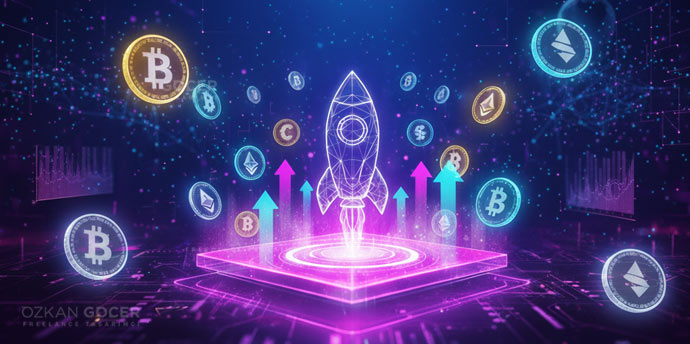
ALTCOİN GUİDE: MOST POPULAR ALTCOİNS AND ANALYSİS FOR BEGİNNERS

Altcoin Guide: Most Popular Altcoins and Analysis for Beginners

Altcoin is the general name for all cryptocurrencies other than Bitcoin. Below you will find, in a neutral and educational way, what an altcoin is, how it differs from Bitcoin, its types (stablecoin, utility, DeFi, meme), what its price moves on, the altcoin season, the "best altcoin" question, and the risk of an altcoin going to zero. What I write contains no investment advice.

What Is an Altcoin, What Is It For?

Altcoin is short for "alternative coin" and is a general term for all cryptocurrencies other than Bitcoin. Because Bitcoin is the first and most known cryptocurrency, the thousands of cryptocurrencies that came after it (Ethereum, XRP, Cardano, Solana and many more) are all called "altcoins"; you can see the current list on CoinMarketCap.

What are they for? The answer varies a lot: some altcoins aim to be an alternative payment or store of value to Bitcoin, some aim to run smart contracts and applications (such as Ethereum), some aim to stay pegged to a stable value (stablecoin), and some aim to be used inside a specific project. So an altcoin is not a single thing but a broad category with very different purposes and technologies. Important note: the number of altcoins runs into the thousands, and the vast majority are small, risky projects of uncertain durability.

The Difference Between Bitcoin and Altcoin

The basic difference is this: Bitcoin, which appeared in 2009, is the first cryptocurrency and is usually seen as a store of value with the "digital gold" analogy; it is the largest, most known and most established cryptocurrency. Altcoin, on the other hand, refers to all the other cryptocurrencies that came after Bitcoin and try to offer different features; Investopedia uses this definition too.

Altcoins were mostly born to overcome some of Bitcoin's limits or add new functions: Ethereum can run smart contracts; some offer faster and cheaper transactions, some privacy, some a stable value. There is a market difference too: while Bitcoin is generally considered the most stable (still volatile), altcoins are usually more volatile and riskier; their prices swing more sharply and the durability of many is uncertain. As a general rule, the smaller and newer an altcoin is, the higher the risk.

What Are the Types of Altcoins?

Altcoins split roughly into a few groups by purpose. There is a technical distinction too: "coins" have their own blockchain, while "tokens" run on another chain. The main types are as follows:

Stablecoin (Stable Value)

Stablecoins are coins whose value is meant to be pegged to an asset (usually the US dollar); the aim is to reduce volatility. That said, they have their own risks too; some stablecoins have lost their peg in the past and dropped sharply in value.

Platform / Utility Token

Platform or utility tokens are coins used inside a specific blockchain or application; for example the native tokens of smart contract platforms. They can have functions like access to a service, paying transaction fees or voting; ethereum.org explains token standards in detail.

DeFi and Meme Coins

DeFi (decentralized finance) tokens are the coins of projects that offer financial services like lending, swapping and interest without intermediaries. Meme coins, on the other hand, are usually born around a joke or community, have no serious technological purpose, and are extremely speculative and risky. There are also niche categories themed around privacy, gaming (GameFi) and artificial intelligence.

What Does an Altcoin Price Rise or Fall On?

Altcoin prices move with many factors and usually with high volatility; you can track live data from sources like CoinGecko:

  • Supply and demand: the most basic rule; if demand rises the price goes up, if it falls the price drops.
  • Bitcoin's course: the market largely follows Bitcoin; altcoins usually move in the same direction more sharply.
  • The project's progress: technology, team, real use and partnerships.
  • News and regulation: positive or negative news and legal regulations affect the price fast.
  • Sentiment and speculation: social media, hype, fear of missing out (FOMO) and big investor (whale) moves.
  • Liquidity: in low-volume coins the price is far easier to manipulate; I explained the detail in my liquidity article.

A reminder: altcoin prices mostly move on speculation rather than fundamentals; so they are hard to predict and fast losses are possible. What I write is not investment advice.

What Is Altcoin Season?

Altcoin season (altseason) is the popular name for a period in the crypto market when altcoins rise more strongly than Bitcoin. The typical story goes like this: first Bitcoin rises and draws attention, then investor interest and money shift to altcoins, which causes many altcoins to rise sharply in a short time.

An important warning is needed: altcoin season is not a guaranteed or predictable schedule; the season everyone "expects" may never come or may be different. On top of that, the fast rises in these periods are often followed by equally sharp drops, and late joiners can suffer big losses. Talk like "altcoin season is coming, do not miss it" is frequently for speculation and marketing.

Is There a 'Best Altcoin'? How Is It Evaluated?

Telling you "buy that altcoin" or "this is the best" would not be right or responsible; that becomes investment advice, varies from person to person, and no one knows the future of the price. Instead, general criteria for how you can evaluate a project are useful.

When evaluating, ask these questions: does the project have a real purpose and use, or is it only speculation? Is the team behind it known and trustworthy? Are the technology and roadmap transparent, and is the documentation (whitepaper) meaningful? Are the community and real user base solid? If it is marketed with promises like "guaranteed profit" or "sure to moon", that is a warning sign. Most importantly, do your own research (DYOR) and do not put in money you cannot afford to lose. No coin is recommended here; the "best altcoin" question has no single, lasting answer.

Can an Altcoin Go to Zero? The Risks

Yes, and this is one of the most important facts about altcoins. An altcoin's value can theoretically drop to zero, and in practice many altcoins have reached that end. How does it happen? If demand for and trust in a project disappear entirely (the project is abandoned, fraud emerges, the technology collapses, or no new buyers remain), the coin has no buyer and its price practically approaches zero; you cannot sell it and turn it into money.

In crypto history, countless coins and tokens have become worthless this way, with their projects shutting down or vanishing through a "rug pull" (founders taking the money and running); I addressed these traps in my fake exchange and fraud article. In such a case you can lose all the money you invested; in crypto there is no state guarantee like a bank deposit. So altcoins carry the risk of "losing all your money" as much as "high returns"; the risk is very high especially in small, new and unknown coins. Approach crypto only with an amount you can afford to lose and with full awareness of the risk.

FAQ

Frequently Asked Questions

Quick answers for readers who skipped to the end.

What is an altcoin, what is it for?
Altcoin is short for "alternative coin" and is a general term for all cryptocurrencies OTHER THAN BITCOIN. Because Bitcoin is the first and most known cryptocurrency, the thousands of cryptocurrencies that came after it (Ethereum, XRP, Cardano, Solana and many more) are all called "altcoins". What are they for? It varies a lot: some altcoins aim to be an alternative payment or store of value to Bitcoin, some aim to run smart contracts and applications (such as Ethereum), some aim to stay pegged to a stable value (stablecoin), and some aim to be used inside a specific project or platform. So "altcoin" is not a single thing but a broad category with very different purposes and technologies. Important note: the number of altcoins runs into the thousands, and the vast majority are small, risky projects of uncertain durability. This content is educational, not investment advice.
What is the difference between Bitcoin and altcoin?
The basic difference is this: BITCOIN, which appeared in 2009, is the first cryptocurrency and is usually seen as a store or transfer of value with the "digital gold" analogy; it is the largest, most known and most established cryptocurrency. ALTCOIN refers to all the other cryptocurrencies that came after Bitcoin and try to offer different features or purposes. Altcoins were mostly born to overcome some of Bitcoin's limits or add new functions: for example Ethereum can run "smart contracts" and applications; some offer faster or cheaper transactions, some privacy, some a stable value. There is a market difference too: while Bitcoin is generally considered the most stable (still volatile), altcoins are usually MORE VOLATILE and RISKIER; their prices swing more sharply and the durability of many is uncertain. As a general rule, the smaller and newer an altcoin, the higher the risk. This is general information and contains no investment advice.
What are the types of altcoins?
Altcoins split roughly into these groups by purpose: (1) STABLECOIN (stable value), coins whose value is meant to be pegged to an asset (usually the US dollar); the aim is to reduce volatility (though they have their own risks too, and some stablecoins have lost their peg in the past). (2) PLATFORM or UTILITY tokens, coins used inside a specific blockchain or application; for example the native tokens of smart contract platforms. (3) DeFi (decentralized finance) tokens, the coins of projects offering financial services like lending, exchange and interest without intermediaries. (4) MEME COINS, coins usually born around a joke or community, with no serious technological purpose, extremely speculative and risky. (5) Niche categories themed around privacy, gaming (GameFi), artificial intelligence and so on. Note: there is a technical distinction between "coin" and "token"; coins have their own blockchain, while tokens run on another chain. Whatever the type, small and new projects carry high risk.
What does an altcoin price rise or fall on?
Altcoin prices move under the effect of many factors and usually with high volatility: (1) SUPPLY and DEMAND, the most basic rule; if demand for a coin rises the price goes up, if it falls the price drops. (2) BITCOIN'S COURSE, the crypto market largely follows Bitcoin; as Bitcoin rises and falls, altcoins usually move in the same direction more sharply. (3) THE PROJECT'S PROGRESS, the technology, team, real use and partnerships behind the coin. (4) NEWS and REGULATION, positive or negative news and legal regulations affect the price fast. (5) MARKET SENTIMENT and SPECULATION, social media, hype, fear of missing out (FOMO) and whale (big investor) moves have a big short-term effect. (6) LIQUIDITY, in low-volume coins the price is far easier to manipulate and swings sharply. IMPORTANT: altcoin prices mostly move on speculation rather than fundamentals; so they are hard to predict and fast losses are possible. This is not investment advice.
What is altcoin season (altseason)?
Altcoin season (altseason) is the popular name for a period in the crypto market when altcoins rise more strongly than Bitcoin. The typical story is this: first Bitcoin rises and draws attention, then investor interest and money shift to altcoins, which causes many altcoins to rise sharply in a short time; this period is called "altcoin season". These periods are associated with excitement and hype (even FOMO). BUT a very important warning: altcoin season is not a guaranteed or predictable schedule; the season everyone "expects" may never come or may differ from expectations. Also, the fast rises in these periods are often followed by equally sharp DROPS, and late joiners can suffer big losses. Talk like "altcoin season is coming, do not miss it" is frequently for speculation and marketing. This content is educational; decisions based on market timing are extremely risky, and no investment advice is given here.
Which is the best altcoin, which one should I buy?
Telling you "buy that altcoin" or "this is the best" would not be right or responsible; that becomes investment advice, varies from person to person, and no one knows the future of the price. Instead, general criteria for HOW a person can evaluate a project are useful: (1) Does the project have a REAL purpose or use, or is it only speculation? (2) Is the TEAM behind it known and trustworthy (or anonymous)? (3) Are the technology and roadmap transparent, and is the project documentation (whitepaper) meaningful? (4) Are the COMMUNITY and real user base solid? (5) What is the state of liquidity and track record? (6) If it is marketed with promises like "guaranteed profit" or "sure to moon", that is a WARNING sign. Most importantly: crypto, especially small altcoins, is extremely risky; most projects fail or become worthless in the long term. If you decide, do your own research (DYOR), do not put in money you cannot afford to lose, and consult a qualified advisor if needed. No coin is recommended here.
Can an altcoin go to zero, lose all its value?
Yes, and this is one of the most important facts about altcoins. An altcoin's value can THEORETICALLY drop to zero, and in practice many altcoins have reached that end. How does it happen? If demand for and trust in a project disappear entirely (the project is abandoned, fraud emerges, the technology collapses, or no new buyers remain), the coin has no buyer and its price practically approaches zero; you cannot sell it and turn it into money. In crypto history, countless coins and tokens have become worthless this way, with their projects shutting down or vanishing through a "rug pull" (founders taking the money and running). In such a case you can lose ALL the money you invested; in crypto there is no state guarantee like a bank deposit. So altcoins carry the risk of "losing all your money" as much as "high returns"; this risk is very high especially in small, new and unknown coins. Conclusion: approach crypto only with an amount you can afford to lose and with full awareness of the risk. This content is informational, not investment advice.
Summarize:
Özkan Göçer profile photo

Özkan Göçer

Growth Engineer & Digital Marketing Specialist

Özkan Göçer is a Growth Engineer and Digital Marketing Specialist with over 15 years of field experience and 200+ completed projects. He infuses this analysis with over 7 years of expertise in blockchain, crypto markets, and Web3 marketing.


Scroll to top