Identity work follows a recurring pattern: a business commissions a single logo, then realizes six months later that it needs a complete system specifying colors, typefaces, and communication tones for every social channel. You can avoid that costly detour. Read on to learn how to build the system directly.
What Is Corporate Identity?
Corporate identity represents the unified system of visual, verbal, and behavioral codes an organization uses to face its internal and external stakeholders. A logo marks only the starting point. Think of a local restaurant. The menu typography, the waiter's greeting, the napkin color, the Instagram lighting, and the plate presentation must align. Once all details merge into one cohesive experience, corporate identity exists. You recognize Starbucks without seeing the green siren. Identity works in silence.
Aesthetics take a back seat to the actual function: shortening time-to-recognition. Consumers typically require seven visual touchpoints to memorize a brand. A unified identity cuts that number down, because every touchpoint reinforces the same signal. Chaotic branding inflates the number to ten or twelve. Most marketing budgets dry up before reaching that threshold. High product quality cannot save you if your presentation shifts constantly and confuses your audience.
Let me be direct: corporate identity is not an art piece, it is an operational tool. The goal is memory, not affection. Affection stems from your pricing, product quality, and customer experience. Identity merely accelerates the path to recognition.
Corporate Identity vs Brand Identity vs Visual Identity
Founders routinely treat these three terms as synonyms. They are not. Think of a human being: character represents brand identity, covering core values, temperament, and voice. Clothing, posture, and scent form the corporate identity. Facial features that make you recognizable in a crowd constitute the visual identity. Each layer feeds the other. They operate on entirely different levels.
Scroll sideways to read every column. Keyboard: focus the table and use the arrow keys.
| Concept | Scope | Question it answers |
|---|---|---|
| Brand identity | Strategic foundation: values, voice, audience, and core promises | Who am I? |
| Corporate identity | Operational system: visual, verbal, and behavioral touchpoints | How am I perceived? |
| Visual identity | Aesthetic execution: logos, color palettes, and typography | How do I look? |
A brand identity document defines your audience, your mission, and your market promise in plain text. The corporate identity system translates those written definitions into tangible assets like color schemes, typography, photography guidelines, and customer service standards. Visual identity remains the immediate surface layer. Skipping the strategic foundation to build visual assets yields empty aesthetics. Neglecting the system leaves your message without a recognizable face. Execution requires both.
Core Elements of Corporate Identity
Identity work consistently comes back to the same five foundational elements. Their sequence is highly deliberate, building upward from a stable base. Disrupting the sequence causes the entire system to collapse.
Visual Elements (Logo, Color, Typography, Iconography)
Visual assets form the public face of your brand. Your logo anchors the system. It must work perfectly in a single color, balance the icon with the wordmark, and remain legible at 16×16 pixels. I mapped my exact process for building a mark from scratch in my logo design: from idea to brand mark guide.
Your color palette requires five distinct layers: primary, secondary, accent, neutral background, and alert colors for success or error states. Every selection must include HEX, RGB, CMYK, and Pantone codes. Asking for "blue" without specifying the exact code leads to chaotic design. Color psychology directly shapes consumer behavior, as detailed in my colors and their meanings article.
Typography quietly drives brand perception. Limit your brand to two typefaces: a distinctive heading font and a highly legible body font. Introduce a third typeface only under rare circumstances. You can learn to pair fonts effectively by reading my typeface selection and typography guide resources.
Iconography provides the subtle accents of your visual language. Maintain a single style across your website, application, and presentations. Mixing outline and filled icons, or sharp and rounded edges, looks unprofessional. Clear brand guidelines specify exact numerical values for stroke weight and corner radius.
Verbal Elements (Brand Voice, Slogan, Messaging Architecture)
Your verbal identity defines how your brand speaks and writes. Establish whether your tone is formal, casual, expert, or friendly. Neglecting tone definitions results in disjointed social media posts that sound like they came from different companies. A clear definition keeps your content consistent even after staff changes. Your slogan condenses your core promise into a single sentence, while messaging architecture maps specific parts of your story to the correct platforms.
Behavioral Elements (Customer Experience, Employee Communication)
Even the best visual system fails if your support team ignores emails or your receptionist sounds rude. Behavioral elements consist of written protocols governing customer greetings, complaint resolution, and delay communications. Enterprise organizations use detailed service blueprints for this; small businesses can fit the rules onto a single A4 page.
Print Materials (Business Card, Letterhead, Brochure, Envelope)
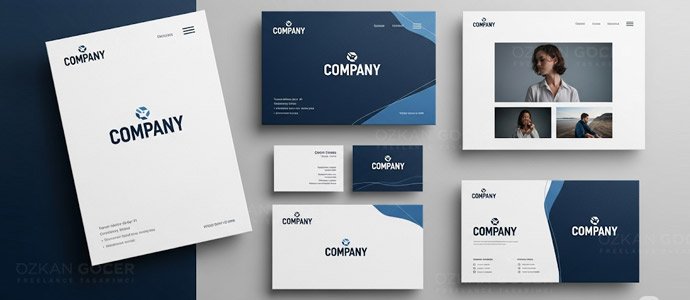
Physical assets still establish your initial tangible impression. You need consistent business cards, letterheads, invoice templates, envelopes, folders, brochures, and product labels. Exact CMYK and Pantone specifications prevent color shifting between screens and printing presses. Eight years ago, I sent a 14-layer logo file to a print shop for a client; the final prints returned with three misaligned layers. I now design every logo as a single black-and-white layer first.
Digital Materials (Web, Social Media, Mobile App)
By 2026, brand identity operates primarily in digital spaces. You must align your website UI kit, social media templates, mobile app icons, email signatures, video bumpers, and animated logos. Isolating design tasks among different creators breeds inconsistency. I detailed my personal workflow for managing digital assets in my what is web design piece.
Types of Corporate Identity
Selecting the right structure prevents costly rebranding cycles later. Your business model, target audience, and product variety dictate which of the three primary frameworks fits your operations. Choose wrong, and you waste marketing spend.
Monolithic Identity
A single master brand represents every product and service you offer. You build high brand equity quickly because every marketing dollar feeds the same name. A single product failure can damage the entire portfolio. Tech startups and professional service firms favor this approach to keep design assets unified. One logo rules.
Endorsed Identity
Sub-brands maintain individual names and visual styles but display a clear link to the parent company. Hotel groups and financial institutions use this structure to build trust in new markets while preserving local relevance. You gain market flexibility without losing the credibility of your established corporate name. The visual execution usually pairs a unique sub-brand logo with a "by [parent brand]" tagline.
Branded House vs House of Brands
A house of brands isolates each product with its own marketing, positioning, and target audience while keeping the parent company completely hidden. Fast-moving consumer goods companies operate this way to capture different market segments without cross-contamination. Conversely, a branded house forces all offerings to share the parent identity. My experience shows that a house of brands requires massive, individual marketing budgets for each asset, whereas a branded house maximizes capital efficiency at the cost of audience specificity.
Functions and Business Benefits of Corporate Identity
Brand identity requires upfront capital, but the returns are measurable. Five performance indicators show whether the spend pays off.
Brand Recognition
Uniform design assets increase brand recall by 3 to 3.5 times. Companies maintaining strict guidelines for their logo, color palette, and typography transition from simple name recognition to category dominance within six months. Think of Coca-Cola. You recognize their red instantly without reading a single letter. Structured visual systems build automatic associations.
Credibility and Professional Perception
Users form a first impression in seven seconds, and 94% of the judgment relies on visual cues, according to Nielsen Norman Group research. Design dictates value. Establishing a professional identity closes the trust gap, granting small businesses 15-40% more pricing power over unbranded competitors.
Differentiation in Competition
Ten companies in any market sell identical products. Recall beats price. Brand identity secures market share by creating a distinct visual presence and a voice that aligns with your target audience.
Employee Engagement and Internal Communication
Internal teams respond to branding too. Pride drives advocacy. Employees who take pride in their company assets post more actively on LinkedIn and refer talent more frequently. A unified design language also commands attention, making internal announcements look authoritative and serious.
Marketing Efficiency
Standardizing your assets reduces marketing costs by 20-35%. Your team generates new ads, social media posts, and presentations from pre-built templates rather than starting from scratch. Design time drops from four hours to forty-five minutes. Efficiency scales quickly.
Building Corporate Identity From Scratch: A 6-Step Process
Every identity project runs through six distinct phases. You can adjust the sequence slightly based on project needs. Skipping any single phase degrades the final output. Quality drops fast.
Step 1: Research and Brand Analysis
Your client brief merely opens the door. Real progress requires deep competitor analysis, audience research, and baseline perception metrics. Interviewing five to ten active customers yields better data than a hundred generic industry reports. Allocate up to two weeks for the research. Rushing leads to misaligned strategy.
Step 2: Strategy and Concept (Brand DNA)
Brand DNA exists as a concrete document detailing vision, mission, values, tone of voice, and brand promise. The core concept condenses into a single metaphoric sentence to guide the visual direction, such as "the technology of tomorrow, the wisdom of yesterday." Skipping the document leaves visual design vulnerable to subjective opinions. Logic beats personal taste.
Step 3: Visual Design (Logo and System)
You define the logo, color palette, typography, iconography, and photography style at this stage. I sketch three to five distinct logo variants, evaluating each against actual use cases rather than presenting a random gallery. Expect two or three rounds of client feedback. If revisions enter a fourth round, your process has stalled. Return to Step 2 immediately.
Step 4: Application Sets (Mock-ups)
Place the logo on a business card, a website header, physical signage, and social media posts. Clients often approve isolated logos but struggle to make final decisions without real-world context. Mock-ups resolve the issue.
Step 5: Brand Book Preparation
The brand book preserves the integrity of your design system over time. I outline the exact contents of the document in the following section. Neglecting the brand book means your identity project dies the day you launch.
Step 6: Launch, Internal Training and Monitoring
Launching the identity is just the beginning. Train your employees on correct usage, audit all design outputs for the first three months, and update the guidelines as practical issues arise. Unattended assets decay. In my experience, around 40% of unmonitored brand identities drift during their first year.
Preparing a Corporate Identity Brand Book
Visual identities decay within months without a central reference point. A brand book preserves your design assets over years of scaling. The document follows a strict layout sequence:
Brand Book Content: Sections That Must Be Inside
- Brand story and values: A 1-2 page summary of your core purpose.
- Logo section: All variations including full, short, mark, and monogram versions, alongside clear space requirements, minimum sizing, and incorrect applications.
- Color system: Primary, secondary, neutral, and alert palettes mapped across Pantone, CMYK, RGB, and HEX code tables.
- Typography: Heading and body font families, hierarchy demonstrations, and a complete size table spanning h1-h6 and paragraphs.
- Iconography: Style guidelines, a core set of sample icons, and grid rules for creating new ones.
- Photo language: Lighting, composition, color filtering guidelines, and side-by-side correct versus incorrect image examples.
- Application templates: Ready-to-use layouts for business cards, letterheads, social media posts, slide decks, and video bumpers.
- Voice tone: The communication style choice between formal and casual, supported by sample sentences and blacklisted phrases.
Logo Usage Rules (Safe Zone, Forbidden Applications)
The safe zone defines the mandatory clear space around your mark, typically matching the height of a single letter from the wordmark. Visualizing incorrect usage prevents external partners from stretching, adding gradients, placing the mark on low-contrast backgrounds, or rotating it. Skipping these rules leads to distorted branding. Protect your asset.
Color System (Pantone, CMYK, RGB, HEX)
Different media require specific color models to display accurately. Screens read RGB and HEX, offset printing needs CMYK, and custom packaging relies on Pantone spot colors. You must define all four codes for your primary blue; omitting even one forces print shops to guess, which alters your brand identity.
Typography Rules (Hierarchy, Size, Application)
Clear type scales prevent layout shifts and readability issues. You must specify heading sizes, line heights, letter spacing, body font families, and default paragraph margins for both web and print. Digital specifications require a fallback font stack to maintain layout integrity if Google Fonts fails to load.
Digital and Print Application Templates
Provide InDesign files for business cards and letterheads, a Figma library for web assets, a PowerPoint deck for pitches, and pre-rendered motion graphics for video intros. Clean file structures allow non-designers on your team to export assets without breaking the layout. Simple systems scale faster.
PDF Brand Book Production: Step by Step
Begin by configuring the master pages in Adobe InDesign with facing pages, running footers, and automatic page numbering. Next, construct individual page layouts for each chapter before importing your color swatches and typography scales. Save all logo assets as high-resolution SVG files. Export the final document using the "high quality print" preset for physical production, and generate a separate, compressed version using the "smallest file size" preset for digital distribution. I recommend distributing a 10-15 page quick-start guide for general onboarding, while reserving the detailed 40-80 page manual for your design team.
Corporate Identity Design Cost in 2026
Pricing for brand identity varies by provider tier rather than a single fixed rate. My tracking of global average cost brackets for 2026 shows clear divisions:
Scroll sideways to read every column. Keyboard: focus the table and use the arrow keys.
| Option | Cost (USD) | Timeline | Scope |
|---|---|---|---|
| DIY Tools (Canva, Looka) | $0 to $500 | 1-3 days | Basic logo and social media template, no brand book |
| Cheap Freelance | $500 to $2,000 | 2-4 weeks | Logo and 2-3 applications, short guide, no strategy |
| Quality Freelance / Small Studio | $3,000 to $7,000 | 6-12 weeks | Full strategy, system, 30-50 page brand book, application sets |
| Mid-size Studio | $8,000 to $25,000 | 10-16 weeks | Deep research, presentation rounds, extra digital assets, mock-up pack |
| Agency / International | $30,000+ | 16-32 weeks | Advertising, PR, international usage, long-term supervision |
The quality freelance or small studio band ($3-$7K) yields the best return on investment for mid-sized businesses and scaling startups. Spending less usually breaks the price-to-value ratio. Spending more means you pay for agency prestige; a luxury most growing companies do not need. Canva and Looka serve well for initial validation, but business growth demands professional assets. Cheap options deliver a standalone logo without usage guidelines. You will likely pay to redo the work within a year.
Clients often ask me about buying a logo alone. Expect a standalone design to cost roughly 20-30% of the complete system. Buying a logo detached from the system risks visual inconsistency across your marketing channels. Avoid it.
Practical Corporate Identity for SMBs and Start-ups
A professional presence on a tight budget comes down to prioritizing assets. You do not need a massive budget; you need a Minimum Viable Brand Identity (MVB).
Professional Look on a Small Budget
Begin phase one with three assets: a clean logo, 2-3 colors, and a font pair containing one heading and one body typeface. Add social media templates next. Keep your initial brand book between 6-10 pages. Scale it later.
Minimum Viable Brand Identity (MVB)
An MVB provides the absolute minimum assets required for a market launch. Your package includes one logo variant, three colors, two fonts, a business card, an email signature, one social media template, and one presentation template. Stop there. Expand the system only when monthly revenue stabilizes. Perfectionism delays your launch. Delay costs money.
Which Materials Come First?
- Logo design with 3 variants: full, short, and mark
- Color palette containing 3 primary tones and 1 accent color
- Font pair consisting of one heading and one body typeface
- Professional email signature
- Social media profile image and one post template
- Print-ready business card
- Website headline design
Common SMB Mistakes
Three errors recur most often. First, owners assume a logo alone constitutes a brand. Second, they adopt temporary trends with the plan to redesign later. Redesigning later doubles your eventual investment. Third, they alter designs based on casual feedback from friends or family. Treat identity as a business strategy, not an aesthetic debate.
Corporate Identity in the Digital Age
In 2026, your brand identity lives or dies online. I always build the digital asset system first, long before we send any vector files to the print shop. Digital-first execution wins.
Social Media Profiles (Visual Templates)
Each platform demands exact specifications: Instagram posts require 1080×1080, Stories need 1080×1920, LinkedIn banners use 1584×396, X headers require 1500×500, and YouTube banners demand 2560×1440. You must deploy a unified template system to keep your logo, typography, and core visual elements aligned across these diverse layouts. Consistency builds immediate recognition.
Website and UI Kit
Your web presence requires a dedicated UI kit containing button states (primary, secondary, disabled), form fields, card components, custom icons, and interactive hover states. Delivering these assets as a structured Figma file lets developers extract exact spacing and styling values instantly. Mapping the color palette directly to CSS variables like --primary and --accent keeps the code clean.
Mobile App Design
Operating systems dictate strict design languages, specifically Apple Human Interface Guidelines for iOS and Material Design for Android. Your brand assets must adapt to both environments without violating native user habits. Treat the app icon as a distinct asset: a highly compressed, simplified version of your brand mark optimized for a rounded square.
Email Signature Systems
Corporate email signatures represent a massive, frequently ignored branding gap. Chaos occurs when employees format their own sign-offs. I recommend coding a single, clean HTML template with standardized variables for names, job titles, and phone numbers. Automated generator tools will push this template to your entire team instantly.
Video and Motion Branding
Modern video assets require dedicated motion guidelines covering YouTube intro and outro bumpers, social media video hooks, and product launch sequences. Your asset library needs a static logo, a 3-5 second animated logo variant, and micro-interaction animations for web UI hovers. Motion design in 2026 carries equal weight to static graphic design.
Rebranding: When and How
Corporate identity lifespans vary. While some companies update their look every ten years, others maintain a single design for twenty years. Specific indicators signal when you must act. Businesses commonly wait too long, losing market share to modern competitors before they realize a change is overdue.
Situations That Demand Rebranding
- Corporate mergers or a shift in strategic direction
- Audience migration, such as moving from B2B to B2C models
- Public relations crises that damage brand reputation
- Visual assets falling out of step with current industry standards
- Business expansion into new global territories
- Legal mandates, including trademark disputes
Rebranding Types (Refresh vs Total Overhaul)
Refresh: Modernizing your current visual assets. You keep the core logo but simplify its lines, adjust color saturation, and update the typography. You preserve customer recognition while updating the aesthetic. It offers low risk and medium impact.
Total overhaul: Rebuilding every asset from zero. You replace the logo, change the color palette entirely, and alter your market positioning. High risk accompanies high impact. You need a clear communication plan to prevent existing customers from feeling alienated.
Rebranding Process and Risks
Rebranding is not like starting fresh. You must protect your current customer base. The workflow follows a strict sequence: research on current perception and new targets, strategy formulation, design execution, stakeholder approval, a soft launch on limited channels, a synchronized full launch across all touchpoints, and six months of performance monitoring. Bad timing can trigger a 15-25% drop in sales. Conversely, proper execution drives a similar increase. Risk remains high.
Legal Protection of Corporate Identity
Unregistered brand assets invite copycats. You cannot easily stop competitors from stealing your visual assets without formal ownership. Protect your work early.
Trademark Registration for Logo and Name
In Turkey, you file applications through TÜRKPATENT. You select from 45 classes; graphic design services typically fall under class 35 and 42. Approval takes 8-14 months from the filing date. Once approved, protection lasts for 10 years and requires renewal. Costs scale directly with the number of selected classes.
Copyright Ownership (Transfer from Designer)
Standard freelance contracts often state that designs remain the property of the creator. You receive limited usage rights rather than full ownership or modification privileges. Secure a signed copyright transfer agreement during onboarding. Failing to do so prevents you from altering your own logo two years down the road. Read every clause.
Domain Strategy
Register your matching .com and country-code domains immediately. Acquire alternative extensions like .co, .net, and .org alongside major social media handles to prevent squatting. I always advise clients to resolve domain availability before finalizing a brand name. Finding out five years later that a competitor owns your domain creates an expensive, avoidable mess.
International Trademark Registration
Global expansion requires broader protection. The Madrid Protocol lets you submit a single application targeting over 130+ countries. Because government fees scale based on the number of countries and classes, integrate these registration costs into your initial launch budget. Plan ahead.
Common Mistakes in Building Corporate Identity
Companies stumble over the same six or seven errors regardless of sector, and the pattern repeats across industries.
- Trend chasing: Following the 2026 "minimalist sans-serif" wave guarantees a dated look by 2028. Build your visual system with a 5-10 year horizon in mind.
- Logo obsession: Spending 70% of your timeline on the icon leaves typography, color systems, and real-world applications half-baked. A brand is a unified system, not a single graphic.
- Skipping the brand book: Your guidelines keep the design system alive once the creative team leaves. Neglecting this documentation causes visual drift within six months.
- Aesthetic-only color choice: Personal preference fails in the market. Replace "I like this shade" with objective analysis of how your target audience decodes the color psychology.
- Using too many typefaces: Mixing three or more fonts generates visual noise. Restraint requires discipline but yields a cleaner, more professional result.
- Approving without mock-ups: Evaluating a logo on a white screen hides functional flaws. Real-world applications expose legibility issues immediately.
- Ignoring the legal layer: Deploying a brand asset before trademark registration invites competitors to claim it first. Resolving trademark disputes later drains budgets.
- Skipping employee training: Launching the assets without educating your staff leads to incorrect usage. The visual assets degrade in daily operations.
I outline my exact process for web design and digital brand positioning on my graphic design service page. When we discuss a new brand identity, a quick thirty-minute consultation reveals if the strategy aligns with your goals.
Market presence requires a stable foundation. Your immediate action plan involves conducting brand analysis, drafting the core strategy, and executing the system design. Bypass one phase and the structure collapses.