WHAT IS GRAPHİC DESİGN? SUB-DİSCİPLİNES, TOOLS AND REAL-WORLD OUTPUTS (2026 GUİDE)

What Is Graphic Design? Sub-Disciplines, Tools and Real-World Outputs (2026 Guide)

Graphic design structures visual communication to solve business problems; it goes beyond making something pretty to focus on delivering a specific message to a target audience as fast as possible. Industry practice divides the discipline into 7 main sub-fields: brand identity, print, digital/web, packaging, motion graphics, illustration, and environmental design. Professionals rely on the Adobe trio (Photoshop, Illustrator, InDesign) alongside Figma in 2026. Developing a competent designer requires 3-5 years of deliberate practice. Most SMB-scale projects ship in 1-4 weeks. Speed requires systems.

In my own practice spanning over 15 years in graphic design, I have focused on bypassing superficial aesthetics. You will analyze the seven sub-fields, their practical applications, industry-standard workflows, and common client-designer friction points through real-world examples. Read my guides on corporate identity, logo design, and color psychology to understand how visual assets function in active campaigns. Design drives revenue.

What Is Graphic Design? (A Plain Definition)

Graphic design arranges typography, color, layout, icons, and photography to deliver a specific message to a defined group of people. In my own practice, I focus on two core pillars: meaning and audience. Decoration lacks purpose. Personal art lacks a target. Designers build structured visual systems to deliver your message directly to your ideal customer. It must convert.

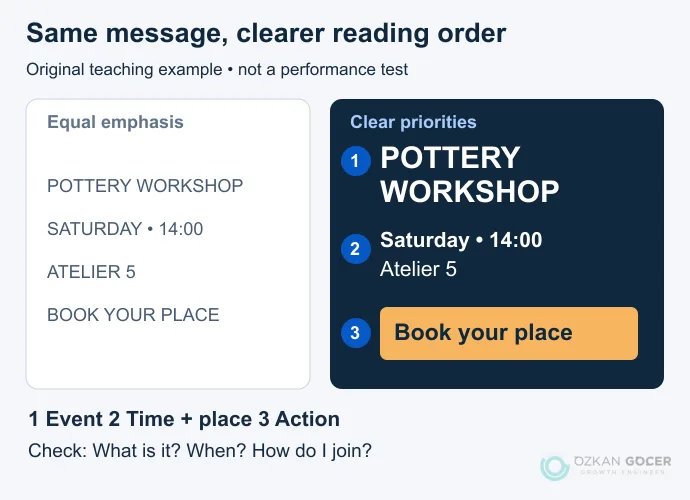
Picture a poorly formatted cafe menu: you stare at the options, feel stuck, and cannot make a decision. The layout failed. Good design guides your eyes to a clear choice, whereas bad design creates friction. Logos, packaging, websites, brochures, and business cards all follow the same rule. Clarity wins.

The 7 Main Sub-Fields of Graphic Design

In my own practice, I often see businesses hire a single "graphic designer" expecting them to handle everything. You cannot treat this discipline as a monolith. It spans seven distinct specialties, each requiring a specific toolset, theory, and execution style.

1) Brand Identity

Brand identity establishes a company's visual fingerprint. Designers in this space build logos, color palettes, typography systems, iconography, photography guidelines, and brand books. I mapped out the seven building blocks of this process in my corporate identity guide. Small and medium-sized businesses buy this service more than any other design asset.

2) Print Design

Print design handles physical assets: business cards, letterheads, brochures, catalogs, books, magazines, and billboards. You must master CMYK color spaces, paper stocks, and prepress technicalities. Adobe InDesign acts as the primary layout software, supported by Illustrator for vector assets, while Photoshop plays a minor role. Luxury packaging, books, and high-end goods keep physical media growing at 5-8% annually.

3) Digital / Web Design

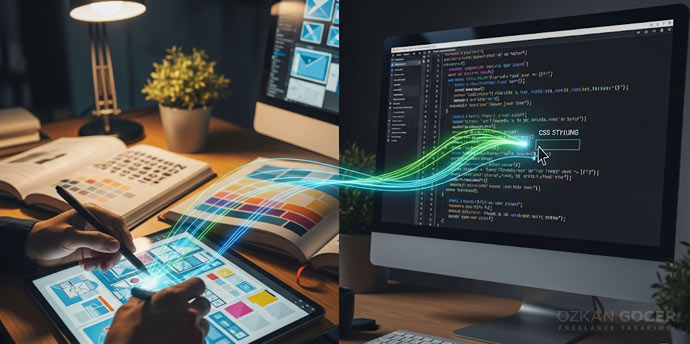
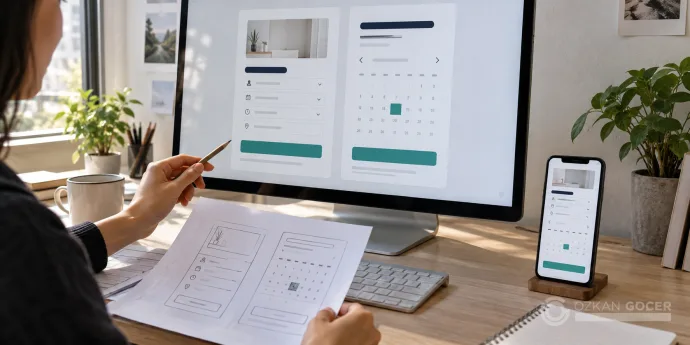
Digital design covers websites, mobile applications, and interactive interfaces. The sector has matured into User Experience (UX) and User Interface (UI) design. Graphic designers in digital projects focus on typography, color systems, and visual hierarchy, leaving user flows to UX specialists. Read my deep dives on what is web design and UI vs UX to understand the division of labor.

4) Packaging Design

Packaging design dictates how a physical product container looks and functions. You need strong 3D spatial awareness and a clear understanding of retail competition to succeed here. Data from Nielsen retail studies proves that 70% of in-store buying decisions stem directly from shelf appearance. See how top brands execute this in my list of effective packaging design examples.

5) Motion Graphics

Motion graphics apply animation to static layouts, producing video intros, social media assets, explainer videos, and television title sequences. Production pipelines rely on Adobe After Effects for 2D work, alongside Cinema 4D and Blender for 3D elements. Short-form video formats on TikTok and Reels have turned motion design into a non-negotiable requirement for modern brands in 2026.

6) Illustration

Illustration centers on drawing original artwork by hand or through digital tablets. Work in this category ranges from editorial drawings for print media to custom game assets, character designs, and web icons. Creators rely heavily on Procreate, Adobe Fresco, and Photoshop. Remember the core distinction: the final deliverable is the artwork itself, not a broader layout or corporate identity system.

7) Environmental Design

Environmental design connects people to physical places through visual cues, covering retail interiors, museum signage, exhibition booths, and wayfinding systems. Projects merge graphic layouts, 3D modeling, and architectural planning. The specialization remains a niche field, but it commands premium budgets.

The Standard Tool Set

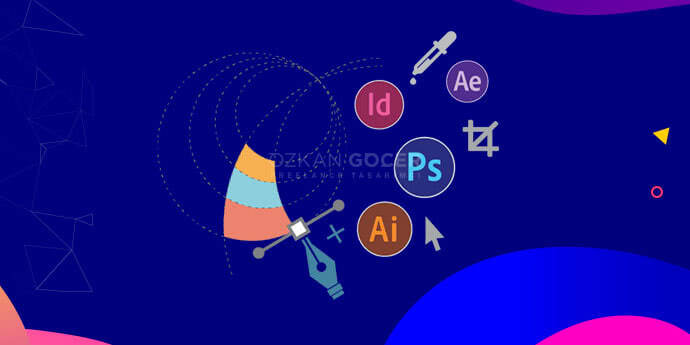
In the projects I have managed, I always look for mastery in a core set of applications. The 2026 industry-standard software list includes:

  • Adobe Photoshop: Handles raster editing, photo manipulation, digital mockups, and web graphics. Most design departments still treat it as their primary tool.
  • Adobe Illustrator: Generates vector assets, logos, icons, and scalable illustrations. It forms the foundation of brand identity creation.
  • Adobe InDesign: Manages multi-page layouts for books, magazines, brand guides, and catalogs. Print and digital publishing projects default to it.
  • Figma: Powers digital product design for websites and mobile applications. It established itself as the industry standard in 2020, offering a free tier for new users.
  • Affinity Designer/Photo/Publisher: Serves as a one-time-purchase alternative to Adobe subscription models, offering professional capabilities for independent creators.
  • Procreate (iPad): Dominates the digital illustration and sketching space on mobile tablets.
  • After Effects: Controls motion graphics production, often paired with Premiere Pro for video editing workflows.

If you are starting out, master Illustrator, Photoshop, and InDesign thoroughly before expanding. Add other tools only when client work demands them. Software proficiency does not make you a great designer. Your strategic thinking does.

The Process Skeleton (5 Steps)

  1. Brief and brand excavation: I run a 2-to-3-hour Q&A session with you to dissect your target audience, competitors, core message, and constraints. We do not stop until every detail is clear.
  2. Visual exploration (mood board): I gather 30 to 50 reference images to narrow our path down to 2 or 3 visual directions. Skipping mood boards always triggers subjective, misaligned feedback weeks later. Avoid the trap.
  3. Concept design: I build 2 or 3 alternative layouts based on your chosen direction. Presenting a single option fails; you need direct comparison to make a confident decision.
  4. Revision: Your standard package includes 2 or 3 rounds of edits. I bill subsequent iterations at an hourly rate.
  5. Delivery package: You receive vector source files, raster outputs, a usage guide, and optimized social media sizes.

5 Common Mistakes in the Client-Designer Relationship

  • Starting without a brief: In the projects I have managed, launching with a vague "you'll figure it out" attitude delays delivery by weeks. Clear scopes prevent scope creep. Write down your goals first.
  • The "show me first, I'll pay if I like it" approach: Professional designers require a 30% to 50% upfront deposit to secure their schedule. Financial commitment forces you to provide clearer, more serious briefs. Pay to get results.
  • Demanding too many options: Choice fatigue paralyzes decision-making when you ask for a dozen variations. In my own practice, presenting 2 or 3 strong alternatives yields the best results. Limit your choices.
  • Giving vague feedback like "make it pop": Vague phrases waste hours of billable time. Give your designer concrete references instead, such as "use warmer tones" or "look at the layout of brand X." Be specific.
  • Bundling rushed requests: Demanding a logo, corporate identity, and website at the last minute leads to sloppy work that you will have to redo within a year. Plan for at least 3 to 6 weeks to build a proper foundation. Quality takes time.

Seeing the Industry Standard: Reference Sources

In my own practice, I monitor specific industry benchmarks to keep design work grounded in market reality. You can track daily creative trends through Behance, the largest global design portfolio platform. For analytical breakdowns of corporate identity shifts, Brand New (UnderConsideration) provides direct, critical reviews of recent rebrands. I also study Pentagram to see how an established agency executes major projects. Data matters. If you need academic validation, Harvard Business Review connects visual design directly with business strategy.

Budget Expectations (2026)

  • Logo & core identity: I usually see clients allocate $600 to $2,500 for freelance or boutique agency work.
  • Comprehensive corporate identity: Rates range from $2,500 to $10,000 to deliver your logo, palette, typography, iconography, and brand guidelines.
  • One-off print projects (brochure, catalog): Expect $50 to $200 per page, varying with layout complexity.
  • Packaging design: Pricing spans $500 to $5,000, covering anything from a single SKU to an entire product line.
  • Motion graphics and animation: Agencies charge $1,500 to $7,500 for a 15-to-60-second video.

How to Become a Graphic Designer

I mapped out the exact steps for entering this industry in my guide on how to become a successful graphic designer. Most professionals start their careers through one of three distinct routes:

  1. University degree: Earning a diploma in Visual Communication, Graphic Design, or Communication Design. A four-year commitment establishes your theoretical foundation.
  2. Bootcamps and certificate programs: Finishing 6 to 12 months of structured training on Coursera, Udemy, or at local academies.
  3. The self-taught route: Acquiring skills via YouTube, free web resources, and self-directed projects. You face a steep learning curve but can secure client work within 1 to 2 years.

In my own practice hiring creatives, I have always valued a strong portfolio over any degree. Show 8 to 12 high-quality projects. Your academic background becomes secondary.

Next Step: Professional Support

Execution determines the final market impact of any design strategy. In my own practice, I align visual assets with measurable business goals. My graphic design services page details my workflow, pricing structures, and actual client case studies. For creative benchmarks, you can study the portfolios of the world's best 18 logo designers and the 12 best graphic designers of all time.

Submit your project details directly to my inbox. You can send a design brief by completing the form in the bottom-right corner. The intake process requires three short steps, and I will review your requirements to send a response within 24 hours.

FAQ

Frequently Asked Questions

Quick answers for readers who skipped to the end.

What is graphic design in one sentence?
Graphic design is the discipline of composing visual elements to deliver a specific message to a specific audience. More than aesthetics, it is built on meaning and audience targeting.
How many sub-fields does graphic design have?
Seven main sub-fields: brand identity, print, digital/web, packaging, motion graphics, illustration, and environmental design. Each has its own tool set and client type.
Which software does a graphic designer use?
Adobe Photoshop (raster), Illustrator (vector), and InDesign (layout) are the standard trio. Figma is rising for digital product work. Affinity and Procreate are also widespread. Adobe After Effects covers motion.
Do you need a degree to be a graphic designer?
No. The industry checks portfolio before diploma. University, bootcamp, or self-taught paths all work. Building a portfolio of 8-12 strong projects makes the school you attended irrelevant.
How long does it take to become a good graphic designer?
On average 3-5 years. Year one for core tools (Photoshop, Illustrator, InDesign), year two for typography and color theory, years three to five for specialization and client relationship management.
How long does a graphic design project take?
Logo + core identity 1-2 weeks, comprehensive corporate identity 3-6 weeks, packaging design 2-4 weeks, motion graphics (15-60 seconds) 2-3 weeks. Timeline depends on content delivery speed and revision rounds.
What does graphic design cost?
In 2026: logo + core identity $600-$2,500, comprehensive corporate identity $2,500-$10,000, packaging design $500-$5,000, motion graphics (15-60 sec) $1,500-$7,500.
What is the difference between graphic design and web design?
Graphic design is the static visual communication discipline (logo, packaging, print). Web design is digital interface design and includes interaction, performance, and code. They overlap but require different specialties.
Why is writing a brief important?
The brief is the project's direction-setting document. Without writing down target audience, message, competitors, and constraints, the designer cannot move in the right direction. Briefless projects have an 80% chance of triggering "I want something completely different" by week three.
How many revisions can I ask for?
The standard package includes 2-3 revision rounds. Beyond that is billable. Stay away from designers who promise unlimited revisions; quality drops and projects drag in that model.
Which sub-field pays the most?
As of 2026, motion graphics and brand identity command the highest hourly rates. Packaging design sits at mid-upper level, print at mid level. Illustration varies by project basis.
Are there free alternatives to professional software?
Yes. GIMP (Photoshop alternative), Inkscape (Illustrator alternative), Scribus (InDesign alternative), Figma (free tier), Canva (template-based, entry level). May fall short for professional work, but solid for learning.
What should I look for when picking a designer?
Portfolio variety, sector experience, client reviews, brief-taking process, and communication quality. Cheap pricing or fast-delivery promises should not be the deciding criteria.
Freelance or agency?
Freelance: fast decisions, tight budget, single designer style. Agency: multi-disciplinary, large project, corporate process. SMBs work fine with freelance; mid-large brands prefer agencies. The deciding factor is competence and portfolio, not the model.
Will AI replace graphic designers?
AI (Midjourney, DALL-E, Adobe Firefly) has settled in as a helper tool: initial sketches, mood boards, stock visual generation. The layers of brand strategy understanding, client relationship management, and system building still belong to the human designer. Designer + AI hybrid is the future standard.
Summarize:
Özkan Göçer profile photo

Özkan Göçer

Growth Engineer & Digital Marketing Specialist

Özkan Göçer is a Growth Engineer and Digital Marketing Specialist with over 15 years of field experience and 200+ completed projects. Having delivered over 200 corporate identity and logo projects using Adobe Illustrator, InDesign, and Photoshop, he draws on extensive field practice to shape this guide.


Scroll to top