Web project budgets run from $500 landing pages to $15,000 e-commerce platforms, and the reasons cheap development fails are consistent across that whole range. Agency-written pricing guides usually push proprietary packages, leaving buyers confused. I present actual market rates, cost drivers, hidden fees, and developer screening questions to clarify your options. You will know exactly what your budget buys.
Website Design Cost by Type (2026 Table)
Project scope dictates your total investment. Building a single landing page demands minimal hours compared to launching a multilingual online store. Pricing aligns directly with technical complexity. The table below outlines the projected 2026 market rates in USD.
Scroll sideways to read every column. Keyboard: focus the table and use the arrow keys.
| Site Type | Price Range (USD) | Timeline | Best For |
|---|---|---|---|
| Landing Page / One Page | $500 - $1,500 | 3-7 days | Campaign, launch, ads |
| Blog / Personal Site | $800 - $2,000 | 1-2 weeks | Creator, freelancer |
| Small Business (5-10 pages) | $1,500 - $3,000 | 2-3 weeks | SMB, local business |
| Corporate / Custom Design | $3,000 - $7,000 | 4-8 weeks | Brand, corporate identity (ideal) |
| E-Commerce Site | $5,000 - $15,000 | 6-12 weeks | Online sales, store |
| Custom Software / Web App | $10,000+ | 3 months+ | SaaS, portal, custom system |
Targeting the $3,000-$7,000 range yields the best return on investment. You get a fast, custom, SEO-ready corporate site optimized to turn visitors into customers. Lower budgets force developers to use rigid pre-made templates. Higher budgets usually involve complex software integrations. To understand how a basic site is built, read my step-by-step website creation guide.
The 7 Factors That Set Website Design Cost
Buyers are routinely confused when one developer quotes $1,000 and another quotes $6,000 for what looks like the same site. Price gaps occur for clear reasons. Seven specific factors dictate these differences.
- Page count and content: Building a 5-page site requires fewer hours than developing a 40-page platform. You must verify whether copywriting, graphics, and photography are included in your quote.
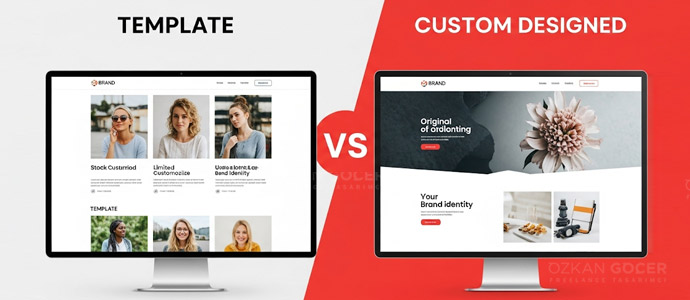
- Design originality: Selecting a pre-built template instead of building from scratch alters the entire budget. The difference between custom and ready-made design serves as the primary driver of your final cost.
- Infrastructure: Systems like WordPress lower your initial expenses and speed up deployment, while custom software development requires a much larger budget.
- Functionality and integrations: Connecting payment gateways, booking systems, CRM tools, and API integrations adds development hours. Expect higher costs for each external connection.
- SEO and content inclusion: Launching a site without technical SEO, speed optimization, and structured content guarantees zero search visibility. You must confirm these deliverables are written into your contract.
- Mobile performance and speed: Optimizing your pages for Core Web Vitals demands deep technical expertise. It directly increases your conversion rates.
- Who builds it: Building it yourself costs the least, hiring freelancers represents the middle tier, and contracting agencies requires the highest investment. Your choice determines long-term support quality and accountability.
Ready-Made Theme vs Custom Design: The Cost Gap
Businesses routinely struggle with the choice between pre-built templates and bespoke development. Templates offer speed and low entry costs, yet they force your business into a generic mold shared by thousands of competitors. Custom design targets your specific operational needs and brand identity. It makes you unique.
Scroll sideways to read every column. Keyboard: focus the table and use the arrow keys.
| Criterion | Ready-Made Theme | Custom Design |
|---|---|---|
| Cost | $500 - $1,500 | $3,000 - $7,000 |
| Originality | Low (thousands of copies) | High (unique to your brand) |
| Speed / Performance | Often bloated code | Optimized, fast |
| Conversion focus | General purpose | Built to a goal |
| Scalability | Limited | Flexible |
Templates serve early-stage startups testing a proof of concept on a tight budget. When your website acts as your primary engine for revenue, investing in custom assets pays off. You win on performance. The resulting conversion difference quickly covers your upfront development spend.
E-Commerce Website Design Cost
For online stores, budget requirements scale directly with operational complexity. Launching a boutique shop with 50 products demands far fewer resources than building a 10,000-item catalog connected to external marketplaces. Final pricing hinges on product count, payment gateways, shipping APIs, inventory sync, and security protocols. Simple setups cost less; enterprise integrations require deep development hours.
Platform selection determines your long-term cost structure. Hosted systems like Shopify lower your initial development barrier but lock you into recurring monthly subscriptions. Open-source alternatives like WooCommerce grant complete ownership, though they demand higher upfront development labor. Read my Shopify vs WooCommerce comparison to analyze the trade-offs. For those starting out, my entry into e-commerce guide outlines the fundamental steps to launch successfully.
One-Time Costs vs Ongoing Yearly Fees
Hidden renewal bills catch buyers off guard because agencies omit recurring fees from initial proposals. Launching a website is not a single transaction; you must budget for ongoing annual expenses to keep your site online. Plan ahead.
- Domain name: You will pay $10-$20 annually to keep your address active. Learn how to choose the right name in my what is a domain guide.
- Hosting: Expect to spend $50-$500 yearly depending on your traffic volume. Understand the basics in my guide on what hosting is and select a provider from my list of the best hosting companies.
- SSL certificate: Modern hosting providers usually bundle this security layer for free, but standalone options cost $0-$100 annually.
- Maintenance and updates: Allocate $30-$200 monthly to handle security patches, routine backups, and minor content adjustments.
- Content and development: Reserve a budget for building new landing pages, executing marketing campaigns, and writing blog posts.
Hidden Costs Most People Forget
Low-ball estimates often double in price because agencies omit basic requirements. Verify if your contract covers these specific items before signing:
- Copywriting, photography, and custom graphic design assets
- Paid stock media licenses and recurring premium plugin fees
- Design revisions, including the exact number of permitted rounds
- Technical SEO configuration and page speed optimization tasks
- System administration training and post-launch technical help desk hours
- Complete legal ownership of the source code and related hosting accounts
Why Is a Cheap Website Quote Risky?
Business owners who accept low-cost web development offers tend to face the same outcome. You end up with broken layouts, abandoned updates, or a developer holding your source code hostage. Cheap agencies use bloated templates, offer zero post-launch support, and hit you with hidden fees later. Cheap is expensive.
Treat your website as a revenue-generating asset instead of a sunk cost. Shift your focus from minimizing upfront costs to maximizing conversion rates. Building your platform around conversion-focused web design principles generates measurable returns over time.
Questions to Ask Before You Sign
Buyers lose thousands of dollars by skipping basic clarifications. Avoid assumptions. Protect your budget and timeline by securing clear answers on the following points during your first meeting:
- Do you build a custom interface from scratch or modify a pre-made template? Demand a specific number of design mockups for your review.
- Does the proposal include copywriting, licensed stock media, and professional site features, or will you face hidden fees?
- Will the developer handle technical SEO, mobile responsiveness, and speed optimization within the initial quote?
- What is the firm delivery date, and how many rounds of design revisions do you get?
- What are the recurring annual fees for web hosting, domain registration, and software licenses?
- Do you retain full legal ownership of the custom source code, domain name, and hosting accounts?
- Will you receive hands-on content management system (CMS) training and structured technical support after the website goes live?
Smart Ways to Lower Website Cost
Businesses waste thousands on features they never use. You can protect your capital by planning your launch assets before hiring a developer. Keep it simple.
- Clarify your needs: Launch a 6-page site instead of a 20-page platform to keep your initial scope tight.
- Prepare content yourself: Write your own copy and supply high-resolution images to cut down billable developer hours.
- Grow in stages: Deploy a basic version first. Add complex features only after your revenue grows.
- Pick the right infrastructure: Choose WordPress instead of custom software to minimize ongoing maintenance fees.
- Prioritize good user experience (UX): A clean, fast layout beats a complex, flashy design because simple structures convert better and cost less to build.
Further Resources
- web.dev (Google): Technical documentation to audit Core Web Vitals, speed, and search engine optimization metrics.
- WordPress.org: Official download files and documentation for the open-source content management system.
- Shopify: Direct access to subscription tiers, transaction fees, and built-in features for the hosted e-commerce platform.
- MDN Web Docs: Standards-based tutorials covering HTML, CSS, and JavaScript for modern browser compatibility.
Final pricing aligns with specific commercial objectives rather than arbitrary page counts. Compare your requirements against the budget table, prepare targeted questions for developer interviews, and select a partner based on conversion capabilities. Avoid cheap bids.
For a brand-specific website that converts, the web design services I offer can help.