What Is a Front-End Developer? What Do They Do?
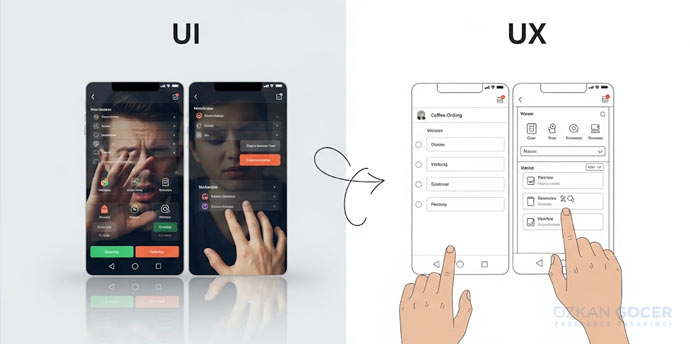
A front-end developer is a programmer who builds the part of a website or application that the user sees and interacts with. Everything you see on screen, that is, the layout, buttons, menus, forms, animations and colors, is the front-end developer's work.
Their task is to turn a design (usually the interface the designer prepared in Figma) into a working, live interface with HTML, CSS and JavaScript. They also make the site display properly on different devices (responsive), load fast and feel smooth for the user. In short, a front-end developer is the bridge between design and technology; they take the designer's visual and turn it into a real experience the user can touch. The role needs both visual sensitivity and coding skill; because the results are visible, it is motivating for beginners.
The Difference Between Frontend, Backend and Full Stack
Web development splits into three main roles. Frontend builds the side the user sees: interface, design, interaction; its tools are HTML, CSS, JavaScript and libraries like React/Vue. Backend builds the server side the user does not see: database, business logic, user authentication and APIs; it uses languages like Python, PHP, Node.js.
Full stack is someone who can do both frontend and backend. With a simple analogy, in a restaurant frontend is the dining room and presentation, backend is the kitchen, and full stack is the person who knows both. I covered the big picture of web development in my web developer article. For beginners, the most common entry door is frontend, because the results are visible and feedback is fast.
Which Languages and Technologies Should a Frontend Developer Know?
Frontend's foundation rests on three essentials: HTML (the page's structure), CSS for the look and JavaScript for interaction. JavaScript is frontend's brain and the language you need to go deepest into.
- The core trio: HTML, CSS and JavaScript.
- Framework: React (the most popular), Vue or Angular.
- Tools: Git/GitHub, a package manager (npm), browser developer tools.
- Data: basic API use (pulling data from the backend).
An important tip: do not learn them all at once; first really settle the HTML, CSS and JS base, then pick one framework and go deep. Most job listings ask for HTML, CSS, JS and one modern framework.
React, Vue, Angular: Modern Frontend Tools
React, Vue and Angular are JavaScript libraries and frameworks that let you build modern, complex interfaces more tidily and efficiently. Writing large applications with plain JavaScript gets hard; these tools split the code into reusable components and speed up development.
React was developed by Meta and is currently the most popular, most-asked-for option in job listings; React has a wide ecosystem. Vue is relatively easy to learn and flexible, while Angular is a broader-featured framework preferred in corporate projects. Which one? The general advice for beginners is React; but do not move to a framework before learning plain JavaScript well, because frameworks are built on JavaScript. I compiled the commonly used ready tools in my JavaScript libraries article.
How Do You Become a Front-End Developer? Roadmap
A university degree is not required to become a front-end developer; many developers learned on their own. You move forward by writing code rather than watching; for an ordered path, roadmap.sh is a useful compass.
1. HTML, CSS and JavaScript Base
Learn to make simple, tidy and responsive pages with HTML and CSS, then move to JavaScript: variables, functions, DOM manipulation, events and pulling data from an API. Do not rush this step; free resources (freeCodeCamp, MDN) are a solid way to settle JavaScript well.
2. Learn a Framework (React/Vue)
After building the base, learn React or Vue and grasp the component logic. Mastering one framework is far more valuable than half-knowing all three.
3. Build Projects and a Portfolio
Build real projects with what you learn (for example a weather app or a store interface) and share them on GitHub. A portfolio is the key to finding a job; employers look at what you can do more than a diploma.
How Long Does It Take to Learn Frontend?
The time varies by the time you give, your discipline and the target level. You can learn to make simple pages with HTML and CSS in a few weeks; becoming fluent in JavaScript and writing real interactive pages takes a few months more, which is the most important part of the process.
Adding a framework and reaching a job-ready (junior) level takes, with regular work, around 6-12 months; for those who spend few hours a week, it stretches. What matters is not the calendar but consistency and practice: someone who writes a bit of code every day moves far faster. Since the frontend world changes fast, learning continues after you get the job too; projects both teach and become your portfolio.
Front-End Developer Salaries (2026)
Front-end developer salaries vary by experience, competence (especially strong framework mastery), company type and city. Junior salaries are entry-level; with experience, a solid portfolio and in-demand skills like React, pay rises significantly at mid and senior levels.
In this profession, remote and overseas (currency-based) work is common; developers working for foreign companies can earn above the local average. Moving to full stack or advanced specialization raises pay further. Since current exact figures change with the market and inflation, checking up-to-date data on career sites is best. The entry salary may be modest; but it is a career that rises fast with experience and in-demand skills and is very well suited to remote work.